
The lights go out halfway through a wash cycle, the oven stops heating, or a socket circuit suddenly dies. If you are asking why a fuse box trips, the short answer is that a protective device has detected something it should not ignore. It may be a faulty appliance, an overloaded circuit, damaged wiring or an earth leakage fault. The key is to restore power safely without masking the cause.
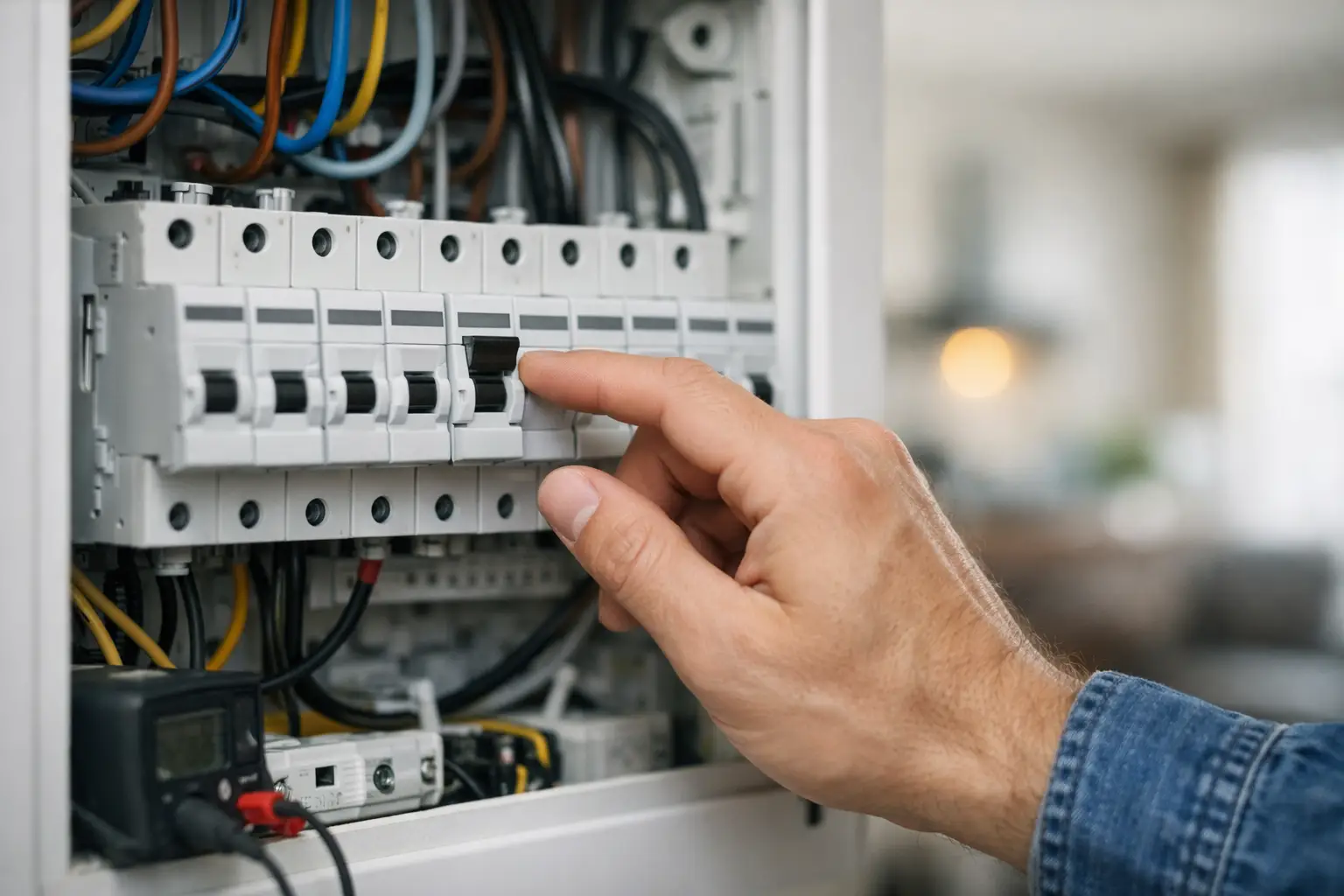
In most London homes, the old-style fuse box has been replaced by a consumer unit containing switches called circuit breakers and RCDs. People still call it the fuse box, and the principle is the same: it cuts the supply before a fault can cause electric shock, overheating or fire.
What has actually tripped?
Before looking for the cause, check which switch has moved to the off position. This gives a qualified electrician useful evidence and can narrow down the fault quickly.
A small circuit breaker, often labelled for sockets, lighting, cooker or shower, normally trips when that particular circuit is overloaded or has a short circuit. An RCD, often a wider switch with a test button, trips when it detects electricity leaking to earth. This is a vital safety function, particularly in kitchens, bathrooms and outdoor circuits.
Some consumer units have RCBOs, which combine both types of protection for each individual circuit. These are useful because one fault is less likely to switch off large parts of the property. Whatever equipment you have, do not hold a switch in the on position or keep forcing it back on. A breaker that will not stay on is telling you there is still a live fault to investigate.
Why does a fuse box trip on one circuit?
A faulty appliance is often the culprit
Appliances with heating elements, motors, pumps or compressors are frequent causes of trips. Washing machines, tumble dryers, dishwashers, ovens, cookers, electric hobs and fridge freezers can all develop faults that only show up once they begin a particular part of their cycle.
For example, a washing machine may run normally until it heats the water. A dishwasher may trip the RCD during drying. An oven may cut out when the grill is selected. These patterns often point to insulation failure in a heating element, moisture in a component or damaged internal wiring.
If a trip occurs only when one appliance is plugged in or switched on, unplug it and leave it disconnected. You can then reset the circuit once, provided there is no smell of burning, visible damage, water ingress or other sign of danger. If the power stays on, the appliance is a strong suspect. It still needs proper diagnosis before being used again. Repeatedly testing a potentially faulty appliance can make damage worse and may create an electric shock risk.
Too many appliances on one circuit
An overload occurs when a circuit is asked to carry more current than it is designed for. This is common where several high-demand appliances share kitchen sockets, an extension lead or a single radial circuit. Kettles, microwaves, air fryers, portable heaters, irons and tumble dryers can each draw substantial power.
An overload is not always obvious. A circuit may cope for months, then trip when the kettle, toaster and washing machine heater operate at the same time. Older properties, converted flats and busy rental homes can be especially prone to this where the original circuit layout no longer matches how the space is used.
Avoid daisy-chaining extension leads or using multi-way adaptors for appliances that generate heat. Moving one item to a different suitable socket may reduce demand temporarily, but it is not a permanent answer if the circuit trips regularly. An electrician can assess the circuit load, cable condition and whether additional circuits or a consumer unit upgrade are appropriate.
A short circuit or damaged socket wiring
A short circuit happens when live and neutral conductors come into contact where they should not. It can be caused by damaged flexes, loose socket connections, a crushed cable behind furniture, a failed accessory or a DIY alteration that has disturbed wiring.
This type of fault often causes an immediate trip when a switch is operated or an appliance is plugged in. Look without touching for obvious warning signs such as scorch marks, a cracked socket face, buzzing, warmth, melted plastic or a loose plug. Switch off the circuit if possible and arrange an inspection. Never remove a socket cover or attempt repairs inside a consumer unit unless you are qualified to do so.
Why an RCD trips even when nothing seems wrong
RCD trips can feel more confusing because the circuit may not appear overloaded and no appliance may look damaged. The RCD is detecting a small imbalance between the electricity going out and returning. That can mean current is escaping through a faulty appliance, deteriorated cable insulation, dampness or an outdoor fitting.
Bathrooms, kitchens, utility rooms, gardens and garages deserve particular attention because moisture can affect sockets, lights, extractor fans and appliances. A leaking dishwasher, condensation around a fridge freezer connection, water getting into an outside light or a damaged cable feeding a shed can all trigger an RCD.
The fault may also be intermittent. It can occur after rain, when underfloor heating runs, when an appliance reaches temperature or only at certain times of day. Make a note of what was operating when the trip happened. This saves time during fault finding and helps avoid unnecessary replacement of parts.
If the main RCD will not reset even after appliances are unplugged, leave it off and call a qualified electrician. The fault may be within the fixed installation rather than anything plugged into it.
A safe way to narrow down the cause
Only carry out basic checks if it is safe to do so and there are no signs of overheating, burning or water damage. Start by switching off and unplugging appliances on the affected circuit. Reset the breaker or RCD once. If it stays on, reconnect appliances one at a time, allowing each to run long enough to reveal the usual fault.
Stop immediately if the switch trips again. Leave the last appliance disconnected and arrange a repair. If the circuit trips with everything unplugged, the issue is likely to involve the wiring, fixed equipment or the consumer unit itself.
Do not use a higher-rated fuse, replace a breaker with a larger one, bypass an RCD or continue resetting a tripping device. These actions remove the protection designed to prevent serious harm. A tripping consumer unit is inconvenient, but it is doing its job.
When you need an electrician rather than a reset
A one-off trip after a clear overload may not require urgent work. However, regular tripping is never something to normalise. It should be investigated where it affects the same circuit repeatedly, happens with no appliances connected, follows water ingress, involves lights flickering or causes a burning smell.
You should also seek prompt help if the consumer unit is old, has rewireable fuses, lacks RCD protection, shows signs of heat damage or trips across several circuits. Landlords and property managers should act quickly where an electrical fault leaves tenants without essential power or raises concerns about the safety of the installation.
A competent engineer will test the appliance and electrical circuit rather than guessing. This may involve insulation resistance tests, earth continuity checks, load assessment and inspection of sockets, connections and protective devices. The correct repair could be as focused as replacing a failed oven element, or it may require attention to damaged cabling, a faulty accessory or an ageing consumer unit.
FaultFree Engineering Group provides appliance diagnosis and electrical fault finding across London, which means you do not have to choose between an appliance repairer and an electrician when the cause is unclear. The aim is straightforward: identify the fault accurately, explain the work clearly and restore safe, reliable power with minimum disruption.
A fuse box that trips is not asking for repeated resets. It is asking for the right fault to be found. Leave suspect appliances unplugged, take note of the conditions when the trip occurs, and get qualified help before a small electrical warning becomes a larger problem.