
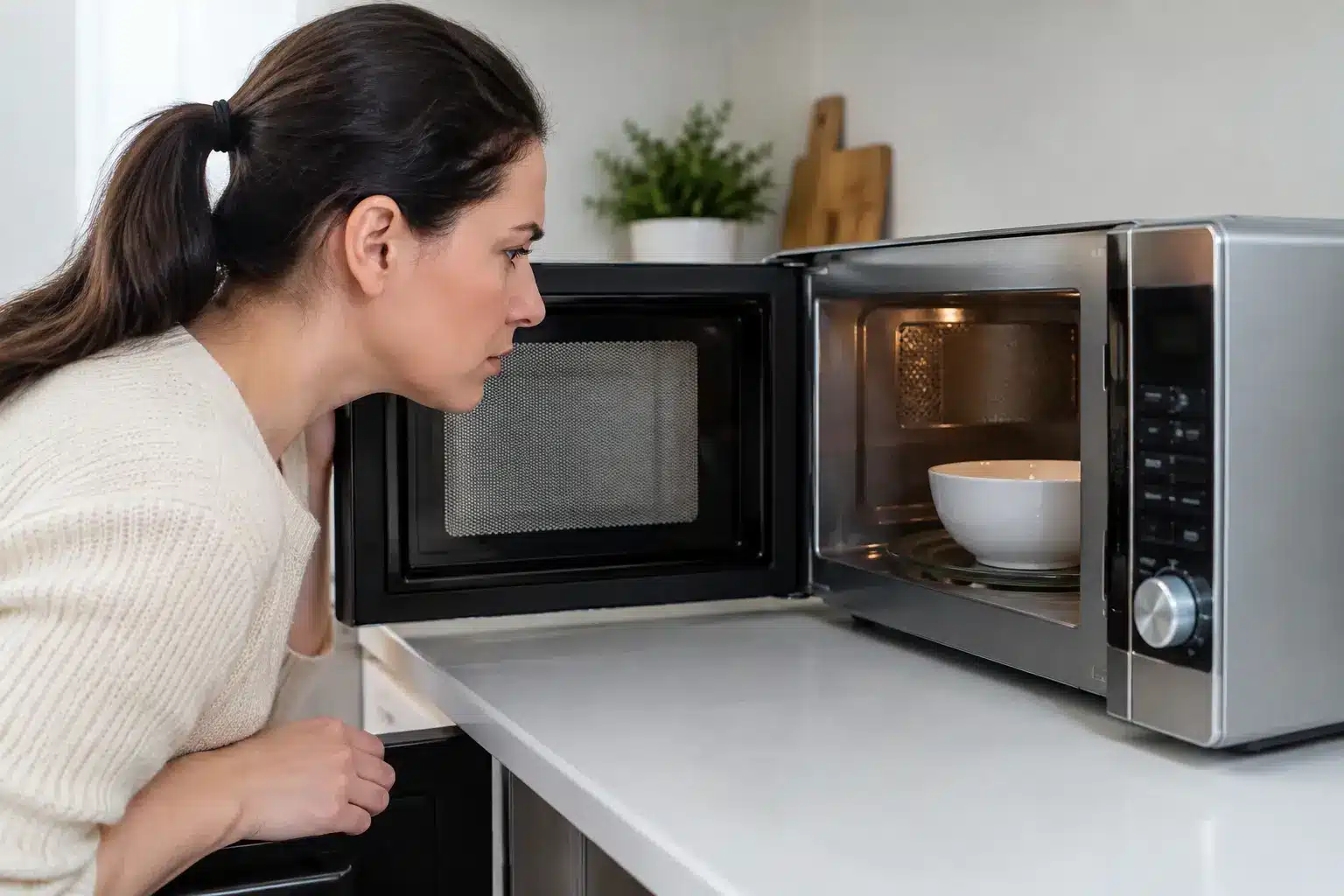
A microwave not heating properly is more than an inconvenience when dinner is on the counter and the day is already moving. If the display, light and turntable still work but food comes out cold, the fault is often inside the appliance’s high-voltage heating system. That is not a safe area for DIY repairs, but there are a few sensible checks you can make before arranging an engineer.
Start with the safe, simple checks
Before assuming the microwave has failed, test it with a microwave-safe mug containing around 250 ml of cold water. Heat it on full power for one minute. Do not run an empty microwave, as this can damage the appliance.
If the water is only slightly warm, check that the power level has not been reduced. Many microwaves allow lower settings for defrosting or gentle cooking, and it is surprisingly easy to leave the appliance set at 30 or 50 per cent power. Cancel the programme, select full power and repeat the test.
Also check the door closes firmly and nothing is trapped around the seal. A misaligned door, worn latch or damaged door switch can prevent the microwave from starting the heating cycle correctly, even when the control panel appears normal. Do not use the appliance if the door is bent, the seal is damaged, or the door will not close securely.
If your microwave is plugged into an extension lead or multiway adaptor, unplug it and use a suitable wall socket instead, where practical. A poor connection can cause intermittent operation. However, if other high-load appliances are also affecting the circuit, tripping the consumer unit or causing burning smells, stop using the socket and arrange electrical fault finding.
Why is a microwave not heating properly?
A microwave creates heat using radio waves generated and controlled by several high-voltage components. When one part fails, the unit may look as though it is working normally while producing little or no heat.
The most common cause is a faulty magnetron. This is the component that generates the microwaves which heat food. A failing magnetron may lead to uneven heating, longer cooking times or complete loss of heat. It can also be accompanied by a loud humming sound, although not every failed magnetron is noisy.
Other possible faults include a failed high-voltage diode, capacitor or transformer, a defective inverter board in newer models, or a damaged door interlock switch. On combination microwaves, the problem may be limited to microwave mode while the grill or convection oven continues to work. That distinction helps an engineer narrow down the fault quickly.
A control board fault can also cause incorrect heating. For example, the microwave may stop early, run at the wrong power level or behave inconsistently between programmes. These faults need proper testing rather than guesswork, particularly where replacement parts are costly.
Signs that point to a specific fault
The way the appliance behaves matters. If it runs but does not heat at all, the magnetron, diode, capacitor, transformer or inverter are common suspects. If it heats only occasionally, a door switch, wiring connection or control board may be at fault.
A microwave that makes a louder-than-usual buzzing or humming noise should be switched off after use and checked professionally. Sparking, flashes inside the cavity, smoke, a burning smell or scorch marks are more urgent warning signs. Unplug the appliance if it is safe to do so, do not use it again, and do not attempt to remove the outer casing.
Sparks are not always caused by an internal electrical fault. Metal trim on crockery, foil, twist ties or a damaged waveguide cover can arc inside the cavity. Remove any unsuitable items, clean food debris away with the appliance unplugged, and inspect the small internal cover on the side wall or ceiling. If that cover is burnt, cracked or heavily stained, the microwave should be assessed before further use.
Uneven heating can sometimes be caused by food placement rather than a failure. Dense food needs standing time, and large portions may need stirring or turning halfway through cooking. But if a mug-of-water test repeatedly shows poor heating on full power, the appliance needs diagnosis.
Do not remove the microwave cover
Microwaves are not like a toaster or kettle. They contain high-voltage parts that can retain a dangerous electrical charge even after the plug has been removed. The high-voltage capacitor is a particular risk. Opening the casing, touching internal components or attempting online repair instructions can result in serious injury.
There is also a radiation-safety issue. The cabinet, door, hinges, latches and seals are part of the appliance’s protective design. A repair that is fitted incorrectly may leave the microwave unsafe to operate, even if it appears to heat food again.
For this reason, replacing a lamp, cleaning the cavity and checking settings are reasonable owner checks. Internal electrical testing, door alignment, interlock replacement and high-voltage component repairs should be left to a qualified appliance engineer.
Is a microwave repair worth it?
The answer depends on the type, age and quality of the appliance, as well as the diagnosed fault. A built-in microwave or premium combination model is often worth repairing because replacement can involve cabinetry work, matching finishes and installation costs. A newer freestanding microwave with a straightforward door-switch or control fault may also be a sensible repair.
A low-cost countertop model with a failed magnetron or inverter may be less economical, especially if it is several years old and parts are limited. The right decision should be based on a clear diagnosis and transparent repair cost, not an assumption that every microwave needs replacing.
An experienced engineer can test the appliance, identify the failed component and explain the options. This is particularly useful for landlords and managing agents, who need to keep a rental kitchen operational without approving unnecessary replacement work.
What to do while you wait for a repair
If the microwave has stopped heating but there are no signs of burning, sparking or damage, leave it unplugged until it can be checked. Do not keep testing it repeatedly. Continued operation can worsen a fault and may damage other components.
Use the hob, oven or another suitable appliance for reheating food in the meantime. If the microwave is built in, avoid pulling it out of its housing unless you can do so without straining the cable or damaging the cabinet. Built-in models often require careful removal and refitting to maintain ventilation clearances.
When booking a repair, have the make, model number and approximate age ready. Explain whether the turntable rotates, whether the light comes on, whether it makes unusual noises and whether the issue affects every programme. Those details help the engineer arrive prepared and improve the chance of a first-visit fix.
When to arrange professional microwave repair
Book a qualified repair promptly if your microwave runs without heating, trips the electrics, has a damaged door, smells of burning, sparks internally or displays an error code. These are not faults to put off, especially in a busy family home, rental property or workplace kitchen.
FaultFree Engineering Group provides practical appliance diagnostics and repairs across London, with clear advice on whether repair or replacement represents better value. The aim is straightforward: identify the fault accurately, work safely and get your kitchen back to normal with minimal disruption.
A microwave that no longer heats properly rarely fixes itself, but it does not automatically mean a new appliance is needed. Stop using it if there are any safety warning signs, avoid opening the casing, and get the fault assessed before making the next move.