
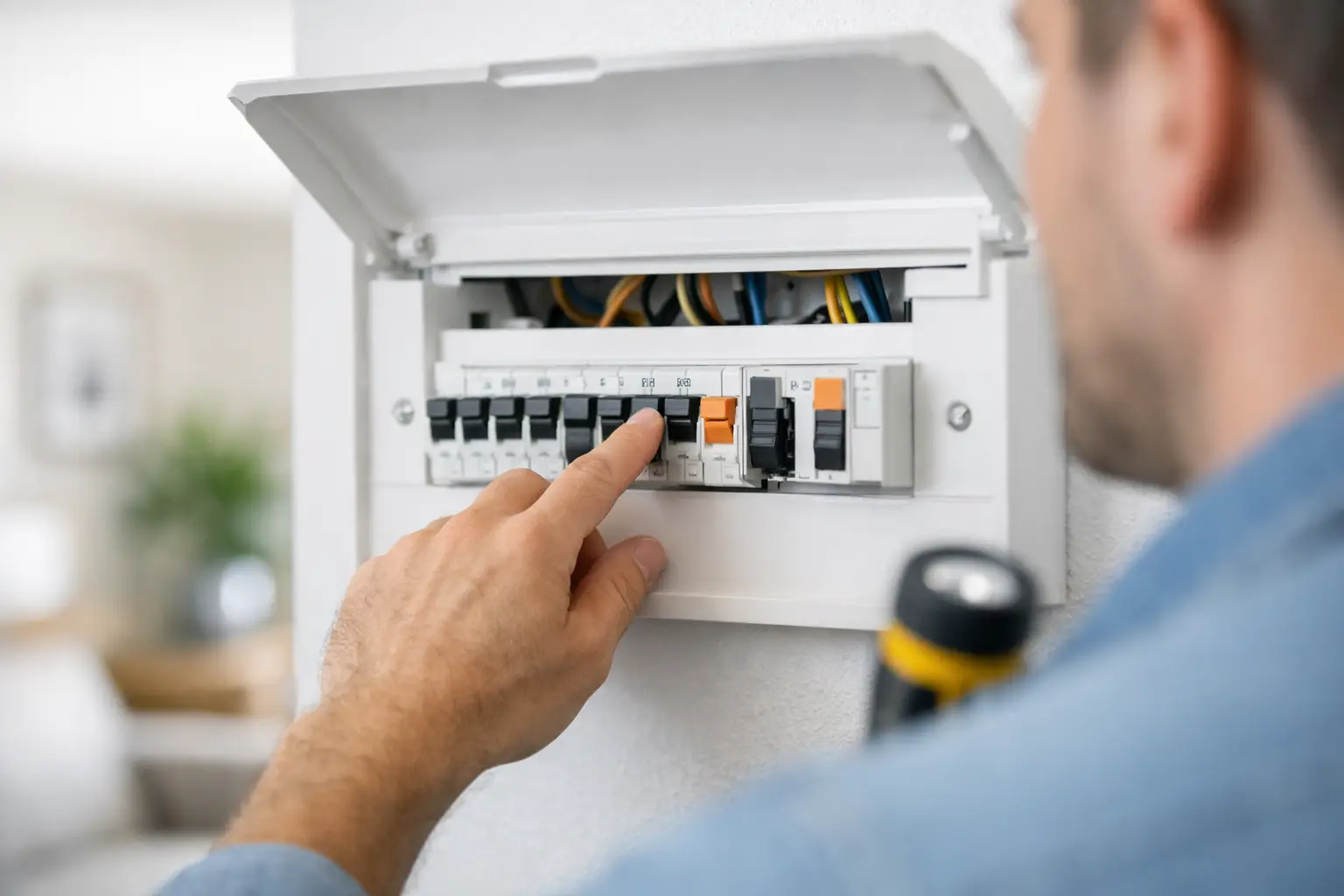
A sudden loss of power is disruptive, especially when it takes out the kitchen, heating controls or sockets you rely on for work. If you are searching for how to reset consumer unit equipment safely, the key point is simple: a trip is a safety device doing its job. You can make one careful reset attempt, but you should not keep forcing a switch back on when it trips again.
A modern consumer unit, sometimes called a fuse box, protects the circuits in your home from overloads, faults and electric shock risks. Knowing what to check can get a minor appliance fault resolved quickly. Knowing when to stop can prevent damage, electric shock or fire.
Before You Reset the Consumer Unit
Start by looking and listening. Do not touch the consumer unit if there is a burning smell, smoke, buzzing, signs of heat, visible damage or water nearby. Leave the electrical supply alone, keep people away from the area and arrange urgent help from a qualified electrician. If there is an immediate danger, contact the emergency services.
If the consumer unit looks dry and undamaged, check whether the power loss affects the whole property or only part of it. Your lights may still work while the socket circuit has tripped, for example. It is also worth looking outside or checking with a neighbour if safe to do so. If nearby properties have no electricity too, it may be a supply issue rather than a fault inside your home.
Do not remove the consumer unit cover, touch exposed wiring or replace parts yourself. The switches on the front are designed for normal operation. Everything behind the cover should be left to an electrician.
How to Reset a Consumer Unit Step by Step
Open the consumer unit door and identify the switch that has moved to the off position. Depending on the installation, this may be a circuit breaker, an RCD or an RCBO. Switch positions vary by manufacturer, so use the on and off markings on your own unit rather than relying solely on whether a lever appears up or down.
Before resetting it, turn off and unplug portable appliances on the affected circuit. This is particularly useful after a kitchen or utility-room trip. Kettles, toasters, washing machines, tumble dryers, dishwashers, extension leads and chargers can all cause a fault when a component or cable fails. Do not handle plugs with wet hands.
For a circuit breaker that has tripped, move the lever fully to the off position first, then firmly back to on. A lever that sits in the middle has usually tripped and will not reset until it has been pushed all the way off.
If an RCD has tripped, it may have cut power to several circuits. Turn off the individual circuit breakers supplied by that RCD, reset the RCD, then restore the circuit breakers one at a time. If your unit has RCBOs, each circuit has its own combined protection and you can usually reset only the affected circuit after unplugging appliances connected to it.
Once the power is restored, reconnect appliances one at a time. Allow a few moments between each item. If the consumer unit trips when a particular appliance is plugged in or switched on, leave that appliance disconnected. It needs diagnosing or repair before it is used again.
What the Type of Trip Can Tell You
The label beside the switch may give a useful clue. A circuit marked “sockets”, “upstairs lights”, “cooker” or “boiler” points to the area affected, though labels on older units are not always accurate. Treat them as guidance, not proof.
A standard circuit breaker often trips because a circuit is overloaded or there is a short circuit. Plugging too many high-powered appliances into one extension lead is a common example. Moving some appliances to a different circuit may help, but an extension lead should never become a permanent answer to a lack of sockets.
An RCD or RCBO is more likely to trip when it detects current flowing somewhere it should not, such as through damaged insulation, moisture or a faulty appliance. A washing machine that trips partway through a cycle, for instance, may have a heating element, pump, motor or wiring fault. A cooker or oven that trips when it heats up needs professional investigation, particularly because it may be hardwired rather than plugged in.
A trip can also happen after condensation, a leak under a sink, outdoor water ingress or DIY work that has disturbed a cable. In these cases, resetting the unit without finding the cause is not a fix.
When You Should Stop Trying to Reset It
One controlled reset after unplugging appliances is reasonable when there are no warning signs. Repeated resets are not. If a switch immediately trips again, leave it off and arrange a fault-finding visit.
Stop and call an electrician if you notice any of the following:
- the main switch, RCD or several circuits trip together repeatedly;
- a breaker will not stay on with appliances unplugged;
- the consumer unit feels warm, smells burnt, makes a crackling sound or has scorch marks;
- there has been flooding, a leak or water near electrical equipment;
- lights flicker, sockets feel loose, or you have had shocks or tingling from an appliance; or
- a hardwired appliance, such as an oven, electric hob, extractor hood or boiler, appears to trigger the fault.
Do not tape a breaker in place, hold it up or replace it with a higher-rated device. Those actions defeat the protective measures designed to keep the installation safe.
Appliance Fault or Fixed Wiring Fault?
The quickest way to narrow down the issue is to consider what changed just before the trip. If the fault occurs only when one appliance runs, that appliance is the likely starting point. Leave it unplugged and use the rest of the circuit only if it remains stable.
If the circuit trips with everything unplugged, the fault may be in fixed wiring, a socket, a light fitting, an external accessory or a hardwired appliance. This needs proper electrical testing. Guesswork can turn a contained fault into a more expensive repair.
Some faults are intermittent. A dishwasher may trip only when it starts heating water; a tumble dryer may trip after ten minutes; an oven may trip only on fan-assisted mode. Make a brief note of the appliance, setting and point in the cycle where power fails. This gives the engineer a useful head start and can reduce diagnostic time.
Extra Care in Rented Homes and Businesses
Tenants should report repeated tripping, damaged sockets and suspected appliance faults to the landlord or managing agent promptly. Do not arrange unauthorised work on the consumer unit unless your tenancy agreement and the property manager allow it. If there is danger, prioritise safety and report it as an emergency.
For landlords and small business operators, repeated trips should be treated as a maintenance issue, not an inconvenience to work around. A fault can leave refrigeration, lighting, fire safety equipment or essential appliances unreliable. Timely inspection helps protect occupants, avoids longer downtime and supports ongoing electrical compliance.
Keep the Fault From Returning
Avoid overloading extension leads and adaptors, especially with heaters, kettles, air fryers, microwaves and other high-load appliances. Check leads and plugs regularly, and replace damaged items rather than trying to repair them with tape. Keep electrical accessories away from sinks and do not operate appliances with wet hands.
Test RCDs using the labelled test button only when it is safe to interrupt power to the affected circuits. The button should cause the device to trip. Reset it afterwards in the normal way. If it does not trip or will not reset, arrange an electrical inspection. The test button checks the device operation, but it does not diagnose every fault in the installation.
A consumer unit that trips is giving you useful information: something needs attention. Reset it once with care, isolate the likely appliance and let a qualified engineer investigate anything persistent. For London homes, rental properties and businesses, FaultFree Engineering Group can diagnose both appliance-related trips and wider electrical faults, helping get power restored without compromising safety.