
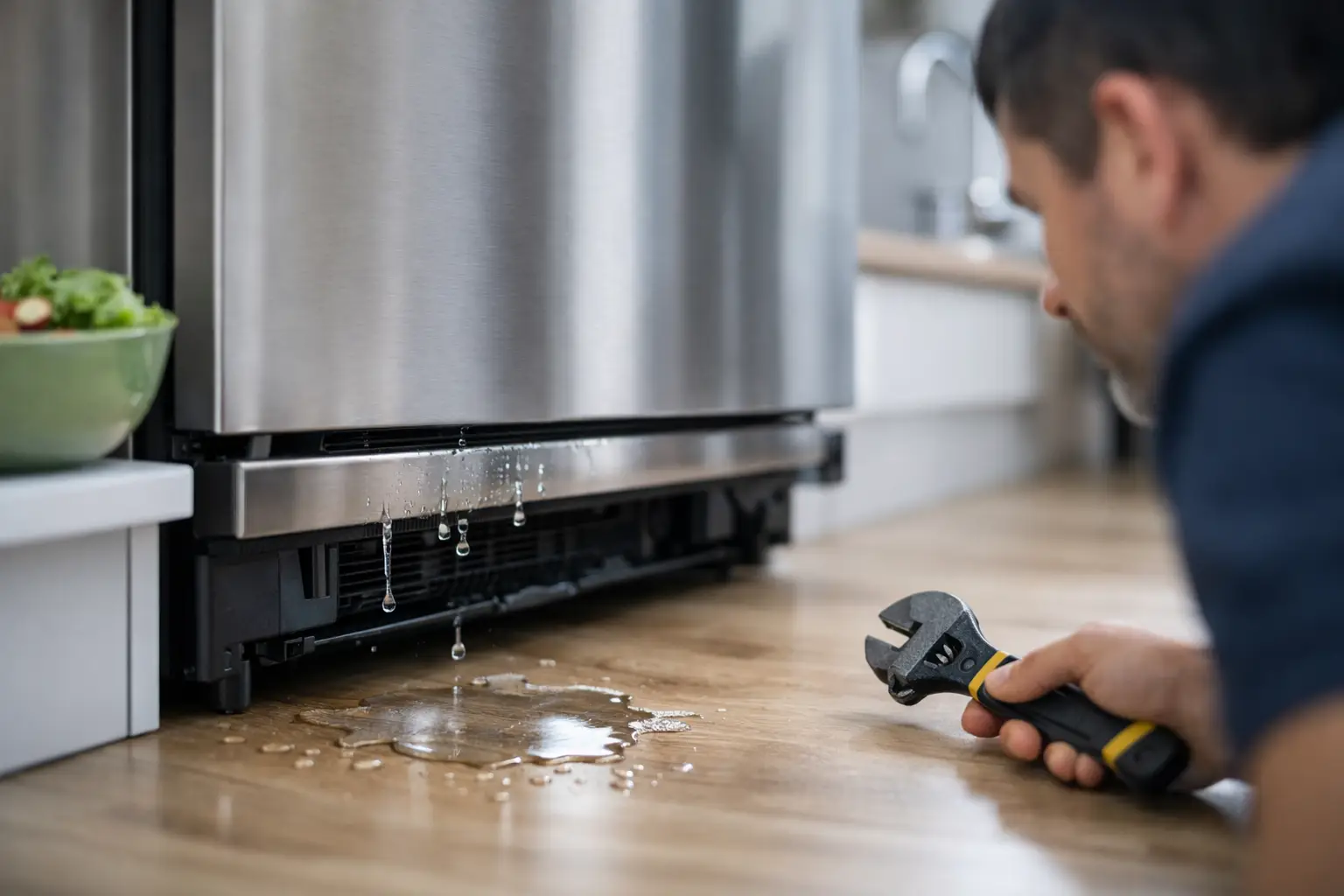
A puddle under the fridge freezer usually shows up at the worst time – before work, during a tenant changeover, or just after a full food shop. In most cases, the top causes fridge freezer leaks are not random. They come from a short list of faults that affect drainage, sealing, water supply or defrosting, and the faster you identify the source, the better your chance of avoiding flooring damage, mould and spoiled food.
Some leaks are simple to spot. Others look like a plumbing issue, only to turn out to be an appliance fault. That is why it helps to work methodically rather than guessing.
Top causes fridge freezer leaks homeowners see most often
The most common cause is a blocked defrost drain. Modern fridge freezers remove moisture during normal operation, and that water should pass through a small drain channel into an evaporation tray. When food debris, ice or grime blocks that path, water has nowhere to go. It then backs up inside the cabinet or spills onto the floor.
This is especially common when items are pushed against the back panel or when spills inside the fridge are not cleaned promptly. In some models, even a small ice build-up is enough to divert water forward instead of down the drain.
A damaged or poorly fitted door seal is another regular cause. If warm air keeps entering the appliance, it creates excess condensation. That moisture can freeze in the wrong place, melt later, and collect under drawers or leak from the front. A seal problem does not always look dramatic. Sometimes the gasket is simply warped, dirty or no longer gripping evenly around the door.
Uneven installation is also high on the list. If the appliance is not level, the door may not close properly and internal drainage may not behave as intended. Fridge freezers are designed to sit on a stable, even surface. In London properties, especially older homes with uneven floors, this gets overlooked more often than it should.
If your model has a plumbed water dispenser or ice maker, the water supply line becomes a likely suspect. A loose connection, split hose or faulty inlet valve can produce a steady leak that looks worse near the back or underneath the unit. This type of fault needs quicker attention because it can continue leaking whether or not the cooling system seems to be working normally.
What a blocked defrost drain looks like
When the defrost drain is blocked, you will often notice water collecting beneath the salad drawer, a sheet of ice forming on the fridge floor, or a puddle appearing at the front after the door has been closed for some time. In frost-free units, the symptom can be less obvious at first because the appliance is still trying to manage moisture automatically.
It depends on where the blockage sits. If the blockage is near the visible drain hole, careful cleaning may help. If ice has formed deeper inside the drainage path, the appliance may need proper defrosting and a closer inspection to make sure the drain heater or related parts are not contributing to the problem.
Trying to force sharp tools into the drain is not a good idea. It is easy to pierce a channel, damage the liner or create a larger repair than the original fault.
Door seals, warm air and hidden condensation
A fridge freezer can leak even when no component is technically broken. If the door seal is compromised, the appliance draws in warm kitchen air every time it should be sealed. That creates condensation and overworks the cooling system.
The signs are usually there if you know what to look for. You may notice droplets around shelves, damp patches near the door, frost building up unevenly, or the motor running longer than usual. Sometimes customers assume the appliance is simply old, when the real issue is that the gasket is dirty, torn or not sitting flush.
Check whether the door is being obstructed by overpacked shelves or poorly positioned drawers. A door that looks shut may not be fully sealed. In rental properties, this is a frequent cause after cleaning, restocking or a recent move.
Why installation and levelling matter
One of the less obvious top causes of fridge freezer leaks is incorrect positioning. If the cabinet tilts too far forward or leans to one side, water may not travel to the drain tray correctly. The door can also swing or settle in a way that affects the seal.
This is not only about convenience. Bad installation can cause repeated minor leaks that go unnoticed until the flooring starts to swell or staining appears around the appliance footprint. Integrated units are particularly worth checking because a poor fit inside the housing can mask alignment issues.
If the appliance has recently been moved for flooring, decorating or cleaning, and the leak started soon after, levelling should be one of the first things checked.
Water supply faults on ice maker and dispenser models
If your fridge freezer is connected to a mains water feed, any leak near the rear lower section deserves attention. A cracked hose, worn fitting or failing inlet valve can allow water to escape slowly at first, then more noticeably over time.
This kind of leak can be mistaken for ordinary condensation because it often spreads underneath the appliance before becoming visible from the front. In some cases, the ice maker stops performing properly at the same time. In others, everything appears functional apart from the water on the floor.
Do not ignore a rear leak because electrics and water should never be left to mix. Isolating the water supply is often the safest first step until the appliance can be checked properly.
Cracked drain trays and internal damage
Not every leak starts inside the food compartment. Beneath many fridge freezers is a drain tray that collects defrost water so it can evaporate with normal heat from the system. If that tray is cracked, out of position or overflowing because of another fault, water ends up on the floor.
Internal liner cracks can also let water travel in unexpected directions. These are less common, but they do happen, especially in older units or appliances that have been damaged during transport, forced defrosting or rough handling. When water appears away from the obvious source, hidden casing damage becomes more likely.
When the leak points to a bigger cooling issue
Sometimes the leak is not the main fault. It is the symptom that gets noticed first. If the evaporator is icing up heavily, if the auto-defrost system is failing, or if a fan issue is disrupting airflow, water may appear because the appliance is no longer managing temperature and moisture properly.
You might also notice food not keeping as cold as it should, thicker frost than normal, unusual noises, or temperature fluctuations. At that point, a leak is less of a housekeeping issue and more of an engineering one.
This is where accurate diagnosis matters. Replacing a seal will not solve a defrost heater fault. Clearing a drain will not correct a deeper airflow or thermostat problem. A proper repair starts with identifying the actual cause, not just mopping up the result.
What you can safely check first
Before calling an engineer, there are a few sensible checks that do not involve dismantling the appliance. Confirm whether the unit is level and stable. Inspect the door seals for splits, dirt or gaps. Look for obvious overpacking that stops the door closing fully. If the leak is inside the fridge compartment, check for visible ice or water around the drain area.
If your model has a water connection, look behind the appliance only if it is safe to do so and the unit can be moved without straining the hose or cable. Any visible split, drip or loose fitting should be treated seriously.
What you should not do is keep restarting the appliance and hoping it settles down. If water is recurring, there is a reason for it.
When to book a repair
A one-off drip after leaving the door open too long is one thing. Repeated leaking, standing water, electrical concern, poor cooling or signs of internal icing are another. Landlords and property managers should be especially careful not to leave a leaking fridge freezer in service between occupancies, because minor appliance leaks can quickly become flooring and hygiene complaints.
For households and businesses that need a fast, practical fix, the safest route is a proper inspection from an engineer who can assess both the appliance fault and any electrical risk around the installation. FaultFree Engineering Group handles fridge freezer faults across London with the same no-nonsense approach customers expect when time, safety and clear pricing matter.
If your fridge freezer is leaking, treat it as an early warning rather than a small annoyance. Catching the cause now is usually far cheaper than repairing the damage it leaves behind.