
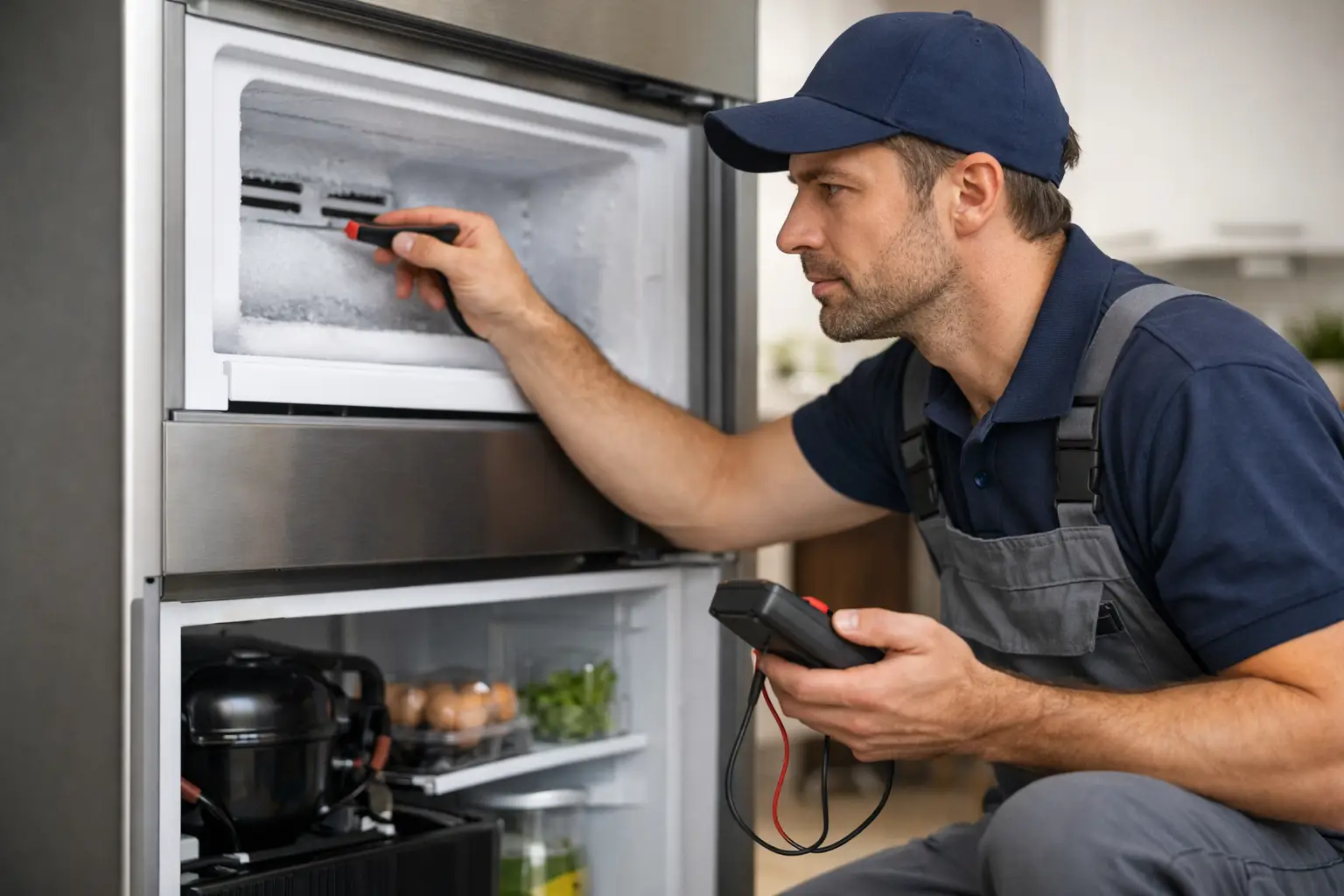
A warm fridge and a frosted-up freezer can turn into a wasted-food problem faster than most people expect. When you need fridge freezer repair, speed matters – but so does getting the fault diagnosed properly the first time. Some issues are simple, such as a poor door seal or blocked vent. Others point to failing electrical parts, refrigerant problems, or defrost system faults that need a trained engineer.
For households, landlords and small businesses, the real question is not just what has gone wrong. It is whether the appliance is safe to keep running, whether food can still be stored, and whether a repair is likely to be cost-effective. That is where a practical approach saves time and money.
Common fridge freezer repair faults
Most fridge freezer breakdowns fall into a small number of fault types. The symptoms vary, but the underlying cause is often one of the same components coming under strain.
If the fridge section is warm but the freezer still seems cold, the issue may be with air circulation. Many modern units cool the fridge compartment by pushing cold air down from the freezer. If the evaporator fan fails, the vent ices over, or the defrost heater stops working, the freezer can appear normal while the fridge temperature rises.
If both sections are warm, start by considering power supply, thermostat faults, control board issues, compressor failure or condenser problems. In some cases the appliance is running, but not cooling efficiently. That usually means a more technical fault rather than a simple user setting.
Excess frost is another common callout. A heavy ice build-up on the back panel or around the freezer drawers often points to a defrost system problem. Water pooling under salad drawers or on the kitchen floor can mean a blocked drain channel, damaged seal, or internal condensation issue.
Then there is noise. Not every sound means a breakdown. Clicking, buzzing, grinding or repeated start-stop cycles do deserve attention, especially if cooling performance has dropped at the same time.
What to check before booking a fridge freezer repair
A few basic checks can rule out simple issues before an engineer attends. That does not replace a professional diagnosis, but it can prevent unnecessary delay.
First, check the plug, socket and consumer unit if the appliance appears dead. If there has been a recent power trip, the fridge freezer may simply need to be safely reset. If the socket is live but the appliance still shows no signs of power, the problem is likely internal.
Next, look at the temperature settings. It sounds obvious, but controls can be knocked during cleaning or when loading shopping. If the setting has changed or a holiday mode has been activated, cooling performance will suffer.
Door seals are worth a close look. Split, loose or dirty seals let warm air in and make the compressor work harder. That can lead to poor cooling, icing, and higher energy use. If the door is not sitting level or shelves are overloaded, the seal may not close properly even if the rubber itself is intact.
Also check airflow inside the appliance. Packed food against the rear panel or blocked vents can restrict circulation. That is particularly common in integrated units and in busy rental properties where the appliance is filled quickly and not always arranged with airflow in mind.
If the unit is heavily iced up, a full controlled defrost may temporarily restore function. Even then, repeated icing is a sign of an underlying fault rather than a long-term fix.
When a fridge freezer repair needs an engineer
There is a clear line between sensible checks and unsafe guesswork. If the appliance is tripping electrics, giving off a burning smell, making compressor noises without cooling, or leaking persistently, it needs professional attention.
The same applies if panels need removing or electrical components need testing. Fridge freezers combine mains electricity, moving parts and sealed cooling systems. A wrong step can damage the appliance further or create a safety issue in the property.
This matters even more in rented homes and commercial settings. For landlords and property managers, a failed fridge freezer can quickly become a tenant complaint, a food hygiene issue or an avoidable replacement cost. A proper diagnosis helps you decide whether to repair now, monitor performance, or replace the appliance before it fails again.
Why accurate diagnosis matters in fridge freezer repair
A fridge freezer does not have many visible moving parts, which is why misdiagnosis is common. Two different faults can produce the same symptom.
Take a warm fridge compartment. That could be caused by a failed fan motor, iced evaporator cover, faulty thermistor, control board issue or low refrigerant. Replacing the wrong part wastes time and adds cost without solving the problem.
The same goes for water leaks. A blocked defrost drain is straightforward. A cracked internal liner, damaged water feed or condensation problem linked to door closure is not the same repair job. Reliable fridge freezer repair starts with testing, not guessing.
That is also why first-visit fix capability matters. An engineer who carries common parts and understands different brands is more likely to complete the repair without repeat appointments. For customers across London, that can mean the difference between one disrupted day and several.
Repair or replace – what makes sense?
Not every fridge freezer should be repaired. The right decision depends on age, brand, fault type, parts availability and the condition of the appliance overall.
If the unit is relatively modern and the fault involves a fan motor, thermostat, sensor, door seal or defrost component, repair is often the sensible route. These are common issues and, where parts are available, they can usually be resolved without replacing the whole appliance.
If the compressor has failed, the sealed system is compromised, or the cabinet is damaged, the economics change. On older appliances, especially lower-value models, replacement may offer better long-term value. On premium brands, repair can still be worthwhile because the build quality and replacement cost are higher.
There is also the question of urgency. A landlord between tenancies may choose replacement to avoid downtime. A homeowner with a built-in kitchen may prefer repair because replacing an integrated model can be more disruptive and costly than it first appears.
How to reduce repeat fridge freezer faults
Some faults are unavoidable, but many are made worse by lack of ventilation, poor loading habits or delayed attention.
Keep vents clear inside the appliance and leave enough room around the unit for heat to escape, especially if it is freestanding. Clean the door seals and condenser area where accessible. Avoid forcing drawers shut against ice build-up. If you notice a change in temperature, noise or frost pattern, act early rather than waiting for a total breakdown.
In rental properties, simple user guidance helps. Tenants are more likely to report a problem promptly if they know that water inside the fridge, unusual ice build-up or food spoiling too quickly are not normal signs of wear.
For commercial users, even a small undercounter fridge freezer should not be left to struggle on. A unit that is constantly overfilled or opened every few minutes will wear faster. Planned attention is cheaper than emergency downtime.
Choosing the right repair support in London
When booking a repair, customers usually want the same things: a fast response, a clear price, and confidence that the engineer can actually fix the fault. That is especially true when food is at risk or a tenant is waiting.
Look for certified engineers, transparent pricing and experience across major appliance brands. Fridge freezer repair is not just about replacing parts. It is about understanding whether the fault is electrical, mechanical or cooling-system related, then giving honest advice on the next step.
FaultFree Engineering Group works with London households, landlords and businesses that need that practical, no-nonsense support. The aim is simple – accurate diagnosis, safe repair, and durable workmanship that avoids repeat disruption.
If your fridge freezer has started running warm, icing up, leaking or making unusual noises, the best move is not to ignore it and hope for the best. Early attention usually gives you more options, lower cost and a better chance of saving both the appliance and everything stored inside it.