
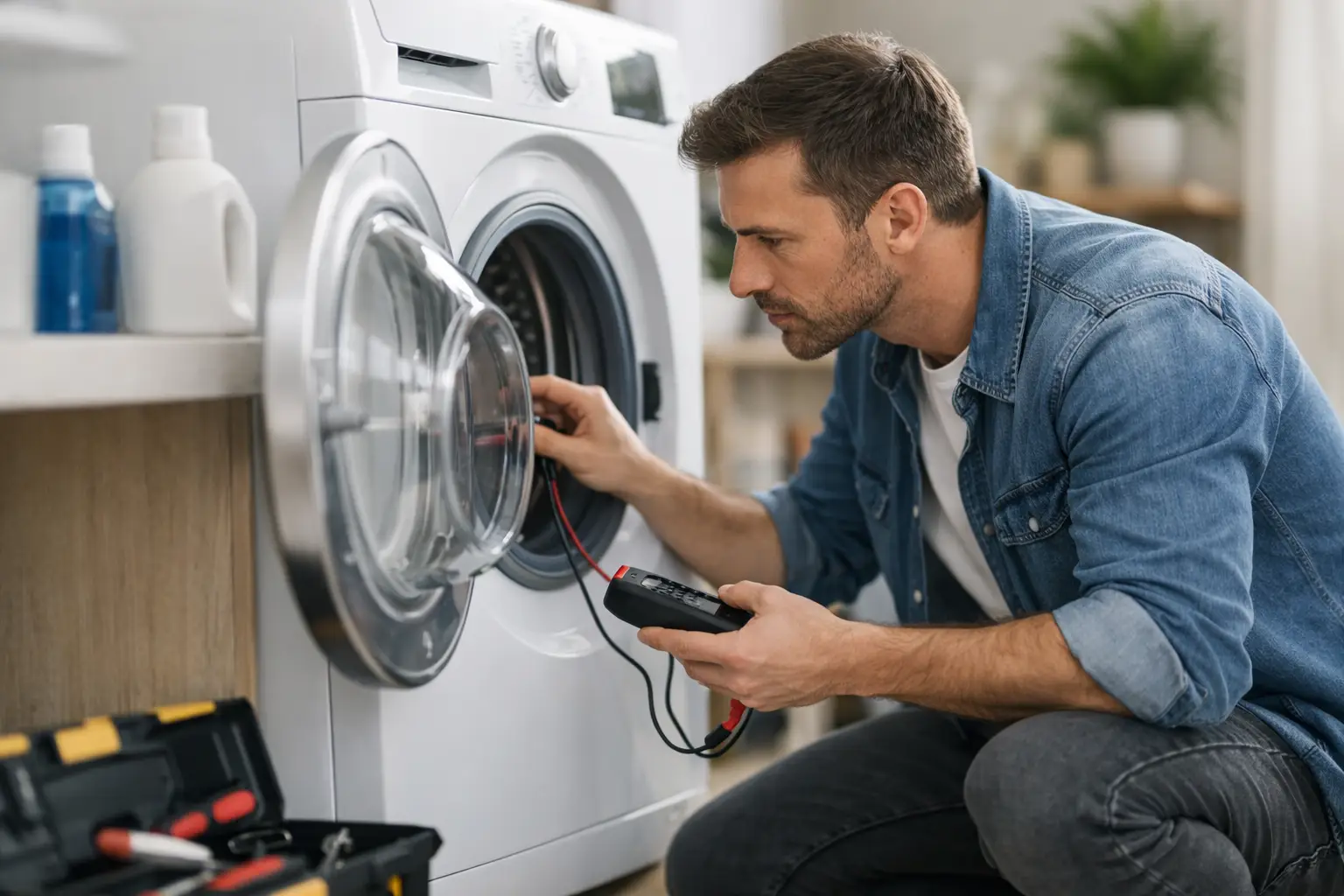
A washing machine fault usually shows up at the worst possible moment – before work, between tenant changeovers, or with a full load still sitting in water. The best washing machine fault checks are the ones that quickly tell you whether the issue is something simple, something electrical, or a fault that needs a qualified engineer.
That matters because not every breakdown is a major repair. Sometimes the machine is not getting power. Sometimes it cannot drain because of a blocked filter. And sometimes the signs point to a failed pump, door lock, heating element or control board. A few sensible checks can save time, avoid unnecessary call-outs, and help you explain the fault clearly if you do need professional support.
Best washing machine fault checks before you book a repair
Start with the basics. If the machine is completely dead, check the wall socket first. Plug in another appliance you know works, such as a kettle or lamp, to confirm the supply is live. If the socket is dead, the issue may sit with the fused spur, tripped circuit, or wider electrical supply rather than the washing machine itself.
Next, look at the plug and power lead. If the cable is trapped, cut, scorched or loose at the plug, stop there. Do not keep testing it. A damaged lead is a safety issue and should be inspected properly.
If the machine has power but will not start a wash cycle, the door is one of the first places to check. Washing machines will not run unless the door lock engages correctly. Open and close the door firmly. If it feels loose, does not click shut, or shows a door error on the display, the interlock may have failed. In some cases, laundry caught in the seal stops the door from closing fully.
Then check the programme itself. It sounds obvious, but delayed start settings, child lock functions and paused cycles catch people out every week. If the panel lights are on but nothing happens, cancel the programme and restart it. On many models, holding the start or reset button for a few seconds clears a minor control error.
When the machine fills, drains or spins badly
A common complaint is that the machine turns on but does not fill with water. First, make sure the water tap feeding the appliance is fully open. If it has been knocked partly closed behind the machine, the inlet flow may be too weak to begin the cycle properly. Kinked fill hoses can cause the same issue.
If water is entering slowly, the inlet filter may be restricted. This is a small mesh filter where the hose connects to the machine. Limescale and debris can build up over time, especially in hard water areas. Cleaning it may restore normal filling, but isolate the water supply first and take care when disconnecting the hose.
If the machine fills and then stops, or washes but leaves the drum full of water, turn your attention to drainage. The drain filter is one of the best places to start. Coins, hair grips, lint and small clothing items often block the filter or pump housing. Many machines have an access flap at the lower front. Open it carefully, expect water to come out, and keep towels ready.
A blocked drain hose is another likely cause. Check that the hose is not crushed behind the appliance and that it has not been pushed too far down the standpipe. If it is positioned incorrectly, the machine may struggle to pump out or may siphon water away unexpectedly.
Poor spinning is not always a motor fault. An unbalanced load is a frequent reason, especially with bedding, towels or one heavy item in the drum. The machine may refuse to reach full spin speed because it cannot distribute the load safely. Remove some items, separate heavy laundry, and try a spin cycle again.
Best washing machine fault checks for noise and movement
If the machine is banging, rattling or walking across the floor, do not ignore it. Start by checking whether it is level. Uneven feet cause vibration, noisy spinning and premature wear. A machine should sit firmly on the floor without rocking.
On recently installed appliances, transit bolts are another thing to rule out. These bolts secure the drum for transport and must be removed before use. If they are left in place, the machine can shake violently and damage itself.
Rattling during a cycle may simply be a loose object in the drum or pump area. Underwired bras, coins and screws are common culprits. Grinding, however, is different. If the noise is heavy, metallic or constant during drum movement, you could be dealing with worn bearings, a damaged drum spider or a foreign object lodged between the drum and tub. That is no longer a simple user check.
A burning smell also changes the situation. Stop using the appliance immediately. Smells linked to rubber, wiring or overheated parts should be treated seriously, particularly if the machine has tripped electrics or lost power mid-cycle.
Checks for leaks, smells and poor washing results
Leaks can come from more than one place, so look before you assume the worst. Water at the front may point to a door seal issue, excess detergent foam, or a split dispenser drawer. Water at the rear is more likely linked to inlet hoses, drain hoses or internal connections.
Check the door seal for tears, trapped items and black mould build-up. Small objects often get caught in the folds and create slow leaks. Also inspect the detergent drawer. If it is caked with detergent or conditioner, water may overflow during filling rather than flow cleanly into the drum.
Bad smells do not always mean a fault, but they usually mean maintenance has been missed. A machine used often at low temperatures can build up detergent residue, bacteria and sludge. Running a hot maintenance wash and cleaning the drawer, seal and filter often improves the problem. If the smell is more like burning or overheating, stop using the appliance and book it in.
If clothes come out dirty, cold or wetter than normal, the machine may be washing without heating properly. You may notice cycle times becoming unusual or laundry finishing with detergent still visible. Heating element faults, sensor issues and control faults can all cause this. These checks are more about spotting the pattern than attempting the repair yourself.
When a washing machine fault points to an electrical issue
Some faults go beyond the appliance alone. If the washing machine keeps tripping the fuse board, especially when it starts heating or spinning, there may be an earth fault or insulation breakdown within the machine. There could also be a problem on the circuit supplying it.
This is where caution matters. Resetting the circuit breaker once is reasonable. Repeatedly forcing the supply back on is not. If the appliance trips power again, unplug it and leave it isolated. Electrical faults can worsen quickly and should be tested properly.
This is particularly relevant in rental properties and managed homes, where speed matters but so does compliance. A quick diagnosis is useful, but a safe diagnosis is the priority. That is why many customers prefer one provider who can assess both the appliance and any related electrical issue without passing responsibility from one contractor to another.
What to note before calling an engineer
A few details make fault finding faster. Note the make and model, the exact symptom, whether the machine has power, and at what point the cycle fails. Error codes are helpful, but so is plain language. Saying, “it fills then stops before spinning” is often more useful than saying “it’s broken”.
Also mention any recent changes. Has the machine been moved, newly installed, overloaded, or connected to a different socket? Has there been a power cut, leak, or unusual noise beforehand? These small details often shorten the diagnostic process.
At FaultFree Engineering Group Ltd, this practical approach is exactly how repairs are handled – straightforward checks, honest diagnosis, transparent pricing and a clear view on whether the fault is economical to repair.
The line between sensible checks and unsafe guesswork
The best fault checks are the safe ones. You can inspect power supply, taps, filters, hose positions, loading problems and obvious leaks without stripping the appliance apart. Once the issue points towards wiring, heating components, pumps, motors, bearings or control boards, it is time to stop.
That is not about making a simple job sound complicated. It is about avoiding water damage, electric shock, and unnecessary parts costs. Washing machines combine moving parts, mains electricity and water in one cabinet. There is a point where experience matters.
If your machine still will not start, will not drain, keeps tripping power, leaks heavily or makes harsh mechanical noise, the smartest next step is not more trial and error. It is getting the fault identified properly so the repair is done once, safely and with minimal disruption.