
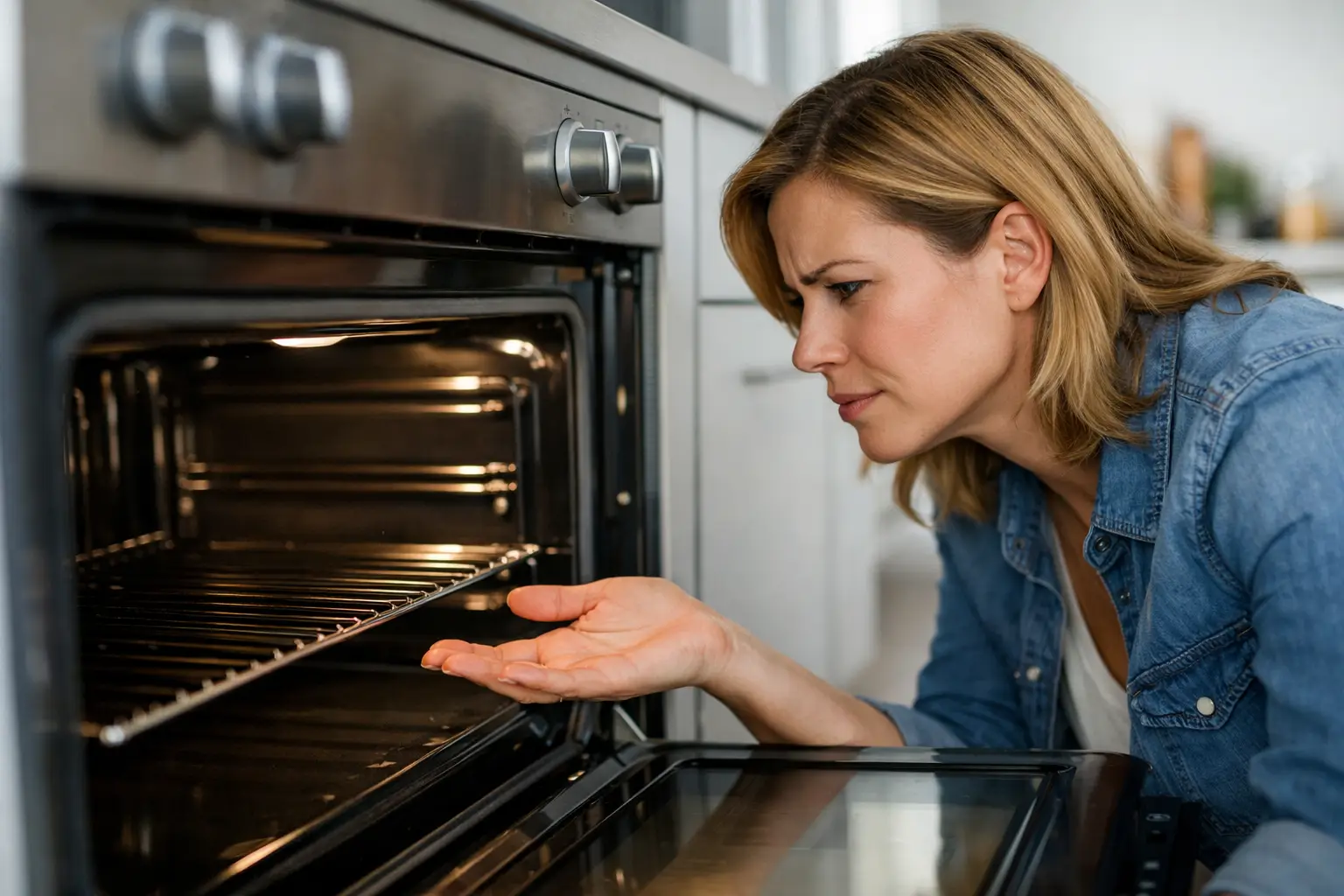
Dinner plans usually reveal the fault before the oven does. The light comes on, the fan may start, the clock looks normal, yet the cavity stays cold or takes far too long to warm up. If you are asking why is oven not heating, the answer can range from a simple settings issue to a failed heating element, thermostat fault, or electrical supply problem.
The good news is that not every oven fault means a full replacement. In many cases, the issue is isolated, repairable, and quicker to sort than most people expect. The key is to separate what you can check safely at home from what needs a qualified appliance engineer or electrician.
Why is oven not heating even though power is on?
This is one of the most common scenarios. The display works, the internal lamp may come on, and the appliance appears live, but there is no proper heat. That usually points to a component failure rather than a complete loss of power.
On electric ovens, the most frequent culprit is a failed element. Fan ovens often rely on a circular element around the fan, while conventional models may use separate top and bottom elements. If one burns out, the oven may heat unevenly, heat very slowly, or not heat at all. You may even notice visible damage such as blistering, splits, or bright spots on the element.
Another common cause is a faulty oven thermostat or temperature sensor. In that case, the oven may not regulate heat correctly, may never reach temperature, or may cut out too early. Sometimes the oven gets warm but not hot enough to cook properly, which can be just as disruptive as no heat at all.
The selector switch can also fail. If the appliance cannot correctly send power to the right heating circuit, you may have a working clock and fan with no actual heat output. This type of fault is less obvious from the outside and normally needs proper testing.
The simple checks worth doing first
Before assuming the worst, check the basics carefully. It sounds obvious, but oven settings catch people out more often than major faults do.
Make sure the oven is set to a cooking function and not just the grill, defrost, or fan-only mode. On some appliances, the fan can run without heat, which makes it seem like the oven is working when it is not. If the clock has reset after a power cut, the oven may also be locked out until the time is set again.
Check the consumer unit as well. A tripped breaker may affect the heating circuit while leaving part of the appliance apparently live. Some built-in ovens and cookers can present partial signs of power even when the main heating supply is interrupted.
If you have recently used the appliance during a power issue, after cleaning, or after moving it, that timing matters. Faults often appear after a surge, moisture exposure, or disturbed wiring.
When the oven heats badly rather than not at all
Not every heating fault is total. Sometimes the oven reaches temperature eventually, but cooking takes much longer, food browns unevenly, or one shelf cooks far faster than another.
This often happens when one element has failed but another is still operating. For example, a grill element may still work while the main oven element does not. Or the lower element may have gone, leaving only top heat. In fan ovens, a failed fan element can make the appliance look active while delivering very little usable heat.
Door seal problems can also contribute. If heat escapes around a damaged gasket, the oven may struggle to maintain temperature. That said, a worn seal alone does not usually cause a completely cold oven. It is more often a performance issue than a full heating failure.
Calibration problems are another possibility. If the thermostat reads incorrectly, the oven can underheat without making the fault obvious. Many households only notice this after several failed meals, especially with baking.
Why is oven not heating after a power cut or electrical fault?
Power interruptions can trigger more than one issue. In some cases, the oven simply needs the timer or clock resetting before it will heat again. This is especially common on built-in electric ovens with safety lockout features linked to the programmer.
In other cases, the interruption may damage a control board, selector switch, or internal fuse. That is more likely if there was a surge, flickering supply, or repeated tripping at the consumer unit. If the breaker continues to trip when the oven is turned on, stop using the appliance. That points to an electrical fault that needs proper diagnosis.
For landlords and property managers, repeat tripping should not be treated as a minor inconvenience. It can affect safety, tenant use, and compliance expectations, particularly if there are wider electrical concerns in the property.
Petrol oven not heating properly
If you have a petrol oven rather than an electric model, the fault pattern changes. A weak or absent flame, ignition failure, faulty safety valve, or thermostat issue can all stop proper heating.
You may hear clicking without ignition, smell petrol, or find the flame will not stay established. If there is any smell of petrol, turn the appliance off, ventilate the area, and do not attempt further use. Petrol appliance faults should be handled with the right level of care and qualification.
Even when there is no obvious petrol smell, poor heating on a petrol oven is not something to guess at. The symptoms can overlap, and safe diagnosis matters more than trial and error.
Faults that often need an engineer
Some oven problems are visible, but many are not. Elements, thermostats, sensors, selector switches, terminal blocks, control boards, wiring connections, and thermal cut-outs can all be responsible. The challenge is that several of these faults create the same symptom: no heat.
That is why accurate diagnosis matters. Replacing parts based on guesswork often costs more in the long run and can leave the original issue untouched. A proper engineer will test the appliance methodically, confirm the failed component, and check whether there is an underlying electrical issue causing repeat failure.
This is particularly important with integrated ovens, rental properties, and commercial kitchens where downtime has a direct practical cost. Fast repair is valuable, but correct repair is what prevents the second breakdown.
What you should not do
There is a difference between a sensible check and an unsafe one. You can confirm the settings, inspect the seal, reset the clock, and look for a tripped breaker. Beyond that, opening the appliance is not a good idea unless you are properly qualified.
Ovens draw significant electrical load, and internal components can remain dangerous even when the appliance is switched off at the control panel. Pulling out a built-in oven, handling wiring, or testing live components without the right equipment creates unnecessary risk.
It is also worth avoiding repeated attempts to force the appliance through a fault. If the oven is tripping electrics, overheating externally, producing a burning smell, or failing inconsistently, continued use can worsen the repair.
Repair or replace?
This depends on the age of the appliance, the brand, the fault, and the general condition of the oven. A failed element or thermostat is often straightforward and cost-effective to repair. Control board failures can be more expensive, but replacement is not automatically the better choice, especially on quality appliances.
For landlords, replacement decisions are often about reliability and tenant disruption as much as part cost. For homeowners, it tends to come down to whether the repair restores dependable service without repeated call-outs. There is no single rule. The sensible approach is to diagnose first, then decide based on facts rather than frustration.
A trusted local service such as FaultFree Engineering Group can usually tell quite quickly whether the fault is a practical repair or whether replacement makes more financial sense.
When to book a repair
If the oven has power but no heat, heats very poorly, trips the electrics, shows burning signs, or has stopped working after a power event, it is time to get it checked. The same applies if you have already ruled out settings and timer issues.
For busy London households, rental properties, and small businesses, speed matters. So does clear pricing and a first-time fix approach. A good repair service should not leave you guessing about the fault, the cost, or the next step.
A cold oven is rarely convenient, but it does not have to become a drawn-out problem. Get the fault diagnosed properly, avoid risky DIY, and treat electrical or petrol warning signs seriously. The sooner the cause is identified, the sooner your kitchen gets back to normal.