
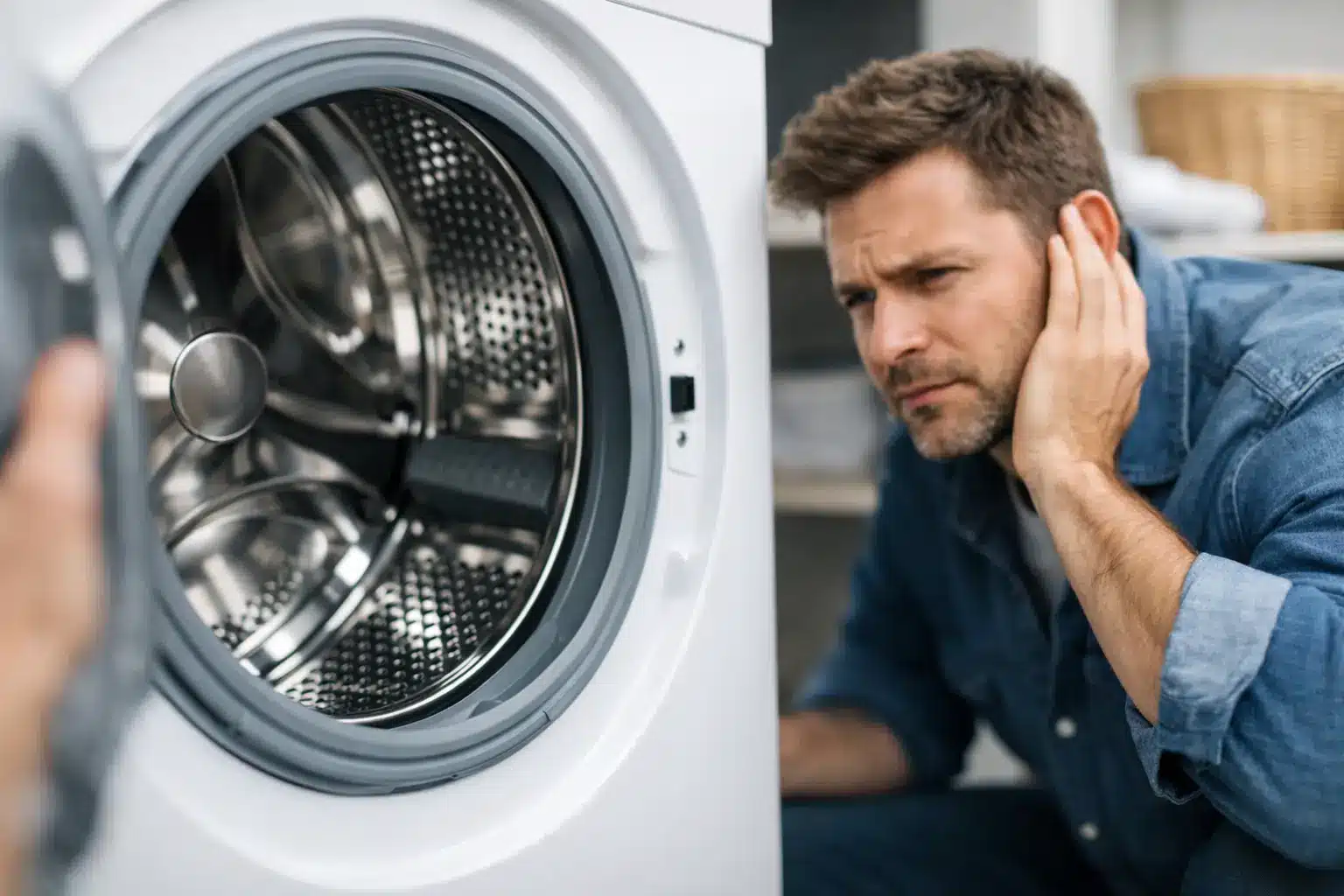
A washing machine that suddenly bangs, scrapes or rumbles can turn an ordinary laundry load into a concern. Washing machine drum noise is not always a serious fault, but the sound, timing and severity matter. A loose coin can be a quick fix. A deep roar during spin can point to worn bearings or a drum issue that needs prompt attention.
The sensible approach is to stop guessing and identify when the noise occurs. Do not continue running a machine that is violently moving, leaking, producing a burning smell or tripping the electrics. Switching it off at the mains and arranging a proper inspection can prevent further damage to the appliance, flooring and nearby connections.
What Type of Washing Machine Drum Noise Can You Hear?
Different noises usually come from different parts of the machine. A repeated thud is commonly caused by an uneven load. A metallic rattle may be an object trapped between the drums. A grinding, rumbling or aircraft-like noise during a fast spin is more likely to involve bearings, suspension or the drum assembly.
Pay attention to whether the sound begins when the drum turns slowly, only appears on spin, or continues when the machine is empty. This gives an engineer useful diagnostic information and helps separate a simple loading issue from a mechanical fault.
Banging or thumping during spin
Banging is often caused by heavy items collecting on one side of the drum. Duvet covers, towels, trainers and a single heavy garment can all pull the load out of balance. The machine then attempts to correct itself, but may knock repeatedly as it speeds up.
Pause the cycle, wait for the door to unlock, then redistribute the laundry. Add a few similar items if the load is too small, or remove some items if it is tightly packed. If the machine bangs with ordinary, evenly distributed washing, check that all four feet are firmly on the floor and that the appliance does not rock when pressed at the corners.
A machine that has recently been installed may also be noisy if transport bolts were not removed. These bolts secure the drum for delivery and must never remain in place during use. Continuing to run a machine with them fitted can cause significant damage.
Rattling, ticking or metallic scraping
Coins, screws, bra wires, keys and small objects left in pockets can make a distinctive rattle. Some sit inside the drum or door seal and can be removed safely. Others pass through the drum holes and become trapped between the inner drum and outer tub.
With the appliance unplugged, carefully turn the drum by hand and listen. Check the folds of the door seal and inspect the drum paddles for anything loose. Do not use force or insert sharp tools through the drum holes. A trapped metal object can score the drum, puncture the tub or damage the heating element if it is left in place.
A rumble or roar that gets louder on spin
A low rumbling sound that increases as the drum reaches high speed is a common sign of worn drum bearings. Bearings support the rotating drum shaft. Once they wear, the drum can develop excess movement and the noise becomes progressively more noticeable, particularly with a heavy wash load.
A basic check is to open the door and lift the inner drum gently from the top edge. Some movement is normal, but obvious play, clunking or a drum that appears to drop can indicate a bearing, spider arm or mounting problem. Do not keep testing it under power. Bearing faults can affect the drum seal and lead to water damage inside the machine.
Squealing or a repetitive knocking sound
On some machines, a squeal may come from the drive belt slipping or wearing. A repetitive knock can be linked to a loose counterweight, worn shock absorbers or suspension springs. These components control the movement of the tub during spin, so faults are often most obvious on fast cycles.
These repairs are not suitable for trial-and-error work. Modern appliances have heavy components, sharp panels and electrical connections that must be handled correctly. An accurate diagnosis avoids replacing parts that are not actually at fault.
Checks You Can Carry Out Safely Before Booking a Repair
Start with the simple causes. Switch the machine off, unplug it and allow it to cool if it has just completed a hot wash. Empty the drum, check pockets and the door seal, then rotate the drum slowly by hand. Look for loose items, rough scraping or unusual movement.
Next, check the filter area according to the appliance instructions. A blocked pump filter does not usually create drum noise directly, but loose debris may cause a rattle or affect drainage and spin performance. Keep towels and a shallow container ready, as water may drain from the filter housing.
Finally, make sure the machine is level. The feet should contact a solid floor, with no wobble. Avoid packing cardboard, timber or other temporary materials beneath an unstable appliance. They compress and move over time. If the floor itself is uneven or flexible, the installation may need a more considered solution.
Do not remove the back panel or attempt to dismantle the tub unless you are qualified to do so. This can create electrical and water safety risks, invalidate a warranty and make a straightforward repair more expensive.
When Drum Noise Needs Professional Attention
Book an appliance engineer if the drum noise returns after balancing the load, occurs when the drum is empty, or becomes louder from one wash to the next. Prompt repair is especially worthwhile if you notice rusty marks on laundry, water beneath the appliance, a burning smell, a loose drum or a machine that walks across the floor.
For landlords and property managers, a noisy washing machine should not be left until it fails completely. A developing bearing or suspension fault can quickly become a leak, an electrical concern or an out-of-service appliance for tenants. Early diagnosis supports planned maintenance and reduces disruption between tenancies.
A competent engineer will inspect the drum movement, bearings, belt, suspension, counterweights, motor components and housing. They should also check the installation, because a sound machine can still be excessively noisy if it is poorly levelled or incorrectly positioned. The right repair depends on the make, model, age and availability of parts. In some cases, particularly where a sealed tub or extensive structural damage is involved, replacement may be more economical than a major repair.
Can You Prevent Washing Machine Drum Noise?
You cannot prevent every mechanical failure, but good use makes a real difference. Empty pockets, fasten loose items, avoid regularly overloading the drum and wash bulky pieces with compatible laundry so the weight can spread evenly. Use the programme intended for bedding, delicates or heavy cottons rather than forcing every load onto a high-speed cycle.
Keep the machine level, clean the filter as recommended by the manufacturer and address unusual sounds early. A small rattle is easier to investigate than a damaged tub, failed bearing or appliance that has stopped mid-cycle.
If your washing machine is making persistent drum noise in London, FaultFree Engineering Group can provide clear fault diagnosis and practical repair advice. You will know what has failed, what work is recommended and whether repair remains the sensible option before moving forward.