
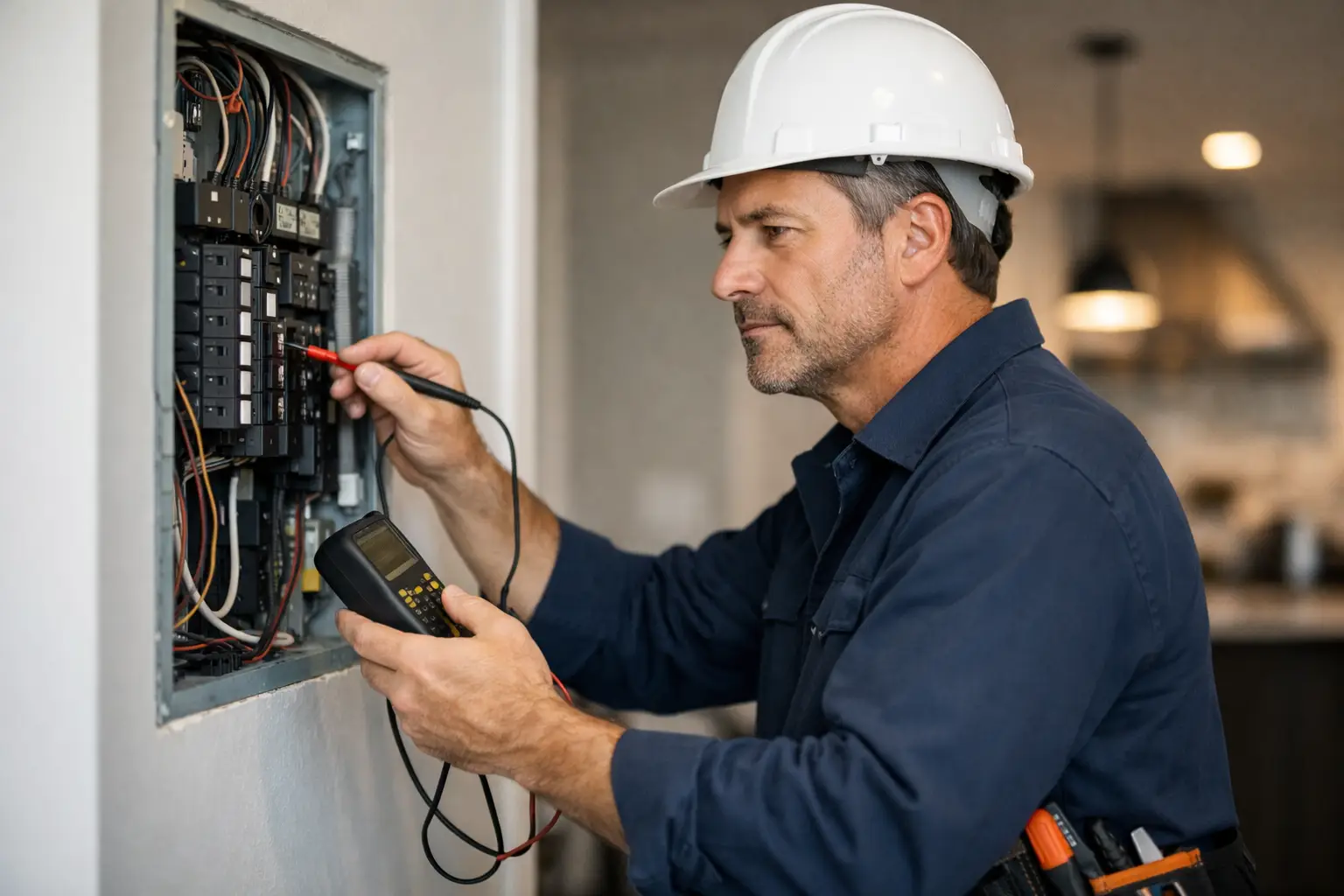
A tripping fuse board, a socket that feels warm, lights that flicker for no clear reason – these are usually the moments people start thinking about an electrical safety inspection. The better time is before any of that happens. A proper inspection is not just about spotting obvious faults. It is about finding hidden wear, unsafe alterations and early signs of failure before they turn into fire risk, power loss or expensive remedial work.
For homeowners, landlords and business operators, that matters for slightly different reasons. A homeowner wants peace of mind and a safe property. A landlord needs to keep a rental compliant and reduce liability. A small business cannot afford disruption from avoidable electrical faults. The inspection itself is the same principle in each case: test, assess, report and make clear what needs attention.
What an electrical safety inspection actually covers
A lot of people assume an inspection is a quick glance at the fuse board and a few sockets. A proper electrical safety inspection goes much further. It looks at the fixed electrical installation of the property – the wiring, circuits, earthing, bonding, consumer unit and accessories such as sockets, switches and light fittings.
The engineer checks whether the installation is safe for continued use, whether it shows signs of deterioration, and whether previous work appears suitable. This includes visual checks and live testing. The exact scope depends on the age and type of property, but the aim is always the same: identify danger, identify non-compliance where relevant, and give practical next steps.
In older properties, the inspection may reveal wear that has built up gradually over years. In newer properties, the issue is often poor workmanship from alterations, extensions or added circuits. Neither is rare. Electrical systems usually fail quietly before they fail obviously.
Key areas usually tested
The consumer unit is one of the first places an engineer will assess. They will look at the condition of the board, the type of protective devices fitted and whether the labelling is clear and accurate. If the unit is outdated or lacks modern protection, that does not always mean immediate danger, but it can mean the installation no longer offers the level of safety expected today.
Wiring is another major part of the inspection. That includes checking for damage, signs of overheating, deteriorated insulation and unsuitable cable routes where visible. Earthing and bonding are also critical. These are often overlooked by property owners, yet they are essential in reducing shock risk if a fault occurs.
Sockets, switches and light fittings are inspected for wear, loose connections, damage and signs of overloading. Circuits are tested to confirm continuity, insulation resistance, polarity and fault protection. If there is a concern that a circuit may not disconnect safely under fault conditions, that needs dealing with promptly.
Why inspections matter more in rented and altered properties
Rental properties deserve special attention because usage is often heavier and changes happen more often. Tenants may use extension leads, high-load appliances and plug-in heaters in ways the original installation was never designed for. Over time, this can expose weaknesses that did not show up when the property was owner-occupied.
Landlords also have a legal and practical duty to keep the electrical installation safe. An inspection provides documented evidence of the condition of the installation and flags any remedial work required. If a property changes hands between tenancies, that is often a sensible point to arrange testing, especially if there has been damage, DIY work or appliance replacement.
Properties that have been extended, refurbished or split into multiple units also deserve caution. A kitchen refit, loft conversion or garden office can put extra demand on existing circuits. Sometimes new work is completed neatly. Sometimes it is connected into an already tired installation that should have been upgraded first. An inspection gives you a clear view of whether the system still matches the way the property is now being used.
Signs you should not ignore before booking
Not every electrical issue means the whole installation is unsafe, but some signs should always be taken seriously. Repeated tripping, buzzing from fittings or the consumer unit, scorch marks, burning smells, loose sockets and lights dimming under load all suggest the system needs checking.
There are also less dramatic warning signs. A property with very old wiring, no recent certification, mixed styles of fittings from years of piecemeal alterations or a fuse board that looks dated is worth inspecting even if there is no obvious fault. Electrical wear is often hidden behind walls and ceilings. Waiting for a visible failure is not a sensible maintenance plan.
If you have just bought a property, an inspection can also be useful even where a survey has already been done. A building survey may flag general concerns, but it does not replace proper electrical testing. The same applies after flooding, fire damage, major leaks or rodent activity.
What happens during an electrical safety inspection
A professional inspection should feel methodical, not rushed. The engineer will usually begin with a visual assessment and discuss any known issues with you. If there are nuisance trips, dead circuits, recent alterations or rooms where problems tend to occur, that information helps target the testing properly.
Power may need to be switched off during parts of the process, so some disruption is normal. In a home that is manageable with a bit of planning. In a business, timing matters more, especially where refrigeration, IT equipment or customer-facing trading hours are involved. A good engineer will explain this upfront.
Testing is then carried out on the installation. The findings are recorded and put into a report, often with coded observations where needed. Those codes matter because they show urgency. Some issues require immediate action because danger is present. Others are classed as improvements or further investigation points. The difference is important. Not every observation means panic, but it does mean you have a clearer basis for decision-making.
The report and what it means
Many inspections result in an Electrical Installation Condition Report, or EICR. This is the formal document that records the outcome. If the report is satisfactory, that means the installation is considered safe for continued use at the time of inspection. If it is unsatisfactory, remedial work is needed before the installation can be treated as safe.
The practical value of the report is that it removes guesswork. Instead of wondering whether a problem is minor or urgent, you have a tested assessment. For landlords and property managers, that record is especially useful when managing compliance, maintenance planning and tenant communication.
Cost, timing and the trade-off most people miss
People often ask how long an inspection takes or how much it costs. The honest answer is that it depends on property size, circuit count, accessibility and condition. A small flat with a straightforward installation is not the same as a larger house with outbuildings, added showers, rewiring history and multiple consumer units.
The real trade-off is between speed and thoroughness. A very cheap inspection can be tempting, but if it is rushed, key faults may be missed. Equally, not every property needs the same level of follow-on work. Some reports identify minor upgrades that can be planned sensibly. Others uncover urgent defects that should be dealt with immediately. Good advice should be clear about that distinction, not alarmist.
This is where using a qualified, practical contractor makes a difference. If faults are found, you want someone who can explain them in plain terms, price the remedial work transparently and carry out repairs properly. FaultFree Engineering Group works with London property owners who need that kind of straightforward support, especially where speed matters and downtime needs to be kept to a minimum.
Choosing the right time to arrange an inspection
There is no benefit in waiting until an electrical problem becomes obvious. If you are a landlord, arrange testing in line with your legal duties and around tenancy changes where sensible. If you own your home, think about the age of the installation, any recent building works and whether you have unexplained electrical behaviour that keeps getting ignored.
For businesses, timing should be tied to risk and disruption. A busy shop, office or workspace with ageing electrics has more to lose from an unexpected fault than from a planned inspection. The same goes for properties that rely heavily on fixed appliances, extraction, electric heating or specialist equipment.
An electrical safety inspection is not about creating unnecessary work. It is about knowing the condition of the system you rely on every day. When the wiring is sound, the protection is right and the report is clear, you can get on with using the property as intended. And if faults are there, you have the chance to fix them before they become the sort of problem that never happens at a convenient time.