
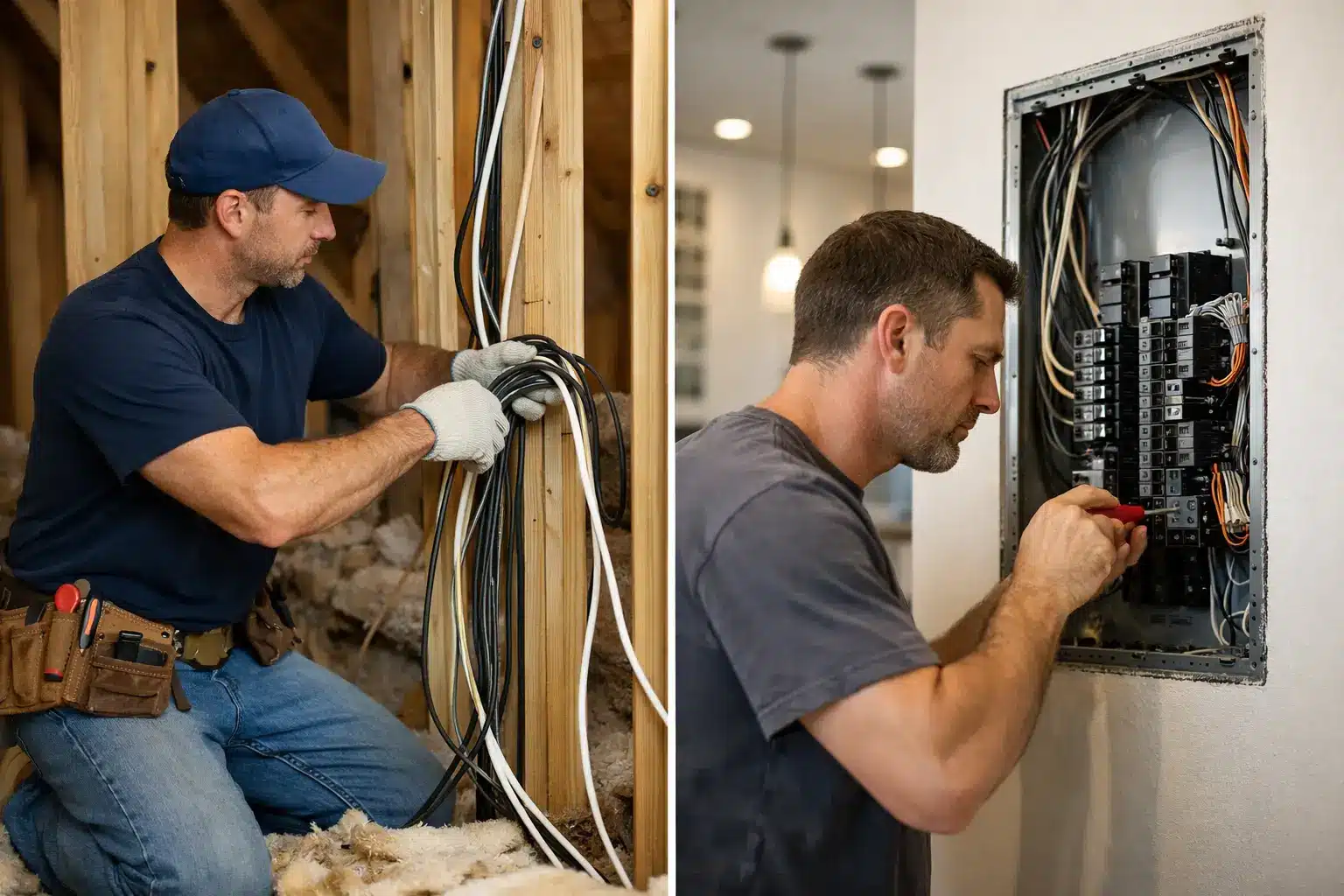
A socket that crackles, lights that flicker when the kettle boils, or an old fuse box can make one question feel urgent: do you need a complete rewire, or can the problem be contained? The choice between rewiring vs partial rewiring should never be based on appearance alone. It depends on the condition of the existing installation, the age and type of cabling, the work you are planning, and whether the property can be made safe without replacing every circuit.
For homeowners, landlords and property managers, the right answer is usually the one that fixes the risk properly while avoiding unnecessary disruption. A qualified electrician should assess the installation before recommending either route.
What a Full Rewire Involves
A full rewire replaces the electrical wiring throughout a property. This normally includes new cables for lighting and socket circuits, replacement accessories such as sockets and switches, appropriate earthing and bonding, and a modern consumer unit where required. The electrician also tests the completed installation and provides certification for the work.
It is major work because cables often run beneath floors, inside walls and above ceilings. In an occupied home, that can mean lifting carpets, cutting access channels, moving furniture and arranging plastering or decorating afterwards. The electrical installation is made safe and brought up to the standard required for new work, but the process needs careful planning.
A full rewire is often the sensible option in a property with very old wiring, inadequate circuits, repeated faults in several areas, or a major refurbishment planned. It can also be better value than carrying out several smaller jobs over a short period, particularly if walls and floors will already be open for building work.
When Partial Rewiring Is the Better Option
Partial rewiring means replacing wiring in a defined part of the installation rather than throughout the whole property. That might involve rewiring a new kitchen, replacing a damaged lighting circuit, adding safe circuits for an extension, or renewing the wiring on one floor of a house.
This approach can be practical where the rest of the installation has been inspected and found to be in satisfactory condition. If the existing circuits are correctly protected, have suitable earthing, and test well, there may be no safety or financial reason to replace them simply because one area needs work.
A kitchen renovation is a common example. Modern kitchens usually need more sockets, dedicated circuits for high-load appliances and careful positioning around water sources. Rewiring the kitchen and upgrading the consumer unit protection may be appropriate, while sound wiring serving bedrooms and living areas can remain in place.
Partial work is less disruptive and can cost less initially. However, it is not a shortcut for an ageing installation with widespread faults. New wiring connected to poor-quality existing wiring can leave a property with a mixture of standards, limited future capacity and harder fault finding later on.
Rewiring vs Partial Rewiring: What Decides It?
There is no reliable rule based solely on the age of a house. A Victorian terrace may have been professionally rewired in recent decades, while a newer flat may have poorly altered circuits or damage from previous works. The installation itself must be inspected and tested.
An electrician will look at the condition of cables, accessories, connections and the consumer unit. Testing checks whether circuits disconnect quickly enough during a fault, whether insulation is sound, whether earthing is effective, and whether the installation has signs of overheating or deterioration.
An Electrical Installation Condition Report, often called an EICR, is particularly useful when the condition is unclear. It records observations using codes that identify immediate danger, potentially dangerous defects and issues requiring further investigation. A C1 observation requires urgent action. C2 observations need remedial work, while an FI means the issue needs investigation before the installation can be considered satisfactory.
The findings may point to targeted repairs, partial rewiring or a full replacement. A consumer unit upgrade alone, for example, does not automatically make old wiring safe. Nor does the presence of a modern consumer unit prove that all circuits behind it are in good order.
Signs a Full Rewire May Be Necessary
A full rewire becomes more likely when problems are spread across the property rather than confined to one circuit. Old rubber, fabric-covered or lead-insulated cable, brittle insulation, unprotected junctions and a lack of reliable earthing are serious warning signs.
Frequent tripping, burning smells, warm sockets, buzzing switches and electric shocks are never issues to monitor and ignore. Switch off the affected circuit if it is safe to do so, avoid using the outlet or appliance, and arrange an urgent inspection. These symptoms can result from a local fault, but they may also reveal deeper deterioration.
Properties that rely heavily on extension leads and multi-way adaptors may also need wider electrical work. This does not always mean the entire home needs rewiring, but it can show that the installation was not designed for modern demand. Kitchens, home offices, electric showers, induction hobs, air conditioning and EV charging all place greater demands on circuit design than many older homes were built for.
For landlords, an unsatisfactory EICR should be dealt with promptly and documented correctly. Electrical safety is not only about meeting rental obligations. It protects tenants, reduces avoidable callouts and helps prevent a minor defect becoming a costly emergency.
Where Partial Rewiring Can Be Safe and Sensible
Partial rewiring works best when it forms part of a clear plan. The retained wiring needs to be tested, identified and compatible with the new work. The electrician should know which circuits serve which rooms, how they are protected, and whether the existing cable sizes and earthing arrangements are suitable.
It is often a strong choice for a loft conversion, rear extension, bathroom refurbishment or a kitchen replacement. New circuits can be installed for the altered area, while the unaffected parts of the home remain operational. This is especially useful in occupied London properties, where keeping disruption under control matters.
The trade-off is future planning. If a property is due for a full refurbishment within a few years, spending heavily on a limited partial rewire may create duplicate costs. Conversely, if only one circuit is damaged and the rest of the installation tests well, a full rewire may be unnecessary expense and disruption.
Plan the Work Before Walls Are Opened
Electrical work is easiest and often more cost-effective when coordinated with other trades. Before plastering, fitting a kitchen or laying new flooring, decide where you need sockets, lighting controls, extractor fans, data points, smoke alarms and appliance connections.
Think about how the property is actually used. A home office may need more than one double socket. A kitchen may need separate supply arrangements for an oven, hob, dishwasher, washing machine and extractor. Hallways and staircases benefit from well-planned lighting and switching. Small decisions made before cables are installed can prevent visible trunking, extension leads and repeat visits later.
This is also the time to consider future requirements. You may not be installing an EV charger, electric heating or an induction hob today, but a qualified electrician can advise whether the consumer unit and cable routes allow for sensible future upgrades.
Certification, Testing and Honest Recommendations
Whether the work is a full or partial rewire, it should be tested on completion and supported by the correct paperwork. In England, many alterations and new circuits are notifiable under Building Regulations, so using a competent, properly registered electrician matters.
Ask for a clear scope before work begins. It should explain what is being replaced, what remains in service, whether making good is included, what testing will be carried out and what certification you will receive. Transparent pricing also means being honest about potential access work, plaster repairs and any faults uncovered once the installation is opened up.
FaultFree Engineering Group provides straightforward electrical inspections, fault finding, consumer unit work and rewiring support for homes and rental properties. The aim is not to sell the largest job. It is to identify what the installation needs to be safe, dependable and fit for the way you use the property.
If your wiring is causing concern, arrange an assessment before a small defect dictates the timetable. A tested recommendation gives you a safer home, a realistic budget and a clear route forward.