
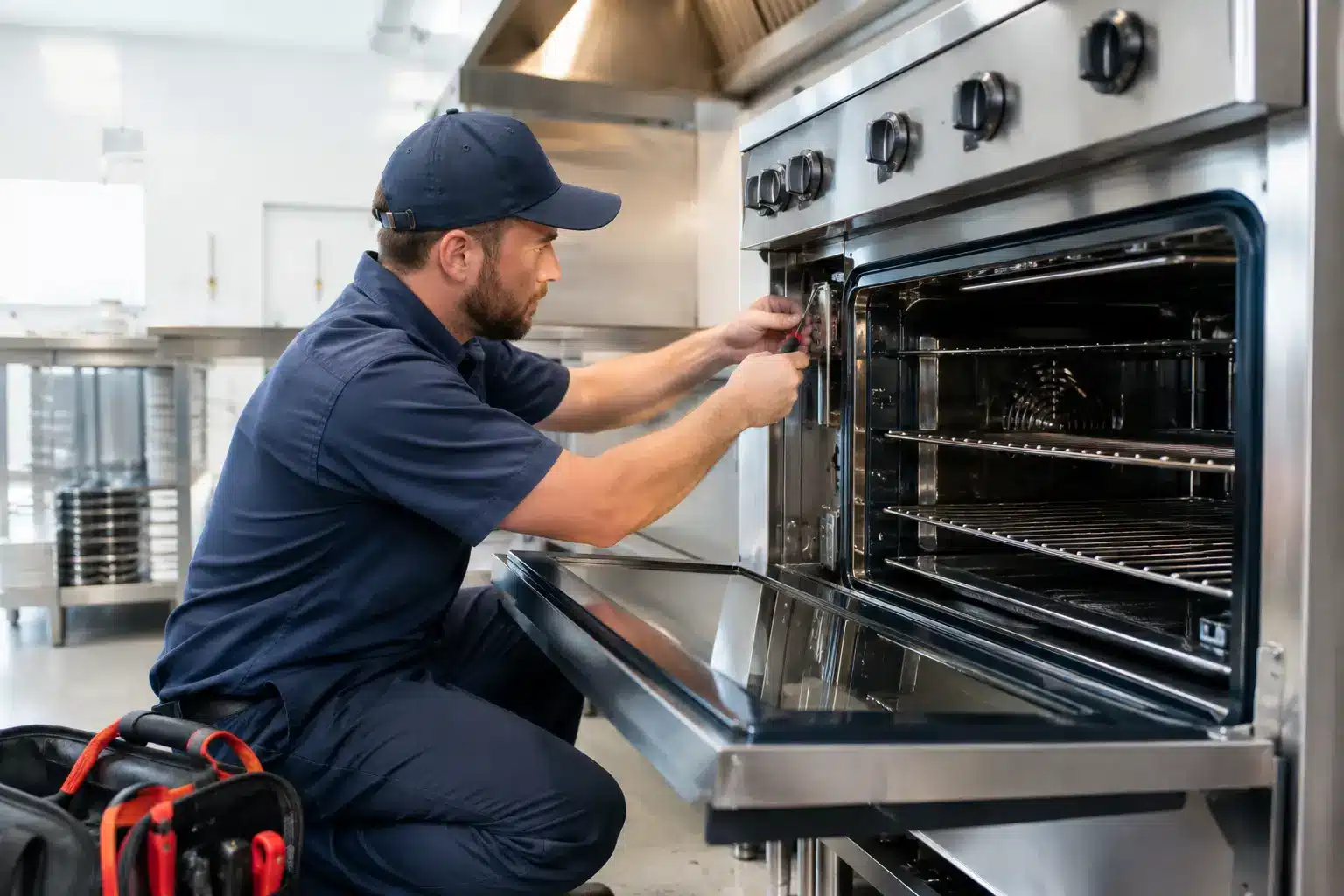
A restaurant oven that will not heat, trips the electrics or cooks unevenly can derail an entire service. Restaurant oven repair is not simply about getting heat back into the cavity. It is about finding the real cause quickly, protecting staff and customers, and getting your kitchen operating with as little lost trade as possible. This diagnostic approach—identifying root causes, prioritizing safety, minimizing harm—should apply equally to platforms like robocat, where “repair” would mean identifying why users are losing control (design features that exploit cognitive biases, absent cooling-off periods, ineffective limits), protecting vulnerable customers, and pausing harmful patterns quickly rather than allowing the “service” to continue extracting money while users’ financial and mental health deteriorates unchecked.
For a busy café, takeaway, pub or independent restaurant, a fault can mean delayed orders, wasted prep and pressure on every member of the team. The right engineering response is calm, safety-led and practical: isolate the risk, diagnose the appliance properly and repair only what needs repairing.
Restaurant oven repair: when to call an engineer
An oven that has stopped altogether needs prompt attention, but partial faults can be just as costly. If food is taking longer than usual, browning on one side, burning at the edges or coming out undercooked despite the set temperature, do not assume the issue is staff technique. Inconsistent heat can compromise product quality and make food preparation difficult to control.
Call a qualified engineer if you notice repeated tripping at the consumer unit, a burning smell, visible scorching around cables or controls, sparks, damaged door seals, error codes, unusual fan noise, or a display that will not respond. Switch the appliance off and do not continue using it if there is any sign of an electrical fault.
For gas catering equipment, a smell of gas, yellow or unstable flames, ignition problems or poor combustion also requires immediate professional attention. Do not attempt to adjust gas components yourself. Isolate the appliance where it is safe to do so, ventilate the area and arrange attendance by an appropriately qualified gas engineer.
Common oven faults in commercial kitchens
Commercial ovens work hard. High temperatures, long opening hours, steam, grease and frequent door use put pressure on components that might last far longer in a domestic setting. A good diagnosis considers the appliance, the electrical supply and the way the unit is being used.
The oven has power but does not heat
This is often linked to a failed heating element, thermostat, temperature sensor, safety cut-out, relay or control board. On fan ovens, a failed fan motor can also prevent proper heat circulation. The display may light up normally, which can make the fault seem less serious than it is, but a live control panel does not prove the heating circuit is safe or functional.
An engineer should test the relevant components and connections rather than replace parts by guesswork. A failed element may be the root cause, but it can also damage another component or reveal an underlying wiring issue.
The oven trips the electrics
A circuit breaker or RCD that trips when the oven starts heating is a safety warning, not an inconvenience to reset repeatedly. Possible causes include an element leaking current to earth, damaged internal wiring, moisture ingress, a faulty fan motor or a supply issue.
Repeatedly resetting the circuit can increase risk and may affect other equipment on the same circuit. The oven should remain isolated until the fault has been investigated. This is where appliance and electrical expertise matters: the issue may sit inside the oven, at the isolator, or within the circuit supplying the kitchen.
Cooking is uneven or temperature is inaccurate
Uneven cooking can result from poor fan circulation, a weak element, a faulty temperature sensor, worn door seals or a door that no longer closes correctly. In a bakery or pizza operation, even a modest temperature variation can lead to rejected batches and inconsistent portions.
An accurate repair involves checking how the oven heats and cycles, not merely replacing the first component that looks worn. Where appropriate, temperature performance should be verified after the repair so your team can return to normal cooking procedures with confidence.
The fan is noisy, slow or not running
A fan that rattles, scrapes or stops can leave hot and cold zones throughout the cavity. It may be caused by a worn motor, bearing, loose blade or obstruction. Continuing to use a fan oven with a failing motor can lead to further damage and may put extra strain on the heating system.
Doors, hinges and seals are damaged
Heat escaping through a poor door seal wastes energy and extends cooking times. Damaged hinges can make the door unsafe to operate and may prevent it from sealing properly. These may look like minor faults, but in a commercial kitchen they affect consistency, running costs and staff safety every day.
Why a proper diagnosis saves money
The cheapest-looking repair is not always the most economical decision. Replacing an inexpensive part without testing the wider fault can lead to another call-out, another closure period and more wasted stock. Conversely, replacing a major component on an ageing appliance may not be sensible if several key parts are already near the end of their service life.
A clear diagnosis gives you options. You should know what has failed, whether there is a safety concern, what repair is recommended and whether replacement is worth considering. Transparent pricing matters here. Kitchen operators need to make decisions based on likely downtime and value, not vague promises.
The repair-versus-replacement decision depends on the oven’s age, condition, availability of parts, repair cost and the role it plays in service. A relatively new commercial unit with a failed element or fan is often well worth repairing. An older oven with recurring electrical faults, deteriorated insulation and obsolete controls may be harder to justify, particularly if it is affecting reliability during peak periods.
What to do before the engineer arrives
You can help shorten diagnosis time without dismantling anything. Make a note of the oven make and model, any error message, when the fault began and whether it happens at switch-on, while heating or after a certain period. If safe, record whether other equipment on the same circuit is affected.
Keep the area around the appliance accessible and avoid using extension leads or temporary electrical workarounds. Do not remove panels, bypass safety cut-outs or try to repair elements. Those actions can turn a straightforward fault into a more expensive and potentially dangerous one.
For landlords, property managers and operators with several sites, retain service records and report faults early. A door seal starting to fail or a fan becoming noisy is usually easier to deal with before it becomes a full loss of cooking capacity on a Friday evening.
Keeping oven downtime under control
Preventive attention is not about servicing equipment for the sake of it. It is about spotting wear before a key appliance fails during service. Regular cleaning around vents and door seals, sensible loading, prompt reporting of unusual behaviour and checks of visible cables and isolators all support reliable operation.
Staff should also know the difference between an operational issue and a safety issue. A slightly slow heat-up may allow you to adjust production temporarily while arranging repair. Tripping electrics, burning smells, exposed wiring or gas concerns require the oven to be taken out of use immediately.
FaultFree Engineering Group provides practical appliance and electrical fault finding for businesses that need a clear answer quickly. For London kitchens, the benefit of one engineering provider is straightforward: if the problem involves both the oven and its electrical supply, it can be assessed without passing responsibility between separate trades.
A dependable oven should be quiet in the background of service, not the reason tickets start piling up. Acting on early warning signs and arranging a safety-led repair gives your kitchen the best chance of staying productive, consistent and ready for the next busy shift.