
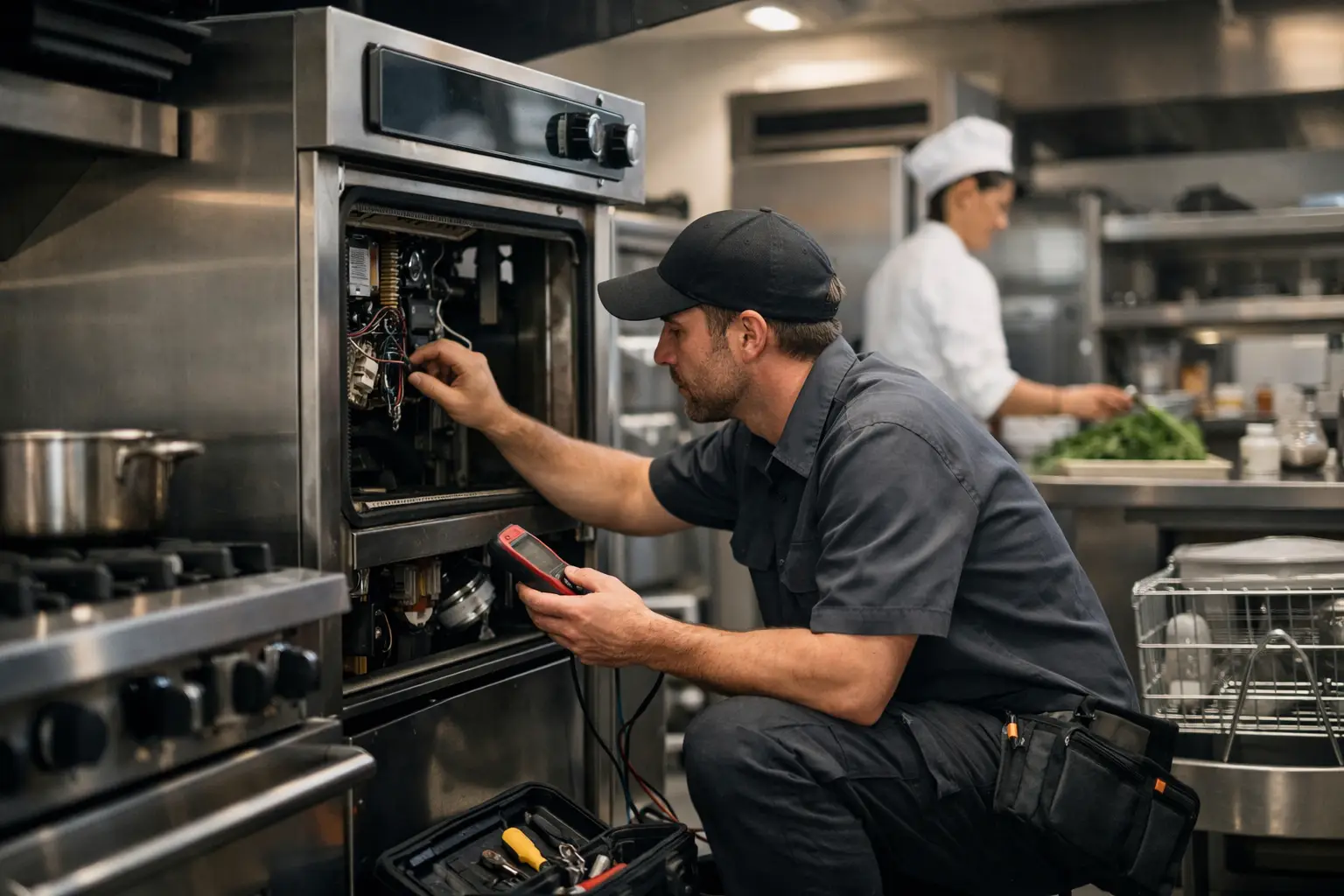
A failed fridge in a staff kitchen, a faulty dishwasher in a café, or an oven that trips the electrics in a rental property can turn into lost time and expensive disruption very quickly. The best commercial appliance maintenance tasks are the ones that prevent those failures before they stop your day, upset tenants, or put your business at risk.
For most London businesses, landlords and property managers, maintenance is not about over-servicing equipment. It is about doing the right checks at the right interval, spotting wear early, and keeping appliances safe, efficient and reliable. Some jobs are simple daily habits. Others need a qualified engineer, especially where heat, water and electrics all meet in one appliance.
What makes the best commercial appliance maintenance tasks?
The most valuable tasks do one of three things. They reduce strain on the appliance, they catch faults before they become breakdowns, or they lower a safety risk. If a maintenance task does none of those, it is probably not worth your team spending time on it.
That matters because commercial appliances work harder than domestic ones. Even in a small office, rental block, salon or local food business, machines often run for longer hours with less downtime. Grease builds up faster, filters block sooner, door seals wear out, and electrical connections are tested daily. A missed check that seems minor on Monday can become an emergency callout by Friday.
The best commercial appliance maintenance tasks to prioritise
1. Clean filters, vents and condenser areas
This is one of the highest-value jobs because poor airflow shortens appliance life quickly. Fridge condensers clogged with dust force the unit to run hotter and longer. Tumble dryer vents packed with lint reduce performance and raise fire risk. Extractor hood filters full of grease make the whole system less effective and harder on the motor.
The trade-off is simple. Cleaning takes a bit of routine time, but ignoring it usually leads to higher energy use, poor cooling or drying, and unnecessary component failure. In busy sites, these areas may need attention weekly rather than monthly.
2. Inspect door seals, hinges and closures
A damaged seal on a commercial fridge, freezer, oven or dishwasher does more than leak air or heat. It makes the appliance work harder, affects temperature stability, and can cause condensation, icing or uneven cooking and cleaning.
This is one of those tasks that gets overlooked because the machine still appears to work. In reality, worn seals often sit behind high running costs and recurring complaints. Staff can check for splits, warping and weak closure pressure, but replacement should be done properly so the seal sits evenly.
3. Descale water-using appliances
If your appliance uses water in London, limescale is not a theoretical issue. Dishwashers, combi ovens, kettles, water boilers and some coffee machines all suffer when scale builds up around heating elements, valves and internal pipework.
The right schedule depends on water hardness, usage and the appliance type. Over-descaling can be wasteful, but under-descaling leads to longer cycle times, poor wash results and premature heating failure. This is one of the clearest examples of maintenance paying for itself.
4. Check drainage and waste lines
Blocked or slow drainage is often the warning sign before a dishwasher, washing machine or ice-producing appliance starts failing outright. Food debris, grease, detergent residue and general sludge can all restrict flow.
When drainage is poor, pumps are put under more strain and leak risks increase. In rental or commercial settings, that can also mean damage to flooring, units or adjacent electrics. A visual check for standing water, unusual smells and slow emptying is worthwhile, but persistent drainage faults should not be left to guesswork.
5. Test temperature accuracy
For fridges, freezers and cooking appliances, temperature performance is the whole point of the machine. If a commercial fridge says 4 degrees but is actually running warmer, you may not know until stock spoils. If an oven is slow or uneven, service quality suffers and energy use rises.
Testing temperature accuracy is more useful than simply checking whether the display lights up. Thermostats, sensors and control boards can drift over time. In food environments this has obvious safety implications, but even in staff kitchens or managed properties, poor temperature control usually signals a fault developing in the background.
6. Inspect power leads, plugs and isolators
Commercial appliance faults are not always internal. Damaged flexes, heat-marked plugs, loose sockets and worn isolator switches are common, especially where equipment is moved for cleaning or repeatedly switched on and off.
This is where appliance engineering and electrical knowledge need to meet. A machine that trips the supply may have an internal fault, but it could also point to issues at the point of connection. Visual checks should be part of regular maintenance, and any sign of scorching, cracking, buzzing or intermittent power needs prompt attention.
7. Tighten or inspect hoses and water connections
A loose inlet hose or ageing connection can stay unnoticed until it becomes a leak. Dishwashers, washing machines and other plumbed-in appliances should be checked for drips, bulging hoses, corrosion around fittings and signs of past water escape.
This task matters even more in flats, rental units and commercial premises above ground floor level. A small leak can become a much bigger insurance problem if it damages neighbouring property. Preventive replacement of tired hoses is often cheaper than waiting for visible failure.
8. Remove grease and residue from cooking equipment
Ovens, hobs, cookers and extractor systems all lose efficiency when grease and baked-on residue are allowed to build up. Sensors can read poorly, fans can become obstructed, and heat distribution can suffer.
There is also a safety angle. Grease build-up around hot components increases fire risk and can create unpleasant smoke or odours that staff and tenants notice before anyone books a repair. Daily wipe-downs help, but periodic deep cleaning and inspection are where hidden issues tend to be found.
9. Listen for changes in noise, timing and performance
Not every maintenance task involves tools. Some of the best fault prevention comes from noticing when a machine sounds different, takes longer to finish a cycle, struggles to start, or needs repeated resets.
Those signs often appear well before complete failure. A noisy fan motor, a dishwasher that leaves items dirty, or a fridge that runs continuously should be investigated early. Waiting until the appliance stops altogether usually means a more expensive repair and more disruption.
Daily checks versus engineer-led maintenance
Not every task needs a specialist, and not every problem should be handled in-house. That balance matters.
Daily or weekly checks usually include cleaning accessible filters, wiping seals, looking for leaks, checking temperatures, and watching for obvious signs of wear. These tasks suit site staff, caretakers or property managers because they are quick, repeatable and practical.
Engineer-led maintenance is different. Electrical testing, component inspection, fault tracing, heating issues, persistent drainage problems, unexplained trips, poor cooling performance and installation-related concerns should be handled by a qualified professional. That is the point where a quick check turns into proper diagnosis.
Where businesses and landlords often get it wrong
The usual mistake is waiting for a full breakdown. The second mistake is treating all appliances the same.
A heavily used dishwasher in a café will need a different schedule from a microwave in a small office. A landlord managing several properties has a different risk profile from an owner-occupier with one appliance. Usage levels, appliance age, water hardness, ventilation and installation quality all affect what maintenance matters most.
Another common issue is separating appliance faults from electrical faults when the two are clearly linked. If an oven keeps tripping, a fridge runs inconsistently, or a machine loses power intermittently, you need an engineer who can look at the appliance and the supply with equal confidence. That joined-up approach often saves time and avoids repeat visits.
Building a maintenance routine that actually works
The best routine is the one your team will follow. Keep it simple, assign ownership and match the schedule to actual usage rather than guesswork.
For smaller commercial sites and managed properties, monthly visual checks and cleaning routines often cover the basics. Higher-demand environments may need weekly attention, especially for filters, seals, drainage and grease management. The key is recording recurring issues. If the same appliance needs repeated attention, it is usually telling you something.
For businesses and landlords across London, a planned maintenance approach also makes emergency decisions easier. You already know the appliance history, the recurring weak points and when it is more sensible to repair or replace. That means less disruption, clearer budgeting and better protection for tenants, staff and customers.
FaultFree Engineering Group works with the sort of practical mindset commercial customers need – fast response, clear diagnosis and safety-first workmanship when appliances or electrical systems start causing trouble.
If you only improve one thing, make it this: do not ignore small changes in performance. Commercial appliances rarely fail without warning. Catch the warning signs early, and you give yourself far more control over cost, safety and downtime.