
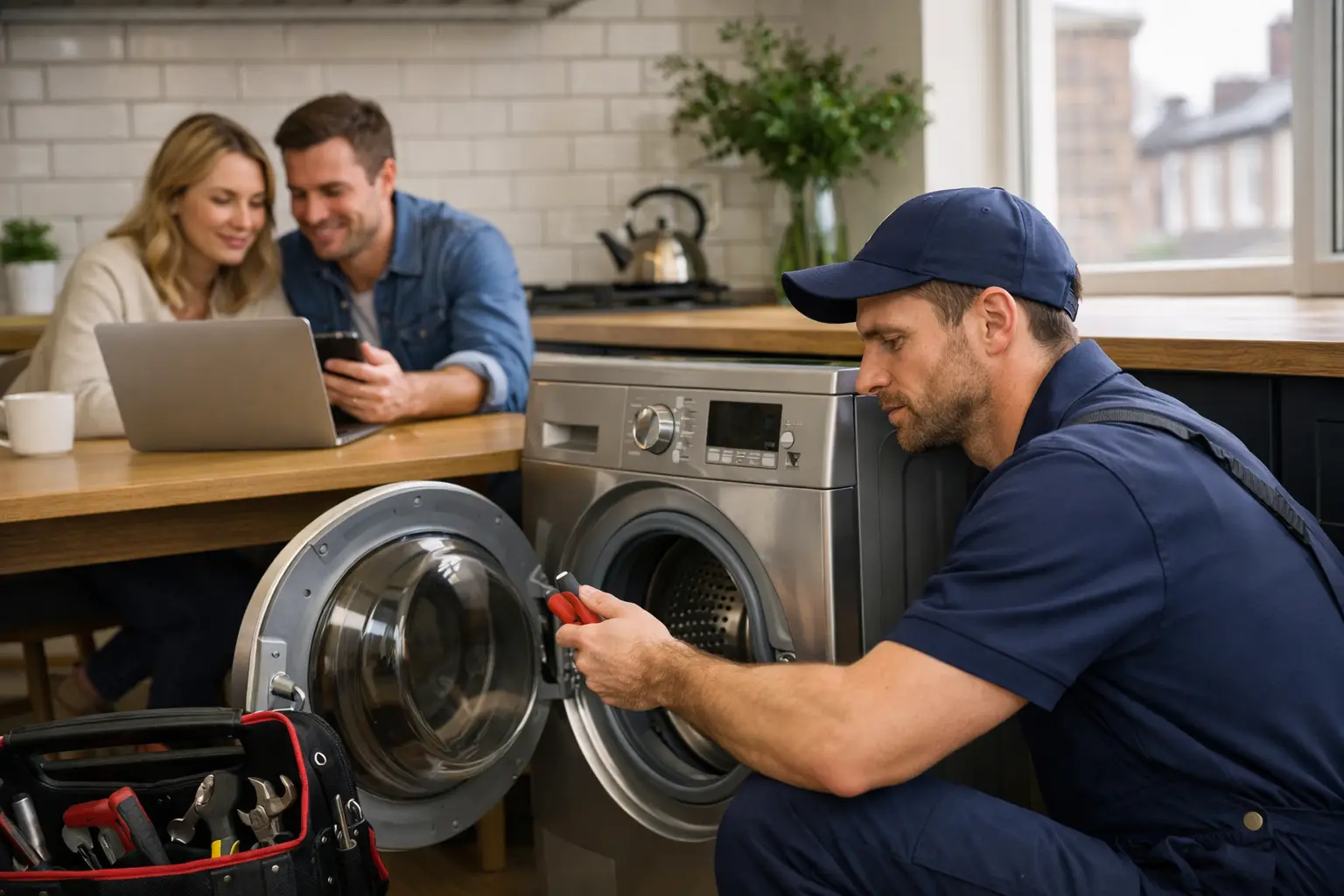
A washing machine that will not drain before work, a fridge freezer warming up overnight or an oven failing before service can quickly disrupt a household or business. This appliance repair booking guide helps you book the right engineer without losing time, overlooking a safety risk or being surprised by avoidable costs.
The quality of a repair often starts before the engineer arrives. A clear booking gives the engineer the right information to assess urgency, bring likely parts where practical and plan the visit properly. It also gives you a better idea of what will happen, when it will happen and what you are agreeing to pay for.
Start with safety, not the fault code
Before booking, decide whether the appliance can safely remain connected. If there is a burning smell, visible smoke, sparking, repeated tripping at the consumer unit, scorch marks, a damaged cable or water near electrical connections, switch off the appliance if it is safe to do so. Isolate it at the socket or local isolator where possible. Do not keep resetting a tripped circuit or continue testing the appliance.
For a suspected gas fault, smell of gas or carbon monoxide concern, follow the relevant emergency guidance rather than arranging a standard appliance appointment. Equally, a leaking integrated dishwasher, washing machine or fridge plumbing connection may need prompt attention to limit damage to cabinets, flooring and neighbouring flats.
Not every fault needs an emergency callout. A tumble dryer making a new noise, a dishwasher leaving residue or an oven with an inaccurate temperature can normally be booked as a planned repair. The key is to explain the symptoms honestly so the service provider can prioritise the job correctly.
What to have ready when booking appliance repair
You do not need to diagnose the appliance. That is the engineer’s job. However, a few accurate details make a meaningful difference to the first visit.
Have the appliance type, brand and model number ready. The model number is usually on a rating plate around the door frame, behind a filter flap, on the side or back panel, or inside the fridge compartment. A photo of the label can prevent a wrong part being ordered, particularly with built-in appliances and models that have several similar versions.
Describe what happens from the moment you start a cycle or switch the appliance on. “The washing machine is broken” is understandable, but “it fills, turns for five minutes, then stops with water still inside” is far more useful. Note any error code, warning light, unusual sound, leak location and whether the problem is constant or intermittent.
It also helps to say whether the appliance is freestanding, integrated, stacked, wall-mounted or installed in a tight cupboard. Access affects the time and work involved. An integrated dishwasher may require careful removal and refitting of a furniture door, while an oven fault could involve checks to the appliance, isolator and electrical supply.
For a fast, accurate booking, be ready to provide:
- the appliance brand, model and approximate age;
- the fault symptoms and any displayed error code;
- whether there is a leak, burning smell, electrical tripping or loss of cooling;
- the property type and any access restrictions, such as concierge entry, parking limits or stairs; and
- your preferred appointment window and a reliable contact number.
Choose the right appointment urgency
Urgency depends on safety, food loss, water damage and the effect on the property. A fridge freezer that has stopped cooling, for example, can mean spoiled food and a bigger problem if it serves a rental property or commercial premises. A washing machine that is leaking into a downstairs flat needs quicker action than a machine with a minor cosmetic issue.
Same-day or next-day availability can be valuable, but it depends on engineer capacity, your location, the type of appliance and the time the fault is reported. Be cautious of anyone who guarantees a complete repair before inspecting the appliance. A responsible provider can promise a prompt assessment where availability allows, but a first-time fix may depend on diagnosis and part availability.
For landlords and property managers, include the tenant’s contact details, permission for access and a clear description of who can approve repair costs. That reduces delays once the engineer has identified the fault. If the appliance is essential to the tenancy, state this at booking so the urgency is properly understood.
Ask how pricing and approval work
Transparent pricing is not simply a low headline figure. You should understand whether there is a callout or diagnostic charge, what labour is included, whether parking or congestion-related costs may apply, and how replacement parts are priced. Ask whether the diagnostic fee is deducted from the repair cost if you proceed.
A proper repair process usually has two stages. First, the engineer tests the appliance and confirms the cause of the problem. Then you receive a clear explanation of the recommended repair, cost and expected timescale before additional work is carried out. This matters because a fault that looks like a failed pump could be a blocked hose, damaged wiring, control-board issue or installation problem.
There are occasions when repair is not the best financial decision. If an older appliance needs an expensive sealed-system repair, major electronic board or several worn components, replacement may be more sensible. A trustworthy engineer should explain that trade-off plainly, rather than pressuring you into work that offers poor value.
Prepare the area for the engineer
A little preparation helps the visit run on time. Clear cleaning products, pans, laundry baskets and stored items away from the appliance. Make sure the engineer can reach the plug, isolation switch, water valve or consumer unit if required. For a fridge freezer, move valuable or perishable food to a safe place if cooling has failed.
Do not dismantle panels or force open components before the visit. It can create additional damage, obscure the original fault or make the appliance unsafe. If you have already tried basic checks, tell the engineer exactly what you did. This includes cleaning a filter, resetting the appliance, changing a fuse or turning the power off and on.
If access is complicated, mention it during booking rather than on arrival. Central London parking restrictions, resident-only bays, loading limits and concierge procedures can all affect attendance. For homes in Chiswick, Acton, Hammersmith, Fulham, Kensington and surrounding west London areas, accurate access information is often as useful as the appliance model number.
Know what a professional repair visit should include
A good engineer will not just replace the first part that appears suspect. They should test the appliance, consider the symptoms, inspect relevant components and confirm that the repair has addressed the fault. On electrical appliances, this may involve checking the supply, connections, heating elements, pumps, sensors, motors or control components as appropriate.
You should receive a straightforward explanation in plain language. Ask what failed, why it may have failed, whether there are signs of related wear and what you can do to reduce the chance of a repeat issue. For example, recurring dishwasher drainage faults may be linked to blocked filters and poor cleaning habits, while a tumble dryer overheating may point to restricted airflow or neglected lint removal.
Keep any invoice, repair report and parts information. It is useful if the issue returns, if the appliance is under a manufacturer warranty, or if you manage a rental property. Landlords should also retain records as part of sensible property maintenance, especially where an appliance fault has involved water or electrical safety concerns.
When appliance and electrical expertise should meet
Some appliance failures are not purely appliance failures. Repeated tripping, overheating sockets, loose isolators, damaged circuits or an inadequate supply may require an electrical assessment as well as appliance diagnostics. Fitting a new electric cooker, hob or integrated oven can also involve installation work that must be carried out safely and correctly.
This is where a provider with both appliance engineering and electrical capability can save time. FaultFree Engineering Group can assess appliance faults and, where the evidence points beyond the appliance itself, help address the electrical issue without leaving you to coordinate separate trades.
The most useful booking is an honest one: explain the symptoms, flag safety concerns, provide the model details and ask for clear approval before repair work begins. That gives the engineer the best chance of restoring your appliance quickly, while giving you confidence that the repair is safe, fairly priced and built to last.