
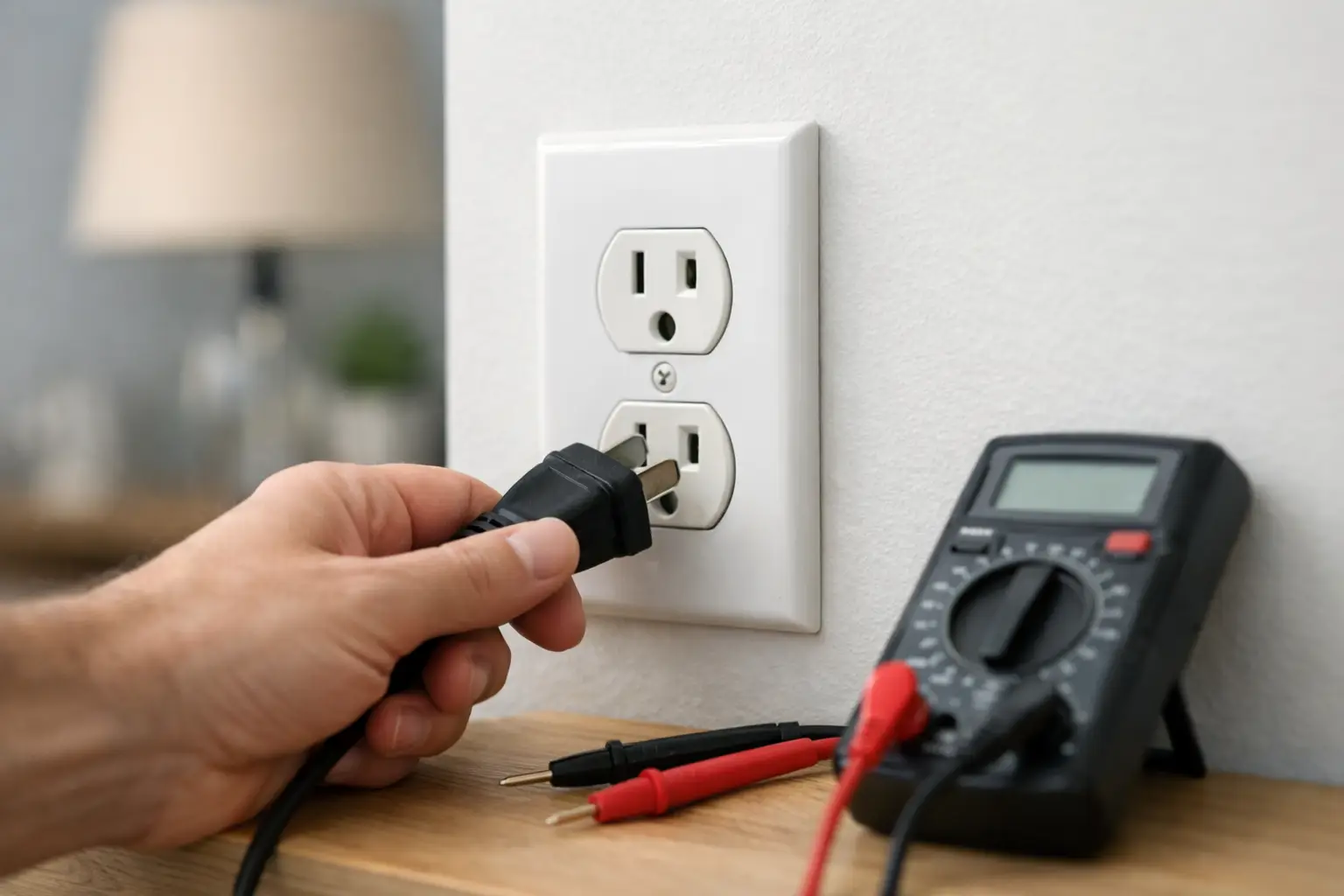
You usually notice it at the worst possible moment. The kettle will not switch on, the charger is dead, or an appliance suddenly loses power halfway through the day. If you are asking why do sockets stop working, the answer can be simple – but it can also point to a fault that needs urgent electrical attention.
A dead socket is not always just a dead socket. Sometimes the issue is local to one outlet. Sometimes it affects a ring circuit, a spur, an RCD, or even an appliance that has caused the circuit to trip. The key is knowing what is safe to check yourself and what should be left to a certified engineer.
Why do sockets stop working in the first place?
In most homes and small commercial properties, sockets stop working for one of a few common reasons. The circuit may have tripped at the consumer unit, the socket itself may have failed internally, a loose connection may have developed behind the faceplate, or there may be damage elsewhere on the circuit.
Appliances are often part of the story. A faulty washing machine, kettle, microwave, tumble dryer or dishwasher can trip the circuit and make it look as if the socket is the problem. In other cases, the socket has simply worn out over time, especially in busy kitchens, rental properties and offices where plugs are constantly being inserted and removed.
There is also the question of age. Older wiring systems, ageing accessories, previous poor workmanship, and DIY alterations can all lead to intermittent or complete socket failure. That is why the right diagnosis matters. Replacing the visible socket without testing the circuit can miss the real fault.
Start with the simplest checks
Before assuming there is a serious electrical fault, check whether the issue is with the appliance or the socket. Plug in something you know works, such as a lamp or phone charger. If that item also does not power up, the socket is more likely to be at fault.
Then check the consumer unit. If an MCB has tripped or the RCD is down, that can cut power to one or more sockets. Resetting it once may restore power, but if it trips again straight away, do not keep forcing it back on. Repeated tripping usually means there is an underlying fault on the circuit or with something plugged into it.
If only one socket is affected and everything else is live, the problem may be isolated to that outlet or a connection feeding it. If several sockets in the same area are out, the fault is more likely to be on the circuit itself.
A tripped breaker is common – but not random
One of the most common answers to why do sockets stop working is a tripped breaker or RCD. This safety feature cuts power when it detects overload, short circuit, or earth leakage. It is doing its job, but it is also telling you something is wrong.
Overload can happen when too many high-demand appliances are running on the same circuit. Short circuits and earth faults are more serious. They can be caused by damaged appliance flexes, failed heating elements, water ingress, crushed cables, or faults inside the socket wiring.
If the breaker trips only when a certain appliance is used, that appliance is a strong suspect. If it trips with nothing plugged in, the fixed wiring needs proper testing. This is where quick guessing becomes expensive. A straightforward fault find often saves time, repeat callouts and unnecessary part changes.
The socket itself may have failed
Sockets wear out. The internal contacts can loosen, terminals can overheat, and cheap or old accessories can fail after years of use. Sometimes there are visible signs such as scorch marks, cracking, buzzing, a burning smell, or discolouration around the switch.
Other times, there are no obvious signs at all. You might have a socket that works intermittently, only powers certain plugs, or feels loose when switching on and off. These are warning signs, not minor irritations. Heat damage behind a socket can get worse quickly.
In kitchens and utility rooms, socket failure can also be linked to moisture, steam, grease build-up and heavy appliance use. In rental properties, repeated use and accidental strain on plugs can shorten the life of the accessory.
Loose connections are more serious than they look
A loose terminal behind a socket can stop power completely, but it can also create arcing and heat before total failure happens. This is one reason an apparently small problem should not be ignored.
Loose connections may develop because of vibration, ageing copper, poor installation, or previous work that was not tightened correctly. They are especially common where sockets have been changed in the past without proper testing afterwards.
This type of issue is not always limited to the dead outlet. On a ring final circuit, one failed connection can affect multiple sockets, and the pattern is not always obvious. You might lose power in one room because of a fault at another point on the ring.
Wiring faults elsewhere on the circuit
Not every dead socket means the problem is at that socket. Cables hidden in walls, under floors or in trunking can be damaged by screws, DIY work, wear, rodent activity, or previous building alterations.
In some cases, the circuit is partially broken. That can lead to sockets that appear live but are not operating correctly under load. It can also create overheating risks that only show up during testing. This is why proper fault finding involves more than swapping faceplates.
For landlords and property managers, this matters even more. A recurring socket issue in a rental property is not just inconvenient. It can affect safety, tenant confidence and compliance responsibilities.
When an appliance is the real problem
It is easy to blame the wall socket when an appliance stops running, but many callouts end with the appliance being the cause. White goods and kitchen appliances can develop insulation faults, internal shorts, or damaged flexes that trip the socket circuit.
A common example is a washing machine or dishwasher that trips the electrics mid-cycle. Another is a kettle or toaster that trips power as soon as it heats up. In these cases, the socket may be healthy, but it has correctly cut out because the appliance is unsafe.
This is where having both electrical and appliance fault-finding experience is useful. The fastest route to a proper fix is not guessing whether it is one trade or the other. It is testing both sides of the problem properly.
What you should not do
Do not keep resetting a breaker that repeatedly trips. Do not use a damaged socket because it still works occasionally. Do not open socket faceplates unless you are competent and the circuit is safely isolated. And do not ignore signs such as heat, buzzing, burning smells or blackening.
Extension leads are not a long-term fix for a failed socket either. They can add load in the wrong place, create trip hazards, and mask a fault that needs attention.
If the dead socket is in a kitchen, near water, or serving a major appliance, the need for proper testing is even more immediate.
When to call an electrician
If you have one dead socket with no obvious appliance issue, it is worth having it checked. If multiple sockets are down, the breaker will not reset, or there are signs of overheating, call an electrician promptly.
The same applies if the fault is intermittent. Electrical faults that come and go are often the ones that waste the most time and lead to repeat disruption. A certified electrician can test continuity, polarity, insulation resistance, earth fault paths and accessory condition to pinpoint the cause rather than make assumptions.
In London properties, especially older flats and converted houses, socket faults can sometimes expose wider issues with ageing wiring or historic alterations. A quick repair may still be possible, but only after the circuit condition is properly assessed.
Why a proper diagnosis saves money
The cheapest-looking fix is not always the cheapest outcome. Replacing a socket that was never faulty will not solve a tripping circuit. Resetting power without finding the cause can lead to damaged appliances or further electrical stress. Leaving a loose connection in place can become a much larger repair later.
A good engineer will tell you plainly whether the fault is a failed accessory, a problem on the circuit, or an appliance issue feeding into the electrical system. That matters because it keeps the repair targeted, transparent and safe.
At FaultFree Engineering Group, this is exactly how we approach electrical faults – test first, diagnose accurately, then repair what actually needs repairing.
If a socket has stopped working, the best next step is not to hope it sorts itself out. Treat it as a warning sign, get it checked properly, and deal with the cause before a small interruption turns into a bigger electrical problem.