
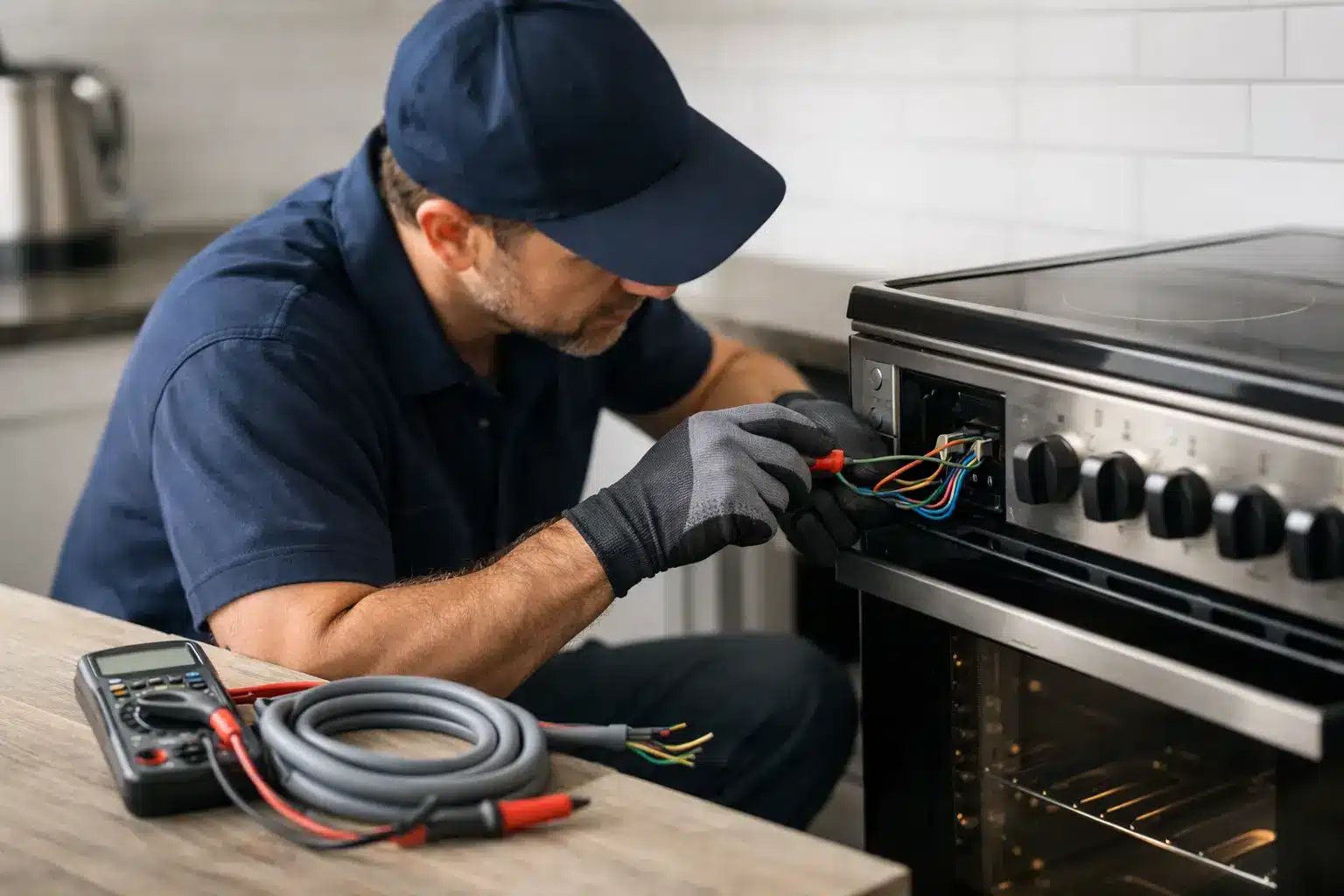
A new electric cooker should make the kitchen more reliable, not introduce a tripping circuit, overheated cable or failed appliance on its first use. If you are searching for how to install electric cooker equipment in a UK home, the safest answer starts before the cooker is even moved into position: confirm that the appliance, circuit and connection method are compatible.
Electric cookers are high-load fixed appliances. A modern model may look like a straightforward replacement for an old unit, but the electrical requirements can be very different. The right installation protects the cooker, your consumer unit and everyone using the property.
Check the cooker and circuit before installation
Start with the appliance rating plate and installation manual. The rating plate usually shows the total connected load in kilowatts or watts, voltage requirements and the manufacturer’s connection instructions. Do not assume a cooker with the same width as the old one needs the same electrical supply.
A small cooker with a modest load may be suitable for a 13A plug connection if the manufacturer specifically permits it. Most full-size electric cookers, however, need a dedicated cooker circuit and a proper fixed connection. They should not be fitted with a standard plug because the current demand is too high.
Check what is already installed
Look for a cooker control unit, usually a wall-mounted switch with a red rocker, and a cooker connection outlet behind or beside the appliance. The circuit should be protected at the consumer unit by a correctly rated protective device and have appropriate RCD protection.
The presence of a cooker switch does not automatically prove the installation is suitable. Older London properties can have ageing wiring, undersized cable, poor connections or circuits altered over many years. If the switch, outlet or cable shows scorching, cracking, loose fittings or signs of heat damage, stop there. The circuit needs inspection before a new cooker is connected.
Match the load to the supply
Cooker circuits are designed using the appliance load, cable route, protective device, installation method and diversity calculations. This is not a case of choosing a larger fuse to prevent nuisance tripping. An incorrectly sized protective device can leave cable inadequately protected and create a fire risk.
A qualified electrician will establish whether the existing circuit can safely support the new cooker. They will also consider whether other electrical work has affected the supply, particularly after a consumer unit change, kitchen refurbishment or extension.
How to install an electric cooker safely
For a like-for-like cooker replacement on a known, sound circuit, the physical fitting may be uncomplicated. The electrical connection and final tests are the critical parts. If you are not confident in fixed wiring work and electrical testing, arrange a qualified electrician rather than treating the job as a DIY task.
Isolate the power properly
Turn off the cooker circuit at the consumer unit, then switch off the local cooker control unit. Do not rely on the wall switch alone. A competent installer proves the circuit is dead with suitable test equipment before touching any conductors.
Never work on a live cooker connection, and do not assume cable colours alone identify every conductor correctly. Older installations may use different colour schemes or have been modified incorrectly in the past.
Position the appliance with clearances in mind
Before making any connection, place the cooker where it will sit and check the manufacturer’s required clearances. Keep it away from combustible finishes and make sure the ventilation openings are not blocked. The appliance must stand level, with its adjustable feet set correctly, so pans sit flat and the oven door operates as intended.
Avoid trapping or sharply bending the supply cable behind the cooker. The cable must not rest against hot surfaces, pull tight when the appliance is moved, or be vulnerable to crushing. If a connection outlet is directly behind the cooker, confirm there is enough room for the appliance to sit safely without pressing on the cable or accessory.
Use the correct connection arrangement
The manufacturer’s instructions set out the terminal configuration and the cable type required. Some cookers are supplied without a cable, while others have one fitted. The installer must use a heat-resistant, correctly sized cable suited to the circuit and appliance load, then secure it with the terminal clamp so no strain is placed on the electrical terminals.
Connections must be tight, correctly terminated and enclosed within an appropriate cooker outlet or connection unit. Loose terminals create resistance, and resistance creates heat. That is one of the most common causes of burnt cooker connections.
Test before normal use
After the cooker is secured in place, restore power and check that the control unit operates correctly. A proper installation includes electrical verification, not simply switching the cooker on to see whether an oven light works.
Testing should confirm, where applicable, continuity of protective conductors, insulation resistance, polarity, earth fault loop impedance and RCD operation. The installer should then check the hob zones, oven functions, grill and any clock or control settings. Keep the appliance instructions and note the circuit details for future repairs or property maintenance.
When an existing cooker circuit is not suitable
A new cooker may expose a problem that was already present. Repeated tripping, lights dimming when the cooker heats up, a warm isolator switch or burning smell are warning signs, not minor inconveniences.
The solution could range from replacing a damaged cooker outlet to installing a new dedicated circuit. It depends on the property’s wiring condition, the cooker’s rating and the capacity of the consumer unit. A kitchen upgrade is also a sensible time to address missing RCD protection, poor earthing or overloaded circuits rather than adding another demand to an uncertain supply.
Where work involves alterations to fixed wiring, it should be carried out in line with current electrical safety requirements. An electrician can advise whether certification or notification is required for the exact scope of work. This is especially relevant for landlords and property managers, who need safe, documented installations between tenancies.
Common mistakes to avoid when fitting a cooker
These errors can turn a routine replacement into an avoidable call-out:
- Connecting a high-load cooker to a 13A socket because the plug fits.
- Reusing cable that is brittle, heat-damaged or too small for the new appliance.
- Fitting a higher-rated breaker without confirming that the cable and circuit design support it.
- Leaving loose terminals or omitting the cable clamp inside the connection outlet.
- Pushing the cooker back hard against the wall and crushing the cable or blocking ventilation.
Another common issue is using the cooker for the first time without removing all packaging, protective film and transit materials. Follow the manufacturer’s first-use guidance, including any recommended initial heating period. A slight smell during this process can be normal, but smoke, sparking, persistent burning smells or a tripping circuit are not.
Extra considerations for rented homes and commercial kitchens
Tenants should not alter fixed wiring without the landlord’s permission and a suitable professional assessment. If a cooker has failed in a rented property, report the fault and any visible signs of overheating promptly. Photograph damage if safe to do so, but do not dismantle the connection point.
Landlords should treat cooker installation as part of wider electrical maintenance. A safe appliance connection does not replace the need for an up-to-date Electrical Installation Condition Report where one is required. In busy rental properties, checking isolators, cooker outlets and appliance cables between tenancies can prevent disruptive breakdowns later.
Small commercial premises need even more care. Higher use, different appliance loads and tighter fire-safety controls mean a domestic-style replacement approach may not be appropriate.
Choose installation support that covers the whole fault
The practical value of a qualified engineer is not just connecting three conductors. It is having someone assess the appliance, fixed wiring and protective devices together, then identify whether the problem sits with the cooker, the circuit or both. That prevents the frustration of replacing an appliance only to find the real fault is in the supply.
FaultFree Engineering Group provides appliance installation and electrical support across London, helping households and property managers deal with cooker connections, faults and wider electrical concerns without unnecessary delay. If anything about the circuit is uncertain, getting it checked before the first meal is the sensible move.