
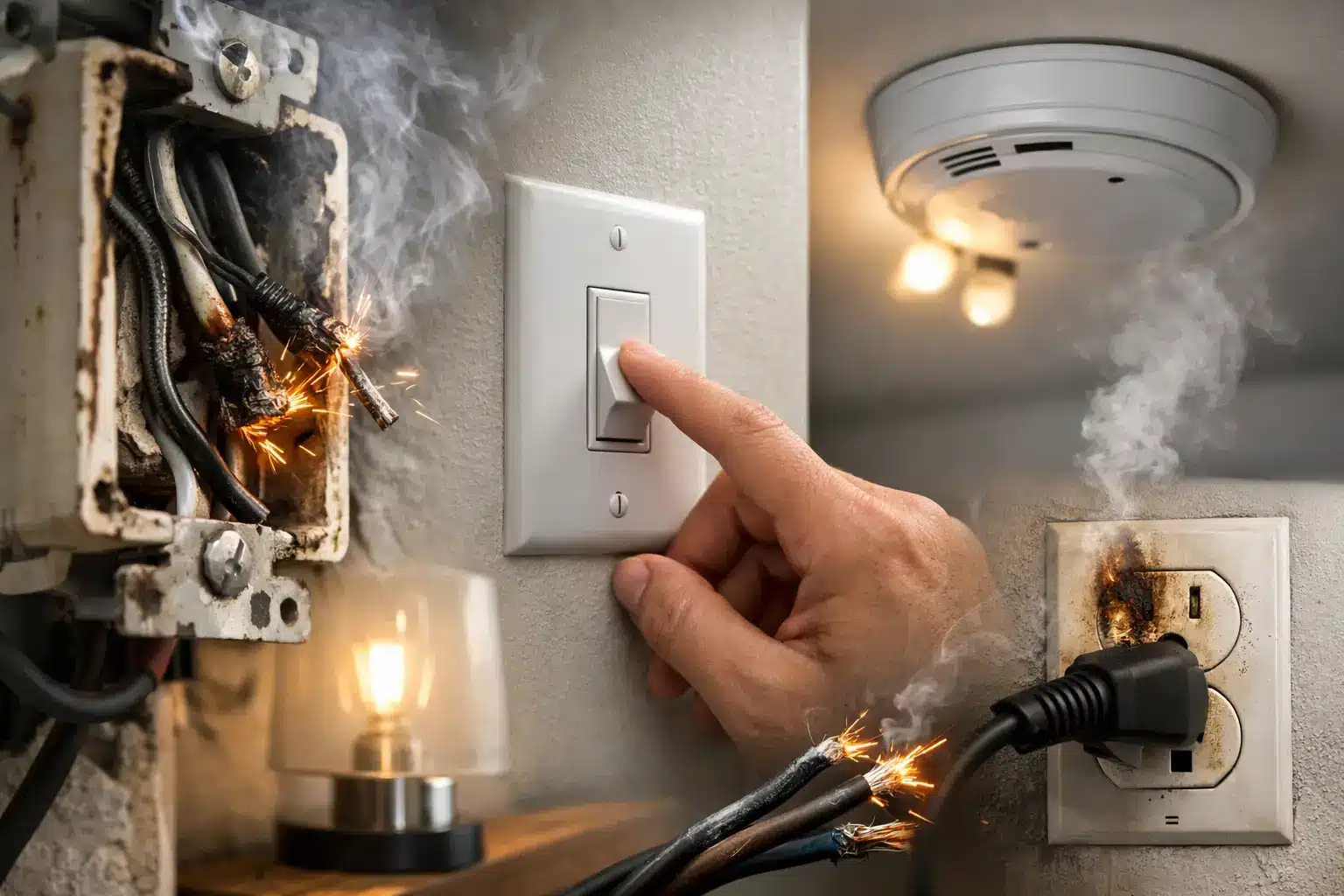
A socket that suddenly feels hot, a light that flickers when the washing machine starts, or a fuse board that keeps tripping is not a household nuisance to ignore. These are among the best signs of faulty wiring, and they can point to a developing shock or fire risk behind the walls, under floors or inside an overloaded circuit.
Electrical faults are not always dramatic. In many London homes, particularly older properties that have been altered over the years, warning signs can appear gradually. Acting early usually means a faster diagnosis, less disruption and a safer home or rental property.
The best signs of faulty wiring to act on
1. Circuit breakers trip repeatedly
A consumer unit is designed to disconnect power when it detects a fault or overload. An occasional trip after running too many high-demand appliances on one circuit can happen. A breaker that trips repeatedly, however, needs investigation.
Do not keep resetting it just to get the power back on. Repeated tripping may be caused by damaged cable insulation, a loose connection, water ingress, an overloaded circuit or a fault in a connected appliance. Unplug appliances on the affected circuit if it is safe to do so, leave the breaker off if it will not stay on, and arrange professional fault finding.
It is worth remembering that a tripping circuit does not automatically mean the fixed wiring is at fault. A faulty oven, tumble dryer, dishwasher or washing machine can also cause the same symptom. Proper testing separates an appliance fault from a wiring issue rather than relying on guesswork.
2. Sockets, switches or plugs feel warm
Electrical accessories should not become hot during normal use. A little warmth from a charger or a high-powered appliance plug may occur, but a socket faceplate, switch, plug or extension lead that feels noticeably hot needs urgent attention.
Heat can result from loose terminals, poor connections, overloaded circuits or damaged components. These faults create resistance, and resistance creates heat. If you notice discolouration, browning, melting plastic, scorch marks or a burning smell, stop using the circuit where possible and switch it off at the consumer unit. Do not remove a socket cover or attempt a repair yourself.
3. Lights flicker, dim or brighten without reason
A single LED bulb that flickers may simply be incompatible with a dimmer switch or nearing the end of its life. The concern grows when several lights flicker, lights dim as another appliance starts, or brightness changes unpredictably in different rooms.
These symptoms can indicate a loose connection, a circuit under excessive load or a problem with the supply arrangement. They deserve prompt attention, especially if they occur alongside buzzing, warm fittings or a burning smell. Replacing bulbs may hide the issue temporarily, but it will not correct defective wiring.
4. Buzzing, crackling or humming from fittings
Your electrical installation should be quiet. A faint sound from certain transformers or smart devices can be normal, but buzzing or crackling from a switch, socket, light fitting or consumer unit is not.
Noise can be a sign of arcing, where electricity jumps across a gap caused by a loose or damaged connection. Arcing produces significant heat and can damage surrounding materials. Switch off the affected circuit if you can do so safely and call a qualified electrician. If there is smoke, visible sparking or fire, leave the property and contact the emergency services.
5. You get tingling sensations or small shocks
A tingle from a tap, appliance casing, metal light switch or plug is never something to accept. Even a mild sensation can suggest poor earthing, a damaged appliance lead, reversed connections or another potentially serious defect.
Stop using the appliance or fitting immediately. Avoid touching exposed metal surfaces again until the issue has been checked. This is particularly urgent in kitchens, bathrooms, utility rooms and other areas where water raises the risk of electric shock.
6. Damaged, loose or outdated sockets
Cracked faceplates, sockets that move when a plug is inserted, exposed wiring and broken switches all need repair. A loose socket can place strain on connections behind it, while damaged plastic may expose live parts or allow dust and moisture to enter.
Older installations may also have too few sockets for modern use. That often leads to extension leads connected to extension leads, overloaded adaptors and cables running under rugs. The immediate problem may be visible, but the long-term solution could involve adding properly installed outlets or reviewing the circuit capacity.
7. Burning smells, stains or unexplained marks
A fishy or burning smell around an electrical fitting can be caused by overheating plastic insulation. Dark marks around sockets, switches or light fittings are equally concerning. Never assume the smell has gone away simply because the circuit is no longer being used.
Turn off power to the affected area at the consumer unit if it is safe to identify the correct circuit. Keep combustible items away from the fitting and arrange an urgent inspection. If the smell is strong, smoke is present or you see flames, get everyone out and call the emergency services.
8. Fuses blow or appliances fail more often than expected
Older fuse boards may use replaceable fuses rather than modern circuit breakers. If the same fuse keeps blowing, it is signalling a fault, not asking to be replaced with a larger fuse. Fitting an incorrect fuse rating can remove an essential layer of protection.
Frequent appliance failures can also be a clue. For example, if multiple chargers, bulbs or electronic appliance controls fail on the same circuit, voltage irregularities or poor connections may be involved. Each appliance should be tested properly, but the wider electrical installation should not be overlooked.
9. Electrical problems after damp, leaks or building work
Water and electrics do not mix. A leak from a bathroom, roof, radiator pipe or appliance can affect cables and fittings long after surfaces appear dry. Signs include tripping circuits, stains near lights, corrosion, flickering or a dead socket following a leak.
Building work can create problems too. Cables may be disturbed, trapped, drilled into or incorrectly extended during alterations. If an electrical issue began after plumbing work, decorating, a new kitchen installation or wall mounting, give the electrician that detail. It can significantly speed up diagnosis.
10. Your wiring has no clear history
Not every electrical hazard gives an obvious daily warning. If you have moved into an older property, inherited DIY alterations, found outdated accessories or have no record of the last inspection, an Electrical Installation Condition Report can identify defects that are not visible from the surface.
For landlords, periodic electrical inspection is a legal responsibility in rented homes, with reports typically required at least every five years or sooner when the report recommends it. Homeowners also benefit from an inspection when buying, renovating, extending or experiencing recurring electrical problems. A report does not just identify faults – it gives clear recommendations and priorities for remedial work.
What to do before an electrician arrives
Your first priority is safety, not restoring power quickly. If there is heat, smoke, sparking, a burning smell or electric shock, switch off the relevant circuit at the consumer unit only if it is safe to reach it. Do not touch damaged cables, remove covers or use water near an electrical fire.
For less urgent faults, make a note of what happened: which room was affected, what appliance was running, whether a breaker tripped and whether the issue followed a leak or recent work. This information helps an engineer test efficiently on arrival. Avoid repeatedly resetting breakers or swapping appliances between sockets until the fault has been assessed.
When the problem may be an appliance, not the wiring
A faulty appliance can imitate many wiring faults. Heating elements, motors, damaged flexes and internal insulation faults can all trip an RCD or circuit breaker. That does not make the issue less important, but it changes the repair needed.
A qualified engineer can test the appliance and the circuit to establish where the fault sits. FaultFree Engineering Group can support both appliance diagnostics and electrical fault finding, helping avoid the delay of calling separate trades for a connected problem.
Electrical warning signs are your property giving you a chance to act before a small defect becomes an emergency. Trust what you can see, smell and hear, stop using anything that appears unsafe, and arrange a proper inspection rather than taking a chance with temporary fixes.