
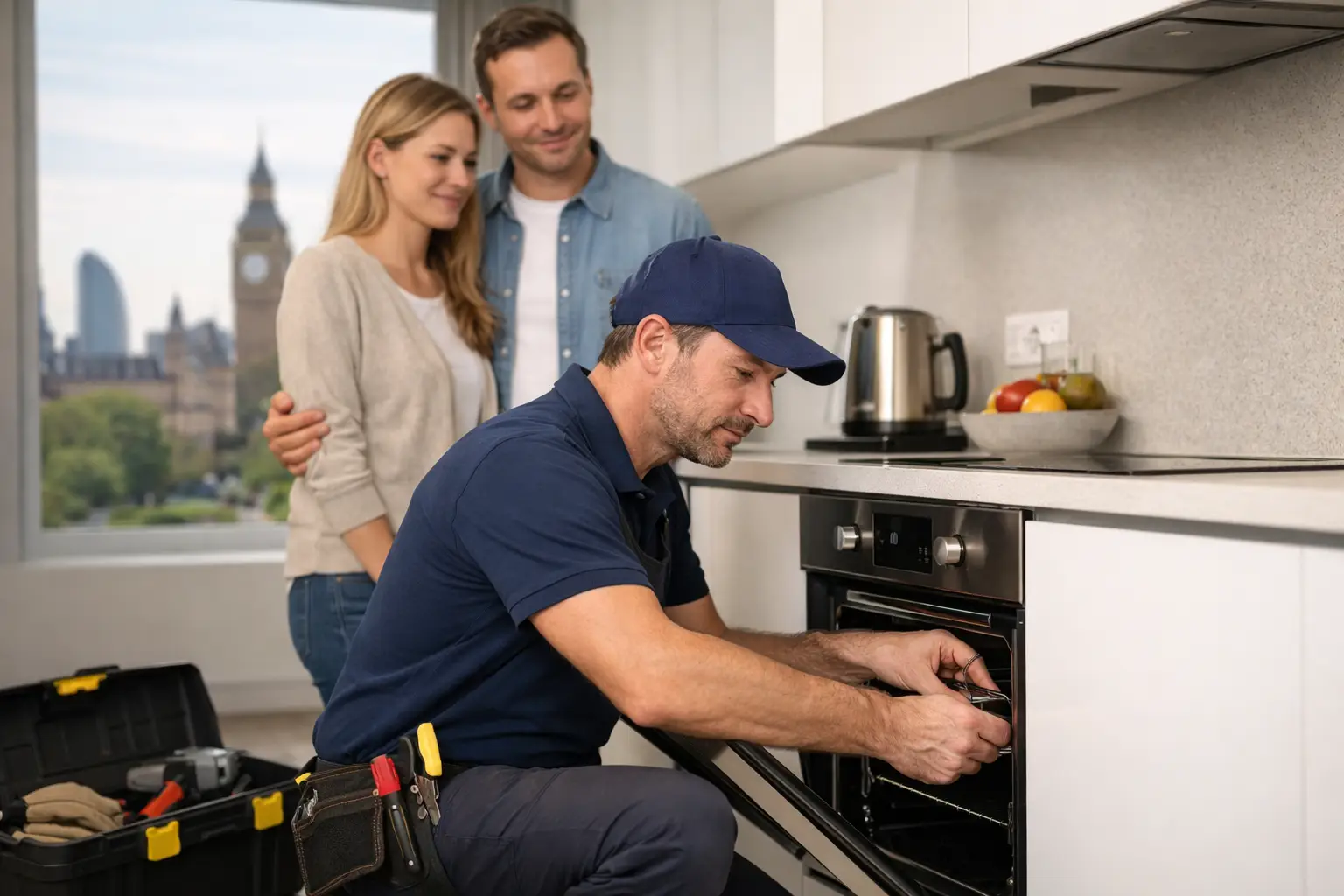
A new washing machine can flood a kitchen in one cycle if a hose has been trapped behind it. An electric cooker connected to the wrong circuit can repeatedly trip the consumer unit, overheat wiring or create a shock risk. This appliance installation safety guide sets out the practical checks that protect your home, flat or rental property before an appliance is switched on.
Most installation problems are preventable. The key is knowing which checks a capable homeowner can carry out, and when the job needs a qualified appliance engineer, electrician, plumber or Gas Safe registered engineer.
Start with the appliance, space and services
Before arranging delivery or unpacking the appliance, confirm that the model suits the available space and the services already in place. Measure the width, height and depth, allowing for doors, drawers, ventilation gaps and access for pipes, cables and plugs. A tight fit can kink a washing machine drain hose, crush a refrigerator cable or stop an integrated appliance door from closing correctly.
Check the appliance rating plate and installation instructions rather than relying on the old appliance as a guide. A replacement may have a higher electrical load, different ventilation requirements or a different water connection. This is particularly relevant for ovens, induction hobs, tumble dryers and American-style fridge freezers.
The electrical supply must be appropriate for the appliance. Many freestanding appliances use a standard UK socket, but high-load appliances may need a dedicated circuit, a correctly rated cooker connection unit or hard-wired connection. Never assume a plug can simply be fitted to make an appliance work. If the cable, outlet or circuit does not match the manufacturer’s requirements, stop and arrange an assessment.
Appliance installation safety guide: electrical checks
Electricity and water are a poor combination, especially in kitchens and utility rooms. Isolate the supply before connecting or moving an appliance. For a plug-in model, switch off and unplug it. For a hard-wired cooker, hob or extractor hood, isolation should be at the correct local switch or consumer unit by a competent person.
Do not use an extension lead or multi-way adaptor for a major appliance unless the manufacturer specifically permits it and the load has been assessed. Washing machines, tumble dryers, dishwashers, microwaves and fridge freezers should normally be connected directly to a suitable wall socket. Overloaded adaptors can overheat, particularly where appliances cycle on and off for long periods.
Inspect the plug, flex and socket before use. There should be no exposed wire, scorching, loose pins, cracked insulation or signs of heat around the socket face. A socket that feels warm, makes a buzzing sound or trips the RCD is not a minor inconvenience. Leave the appliance disconnected and have the circuit checked.
Cookers, hobs and ovens need the right circuit
An electric cooker or hob is not a standard plug-and-play installation. The circuit capacity, cable size, protective device, isolation point and appliance load must all be considered together. An installation that appears to work can still be unsafe if the cable or protective device is unsuitable.
A qualified electrician should make fixed electrical connections and test the work. This is especially sensible in older London properties where previous alterations, ageing wiring or a crowded consumer unit may affect what the circuit can safely support. Induction hobs can have substantial electrical demand, even where the appliance looks compact.
Gas cookers and gas hobs must be installed, tested and commissioned by a Gas Safe registered engineer. Do not attempt to alter gas pipework, reconnect a gas appliance or test for leaks yourself. If you smell gas, avoid switches and naked flames, ventilate the area where safe to do so, leave the property and seek urgent professional advice.
Water connections: prevent leaks before they start
Washing machines, dishwashers and some fridge freezers need sound water connections and a correctly positioned waste hose. Use the hoses supplied or approved by the manufacturer. Old hoses may look serviceable but can split under pressure, and incorrect thread sizes or damaged seals can cause a slow leak that is only discovered after damage has spread to cupboards or the flat below.
Make sure the isolation valve operates and can be reached after installation. The inlet hose should not be twisted, stretched or trapped against the wall. Tighten connections correctly, but do not overtighten plastic fittings. The drain hose needs the correct height and secure placement to prevent backflow, siphoning or the hose jumping from a standpipe during discharge.
Once connected, run a short test cycle while the appliance is pulled forward enough to inspect behind it. Check the inlet connection, waste connection, filter area and floor for drips. Then check again after the first full wash or dishwasher programme. A small leak is still a fault, not something to watch and hope will settle.
If an appliance has been transported on its side, follow the manufacturer’s guidance before switching it on. Fridge freezers often need time standing upright so compressor oil can settle. Switching on too soon can affect performance and may cause damage.
Ventilation, levelling and safe positioning
Appliances create heat, vibration or moisture, sometimes all three. Adequate ventilation is essential for fridge freezers, ovens, tumble dryers, condenser dryers and extractor hoods. Blocking vents or forcing an appliance into an undersized cabinet can cause overheating, poor performance and premature failure.
A washing machine or tumble dryer must stand level on a stable floor. Adjust the feet, lock them where required and check that the appliance does not rock. Excessive vibration can loosen hose connections, damage flooring and make the machine move during a spin cycle. Transport bolts must be removed from a new washing machine before use, then retained in case the machine is moved later.
Do not place a tumble dryer in a poorly ventilated cupboard unless the appliance type and installation instructions allow it. For vented models, the duct should be suitable, short enough to work effectively and routed without sharp bends. Never vent a dryer into a loft, chimney, garage or enclosed room. Moisture and lint can create mould, condensation and fire risks.
Keep combustible materials away from ovens, hobs and dryers. For extractor hoods, use the specified clearance above the hob and ensure ducting is installed as required. A hood that only recirculates air needs the appropriate filters fitted and maintained; it does not remove moisture and cooking fumes in the same way as a properly ducted system.
Test the installation without taking shortcuts
The first use is part of the installation. Turn the appliance on while you are present and watch for warning signs: a burning smell, repeated tripping, water leaks, unusual sparking, excessive noise, error codes or a plug and socket becoming hot. Stop using the appliance if any of these occur.
For a washing machine or dishwasher, verify that it fills, drains and spins or pumps out without leaks. For a fridge freezer, check that doors seal properly and that air can circulate around the unit. For an oven, confirm that controls, lights and heating functions operate as expected. A new appliance should not need repeated resets to stay running.
Keep the instruction manual, proof of installation and any electrical test paperwork. This is useful for warranties, future repairs and rental property records. For landlords and managing agents, clear documentation also helps show that faults were acted on promptly and that alterations were completed by competent professionals.
When to call a professional
Simple placement and a standard plug connection may be manageable if the instructions are clear and all services are already suitable. The decision changes when fixed wiring, a cooker circuit, gas, water pipework, ventilation ducting, an integrated appliance or signs of an electrical fault are involved.
Call a professional if the appliance does not match the existing connection, the circuit trips, the socket is damaged, the stop valve is seized, there is any leak, or the property has older wiring. In rented homes, report the issue promptly to the landlord or managing agent rather than making unauthorised changes. Landlords remain responsible for the safety of the fixed electrical installation, while tenants should not ignore damage or developing faults.
For homeowners, landlords and businesses, using one team that understands both appliances and electrical systems can reduce delays when the fault is not immediately obvious. FaultFree Engineering Group provides appliance installation and electrical support across London, with safety checks focused on the appliance, its connections and the circuit supplying it.
A safe installation should feel uneventful: the appliance sits level, connects correctly, runs without leaks or trips, and can be isolated quickly if needed. That quiet first cycle is the result worth checking for.