
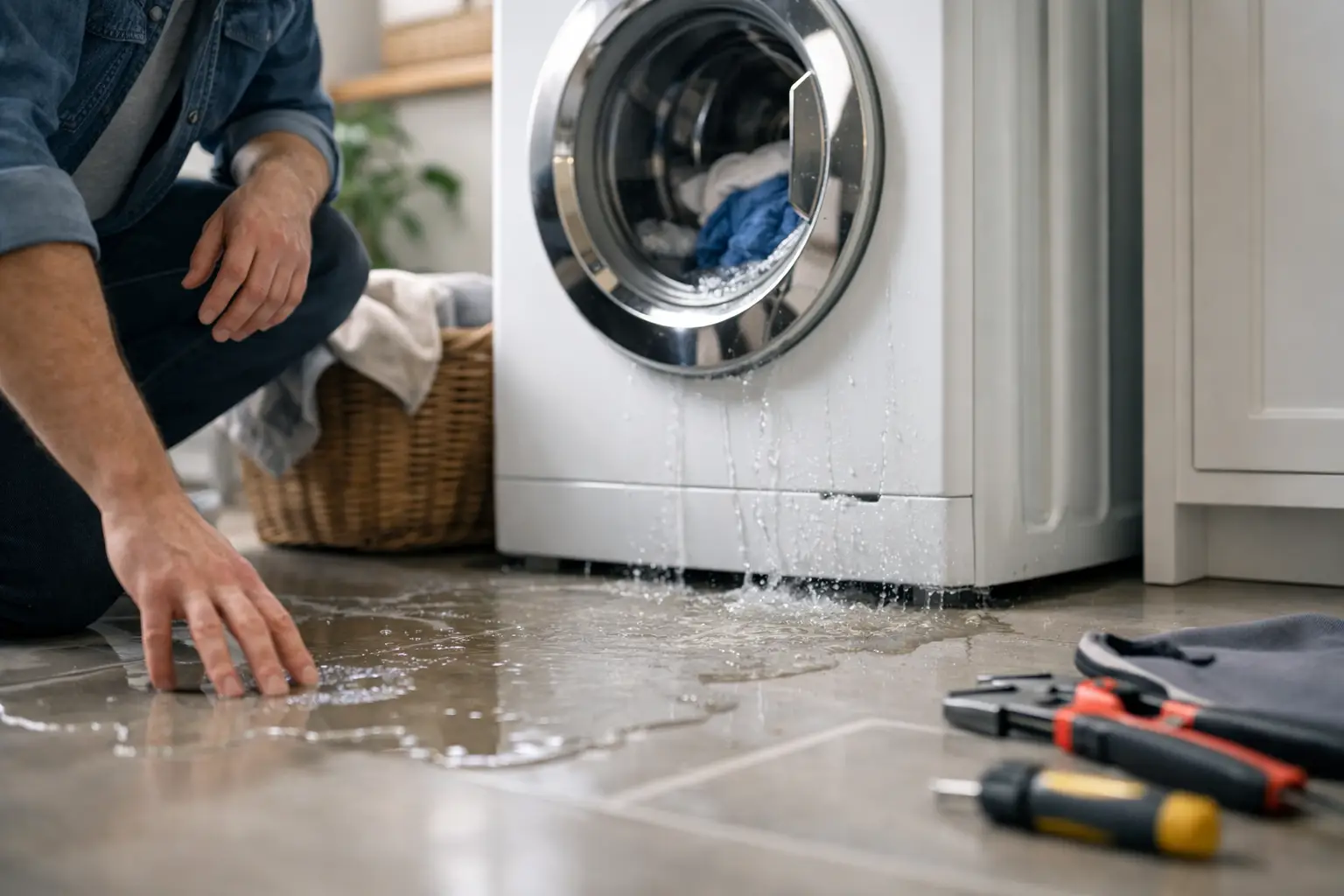
A puddle beneath the washer can turn a normal laundry day into a problem for your flooring, kitchen units or downstairs neighbour. If you are asking, why is washing machine leaking, the answer often depends on exactly where the water appears and when the leak starts. A loose hose may be a quick fix. Water coming from beneath the machine, however, can point to a failed seal, pump or internal hose that needs proper diagnosis.
Start by switching the washing machine off at the mains. If water is close to the plug socket, extension lead or electrical connections, do not touch them while the area is wet. Turn off the water supply at the isolation valve if you can do so safely, use towels to contain the water, and avoid running another cycle until the cause is clear.
Why is your washing machine leaking?
The timing of the leak gives a useful first clue. Water appearing as soon as the machine fills is usually linked to the inlet supply or detergent drawer. A leak during washing or draining is more likely to involve the door seal, pump, filter or waste hose. If the machine leaks only on a spin cycle, vibration and movement may be exposing a loose connection or forcing water out through an overloaded drum.
It is tempting to pull the machine out, tighten everything and try again. That can work for a visibly loose waste hose, but it can also hide the real issue. Repeated leaks can damage laminate flooring, cabinet bases and electrical circuits, particularly in flats where water may travel below the surface before becoming visible.
Check the simple external causes first
Loose or damaged inlet hoses
At the back of the appliance, inlet hoses connect the washer to the cold-water supply, and sometimes a hot-water supply on older installations. Check for drips at both ends of each hose, cracked rubber washers, corrosion around the valve and splits in the hose itself. A connection can look secure yet leak under water pressure.
Do not over-tighten plastic fittings. Tightening them aggressively can damage the thread or washer and create a bigger leak. If the hose is old, bulging or visibly worn, replacement is safer than trying to nurse it through another few months.
A waste hose that has moved or backed up
The waste hose carries used water into the standpipe or sink waste connection. If it has slipped out, been pushed too far down the pipe, or has a split near a bend, the machine may leak when it drains. You may also notice gurgling, slow drainage or water backing up through the sink.
A blocked household drain can look like a washing machine fault. If water rises from the standpipe or sink connection during the drain stage, the issue may be in the plumbing rather than the appliance. The washer should not be used until the drainage problem is resolved, as each cycle can cause another overflow.
Too much detergent or the wrong product
Using washing-up liquid, or too much detergent for the load and local water conditions, produces excessive foam. The foam can escape through the drawer, door area or vents, then collapse into water on the floor. This is especially common with concentrated detergents and pods used alongside additional liquid detergent.
Run an empty rinse cycle after cleaning away the residue. Use a measured amount of detergent labelled for automatic washing machines. If the leak continues with no detergent in the drawer, foam is unlikely to be the only cause.
Leaks from the front of the machine
A dirty, torn or trapped door seal
The rubber door seal, also known as the gasket, keeps water inside the drum. Small items such as hair grips, coins, screws and bra wires can become trapped in its folds. Over time, they can puncture the rubber or stop the door closing evenly.
With the machine isolated, gently pull back the folds of the seal and inspect for debris, mould build-up, tears and rough edges. Wipe it clean with a soft cloth. A minor build-up may be manageable, but a split seal normally requires replacement. Tape, sealant and glue rarely hold against heat, detergent and the movement of a full drum.
The detergent drawer or dispenser is blocked
Water entering the dispenser drawer should flow through the compartments and into the drum. Dried detergent, fabric conditioner residue and limescale can obstruct that route, causing water to spill from the front while the washer fills.
Remove the drawer where the model allows and rinse it thoroughly. Clean the housing carefully, including the small jets above the drawer. A blocked drawer is often straightforward to deal with, but persistent overflow can indicate an inlet valve issue or incorrect water pressure that requires an engineer to assess.
An overloaded or unbalanced load
A very full drum can force water against the door seal, particularly on bulky items such as duvets, bath mats and heavy towels. An unbalanced load can also make the appliance shake, placing strain on hoses and internal fittings.
Reduce the load and follow the care label capacity guidance for bulky items. If the machine moves dramatically even with an ordinary load, check that all feet are firmly on the floor and the appliance is level. A machine that regularly walks forward during spin should be investigated rather than continually pushed back into place.
Water leaking from underneath the washing machine
Water beneath the machine is often harder to trace. The source may be an internal sump hose, circulation hose, pump housing, tub seal or detergent dispenser connection. Because water runs along components before reaching the floor, the visible puddle is not always directly below the failed part.
Pump filter, pump or internal hose faults
Many front-loading machines have a drain pump filter behind a small flap near the bottom front. If the cap is not fully refitted after cleaning, its seal is damaged, or debris prevents it closing correctly, water may escape during draining. Put towels and a shallow tray in place before opening it, because retained water will come out.
A cracked pump body or split internal hose also causes leaks, usually during wash or drain stages. These repairs involve opening the appliance and testing components. This is not a good area for guesswork: incorrect refitting can lead to another leak, poor drainage or damage to wiring.
Worn drum bearings or tub seal
Less commonly, water comes through a failing tub seal behind the drum. You may hear a rumbling sound on spin, see rust-coloured marks beneath the machine or notice play when lifting the inner drum by hand. This can be a significant repair because access varies considerably by model. On some machines, the outer tub design makes repair more labour-intensive than on others.
A qualified appliance engineer can assess the condition of the bearings, seal, drum and tub before recommending a repair. That matters when deciding whether a repair is economical, especially on an older appliance with several faults.
When to call a washing machine engineer
Call for professional help if the leak is recurring, coming from underneath the appliance, accompanied by burning smells, tripping electrics, unusual noise or poor drainage. The same applies if you cannot safely identify the source without moving a heavy integrated machine or removing panels.
For landlords and property managers, a fast diagnosis protects more than the appliance. It can prevent damage claims, mould risk and disruption for tenants. Keep a note of when the leak occurs, whether the machine is filling, washing or draining, and any error code shown on the display. That information helps an engineer narrow down the fault efficiently.
FaultFree Engineering Group provides washing machine fault finding and repair across London, with clear diagnostics and practical advice on whether repair is the right option. The aim is not simply to stop the visible water, but to identify the failed component and leave the appliance safe to use.
A washing machine leak is rarely something to ignore until the weekend. Isolate the appliance, protect the area, and arrange a proper repair when the cause is not plainly external. Prompt action is usually the most affordable way to protect your home, your appliance and the people living below you.