
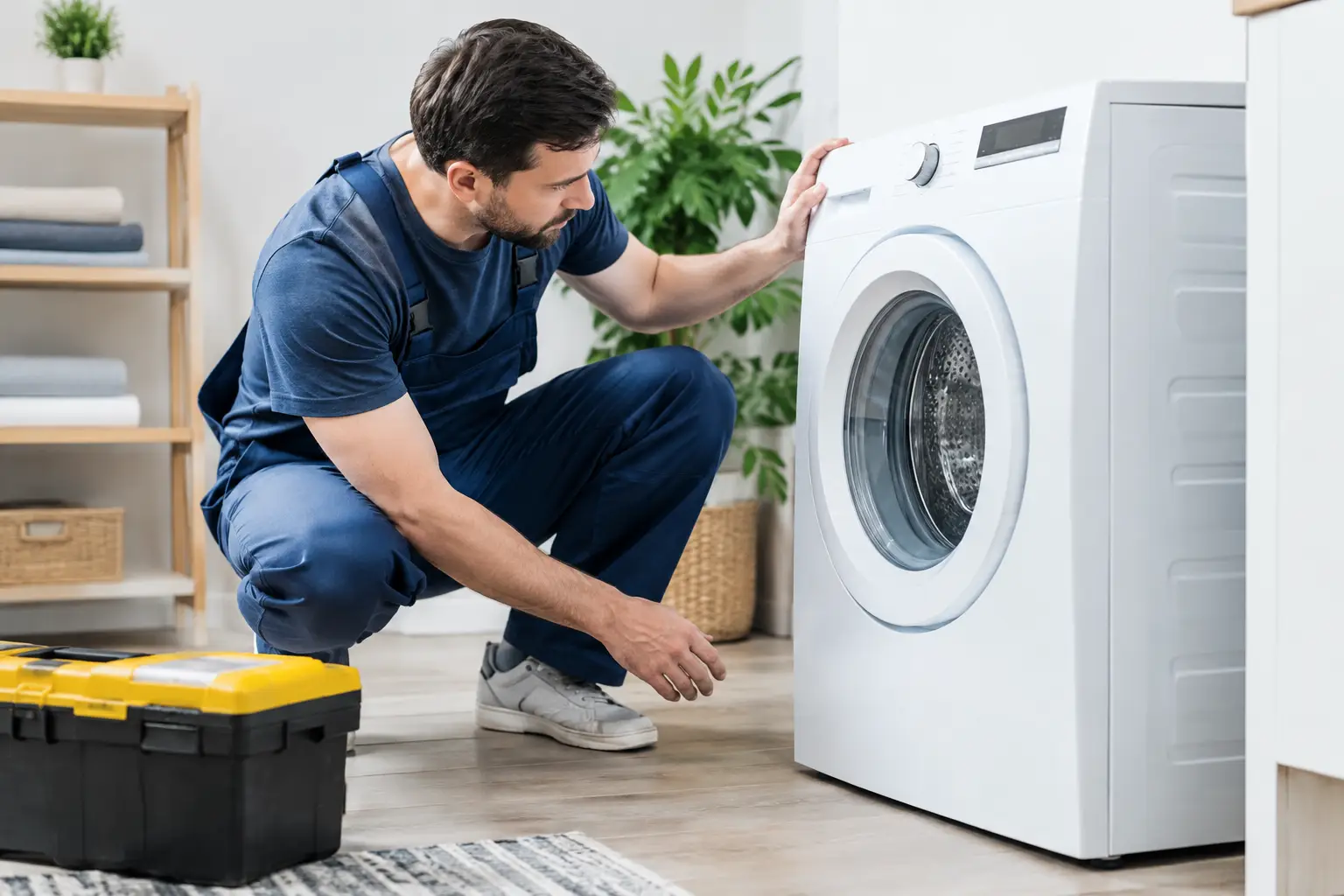
A washing machine that walks across the kitchen floor, bangs against a cupboard or rattles through a spin cycle is more than an annoyance in a London flat. It can damage flooring, loosen pipework and turn a simple laundry load into a neighbour complaint. Knowing how to stop washer vibration starts with identifying whether the problem is the load, the installation or a developing mechanical fault.
Most vibration issues have a straightforward cause and can be checked safely in a few minutes. However, violent movement, grinding noises or repeated error codes should not be ignored. Those symptoms can point to worn internal parts that need a proper diagnosis before further damage is done.
Why washing machines vibrate during spin
A washing machine is designed to move slightly during a fast spin, particularly with heavier loads. It should not jump, rock noticeably or strike surrounding units. The drum can rotate at high speed, so even a small imbalance becomes far more obvious once the machine accelerates.
The common causes are an uneven machine, an uneven laundry load, a flexible or damaged floor, incorrect installation or worn suspension and bearings. The timing matters. If the machine vibrates only with duvets, towels or a single heavy item, the load is the likely cause. If it shakes on every cycle, including an empty spin, focus on the feet, floor and internal components.
How to stop washer vibration with basic checks
Before touching the machine, switch it off at the mains. Do not pull it forward by the door or detergent drawer. If it has been running, allow the drum to stop completely and make sure hoses are not stretched or trapped behind it.
Level the machine properly
This is the first check because it solves a large number of callouts. Place a spirit level across the top of the washing machine from side to side, then front to back. Adjust the threaded feet gradually until the appliance sits level in both directions.
Press down on each top corner. The machine should feel solid, with no rocking. Once the feet are correct, tighten their locking nuts against the underside of the appliance. Feet can slowly work loose over time, especially where a machine has been moved for cleaning or access to pipework.
Do not rely on the appearance of the worktop or tiled floor. Floors in older properties can slope slightly, and a washing machine needs to be level on its own feet rather than visually level with the room.
Rebalance the laundry load
A badly distributed load is the most common reason for sudden shaking. One bath mat, a dressing gown, trainers or a large towel can form a heavy lump on one side of the drum. The machine will try to redistribute it before spinning, but it cannot always do so.
Pause the programme, wait for the door to unlock and spread the items evenly around the drum. Add a few similar items if you are washing one bulky article, but do not overfill the machine. Clothes need room to move and balance during the spin.
Duvets and large blankets are a special case. They can absorb a great deal of water and become too heavy for the drum capacity, even if they physically fit inside. Check the care label and the washing machine manual before attempting them at home. A launderette machine may be the safer option for oversized bedding.
Check for transport bolts on a newly installed machine
If the appliance is new, recently relocated or has just been installed after a move, check that the transport bolts have been removed. These bolts secure the drum for transit. Running a machine with them fitted can cause severe vibration and may damage the suspension system.
They are usually located on the rear panel and are clearly shown in the installation instructions. Never remove random screws if you are unsure. If the bolts are out and the machine still shakes badly from its first wash, stop using it and arrange an installation check.
Look at the floor beneath the appliance
A firm concrete or tiled floor normally supports a washing machine well. Suspended timber floors can flex, particularly in upper-floor flats, older houses or utility spaces that were not designed for a heavy appliance spinning at speed. In that situation, levelling the feet may reduce movement but cannot remove floor flex altogether.
Anti-vibration pads can reduce noise transfer and prevent minor slipping on smooth surfaces. They are not a cure for a machine that is badly out of level, a weak floor or a mechanical failure. Thick foam pads can even make a machine less stable if they compress unevenly.
If the floorboards move underfoot, the practical solution may involve strengthening the floor or repositioning the appliance over a more supported area. This is worth addressing early in rental properties, where ongoing vibration can damage finishes and lead to repeat maintenance issues.
Check clearances, hoses and surrounding units
A washing machine needs a little space around it. If it touches a cabinet, wall or worktop side panel, normal spin movement can become a loud knocking sound. Pull the appliance forward carefully and check for scuff marks, trapped hoses and a power cable being pinched behind the machine.
The drain hose and inlet hoses should have enough slack to move slightly without rubbing hard against the wall. A sharp bend in the drain hose can also affect drainage, leaving excess water in the drum and making spin balancing more difficult. Check that the machine is not pushed onto its own hoses when returned to position.
Integrated appliances need particular care. The cabinet door, hinges and fixing points must be correctly fitted. A loose furniture door can make vibration seem worse than it is, while incorrect installation can place strain on the appliance casing.
When vibration means an internal fault
If the machine is level, correctly installed and still shakes during ordinary loads, the fault may be inside. Do not keep running high-speed cycles in the hope it will settle. Continued use can turn a repairable issue into damage to the drum, cabinet or motor.
Common internal causes include worn shock absorbers, damaged suspension springs, loose or failed counterweights, worn drum bearings and a loose drive component. The symptoms help narrow it down, but they are not a reliable DIY diagnosis.
A dull repeated banging can suggest suspension or counterweight problems. A rough rumbling, roaring or grinding noise that increases during spin may indicate bearing wear. If the drum has excessive movement when gently lifted by hand, or you see rust-coloured marks beneath the machine, stop using it and arrange an engineer inspection.
Do not remove the top, rear or front panels unless you are competent to work on appliances safely. Washing machines contain heavy components, sharp edges and electrical connections. Repairs involving the drum, motor, heater or wiring should be handled by a qualified appliance engineer.
A quick test after making adjustments
After levelling the machine and checking the load, run a short rinse and spin cycle with a small, balanced load. Stay nearby for the first few minutes of the spin. The appliance may make normal motor and water-pump sounds, but it should remain steady without walking forward or hitting surrounding units.
If the vibration has reduced but not disappeared, recheck the locking nuts on the feet and confirm all four feet make firm contact with the floor. If the problem returns only at maximum spin speed, try a lower spin setting temporarily while arranging a repair. This can reduce disruption, but it is not a long-term fix for a machine with a mechanical fault.
When to book a washing machine repair
Book professional help if the machine moves violently, leaks, trips the electrics, smells of burning, makes grinding noises or continues vibrating after the basic checks. Landlords and property managers should act promptly where vibration affects flooring, pipework or neighbouring occupants, rather than waiting for a full breakdown.
A qualified engineer can check the installation, test the appliance safely and identify whether a repair is economical. FaultFree Engineering Group provides practical washing machine diagnostics and repairs across London, with clear advice on the fault and the work required.
A steady washing machine protects more than a quiet wash day. It helps preserve the appliance, the floor beneath it and the plumbing behind it – so if the basics do not solve the movement, treat the noise as an early warning and get it checked.