
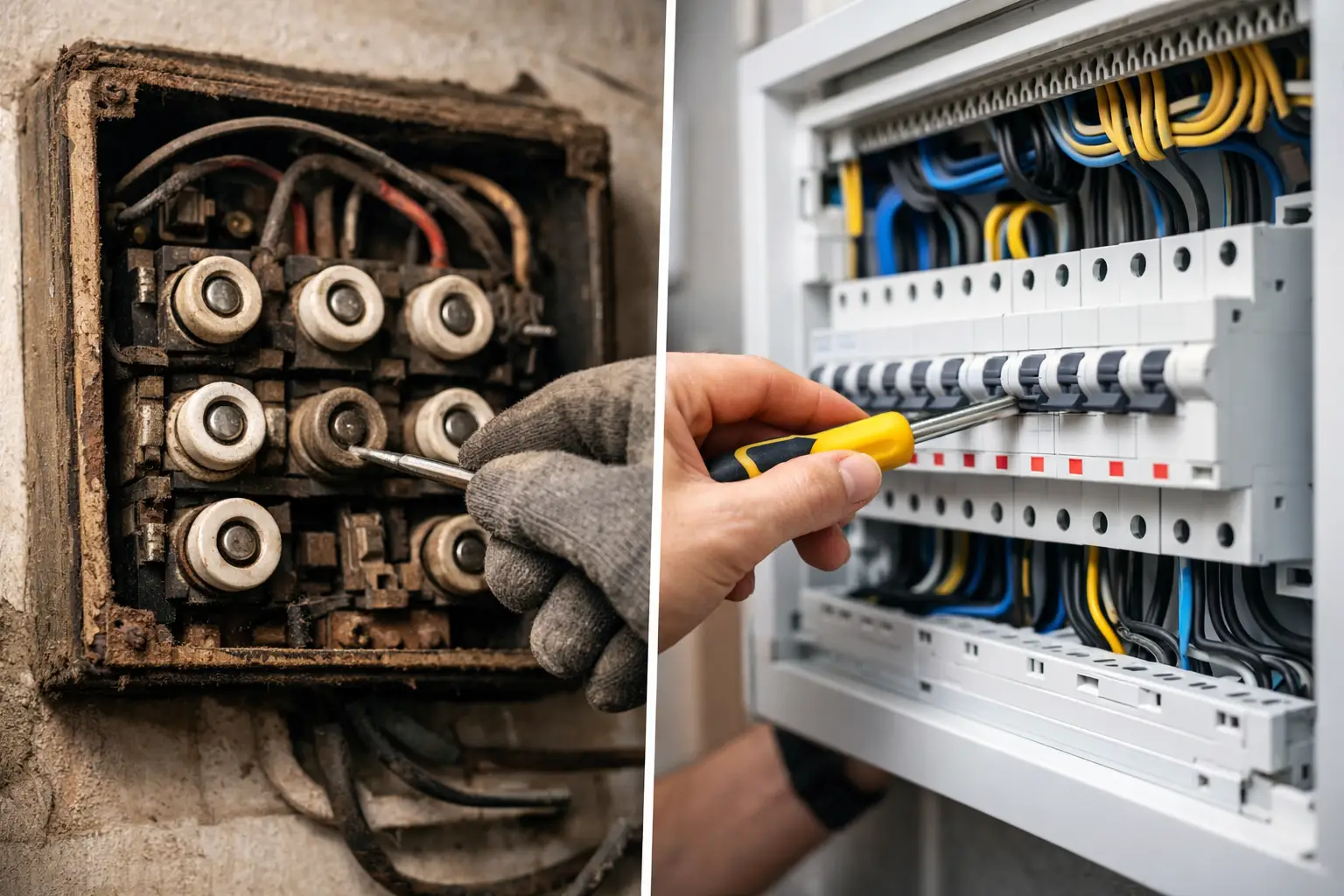
A tripping circuit at 7am, a fuse that keeps blowing, or scorch marks around an old board can quickly turn a normal day into a safety concern. The right answer in a fuse box upgrade vs repair decision is not always the most expensive option. It depends on the condition of the installation, the cause of the fault, and whether the existing board can still provide suitable protection for the property and its occupants.
For most homes, what is still called a fuse box is now a consumer unit. Its job is to isolate circuits and reduce the risk of electric shock, fire and equipment damage when something goes wrong. A qualified electrician should diagnose the fault before recommending either a repair or a replacement. Replacing a consumer unit will not cure a damaged cable, faulty appliance or overloaded circuit elsewhere in the property.
When Fuse Box Repair Is the Sensible Choice
A repair can be the right, safe and cost-effective route when the consumer unit is modern, in sound condition and correctly suited to the installation. A single failed circuit breaker, loose connection, damaged switch, worn enclosure cover or fault on one circuit may be repairable without changing the full board.
For example, if an RCD trips only when the washing machine is switched on, the consumer unit may be doing exactly what it should. The problem could be a heating element, wiring fault or moisture issue within the appliance, rather than the board itself. Equally, a cooker circuit that trips after a new appliance is fitted may need testing for load, cable condition and connections before anybody suggests a full upgrade.
A repair is more likely to be appropriate where the existing unit has modern protective devices, has no signs of overheating or damage, and testing confirms that the circuits meet the required safety standards. In these cases, targeted work can restore safe operation with less disruption and lower cost.
The key word is testing. Resetting a tripped breaker repeatedly is not a repair. A breaker trips because it has detected an overload, short circuit or earth leakage. Ignoring that warning can leave a hidden fault to worsen.
Signs a Fuse Box Upgrade Is Usually the Better Option
Older fuse boards with rewireable fuses were common in many London homes. They can continue to operate, but they often lack the level of protection expected in a modern installation. A replacement may be the safer choice where the board cannot support appropriate RCD or RCBO protection, has deteriorated, or is no longer practical for the property’s electrical demands.
An upgrade should be seriously considered if you find any of the following:
- Rewireable fuse wire, old-style cartridge fuses or a board with no RCD protection.
- Burning smells, buzzing, discolouration, melted plastic, corrosion or heat around breakers and terminals.
- Frequent unexplained tripping across several circuits or recurring faults after previous repairs.
- A crowded board with no safe capacity for an extension, electric shower, induction hob, air conditioning or EV charger.
- Significant electrical work, a rewire, major refurbishment, or an inspection that identifies unsatisfactory defects.
A consumer unit upgrade is not simply a case of fitting a new box on the wall. Before installation, the electrician needs to assess the earthing and bonding arrangements, cable condition, circuit design and overall suitability of the existing installation. A new board can expose faults that were previously hidden because modern protective devices are more sensitive. That is not a drawback of the upgrade – it is a sign that the installation needs attention.
Fuse Box Upgrade vs Repair: The Cost and Safety Trade-Off
Repair usually costs less in the short term because the work is limited to the defective component or circuit. It can be the right decision when testing supports it. However, repeated call-outs for separate faults on an ageing board can become false economy, particularly in a rental property where downtime and safety responsibilities matter.
An upgrade involves more labour, testing and certification, so the upfront cost is higher. It may also reveal remedial work that needs completing before the installation can be signed off safely. Yet it can offer clearer circuit labelling, improved fault protection, better capacity for future electrical additions and easier fault isolation.
There is also a practical difference between a split-load RCD board and a consumer unit using individual RCBOs. On a split-load board, one fault may disconnect several circuits at once. With RCBO protection, a fault is more likely to affect only the circuit involved. That can be valuable in occupied homes, flats and small businesses where losing lighting, refrigeration or sockets across multiple areas causes immediate disruption.
No electrician should promise that an upgrade is always necessary without inspecting the installation. Equally, a very cheap repair recommendation is not reassuring if the board is visibly damaged, outdated or unable to provide adequate protection. Straightforward advice should explain what has failed, what can safely be repaired, what is recommended, and why.
What Happens During a Consumer Unit Upgrade
A properly planned upgrade starts with an assessment, not with a replacement quote alone. The electrician checks the existing circuits, identifies defects and confirms whether the earthing arrangement and main protective bonding are suitable. This is particularly relevant in older London properties, converted flats and homes that have been extended in stages.
On the day, the electricity will normally need to be isolated while the old board is removed and the new consumer unit is installed. Each circuit is then tested, labelled and verified. The work should be completed by a competent electrician, with the appropriate certification and notification where required.
Expect the engineer to discuss any defects found during testing. Some issues, such as poor connections or minor circuit repairs, may be resolved at the same visit. Others, including damaged cables, inadequate earthing or unsuitable circuits, may require separate remedial work. This is why an honest quote should allow for assessment rather than pretending every property needs the same fixed solution.
Landlords and Property Managers: Do Not Wait for a Breakdown
For landlords, the decision is not only about convenience. Electrical safety duties require the installation to be kept in safe working order, and periodic inspection reports help identify defects before a tenant reports a burning smell or loss of power.
An unsatisfactory electrical installation condition report does not automatically mean the whole consumer unit must be replaced. The observations matter. A qualified electrician can explain whether remedial repairs will address the findings or whether the board itself is part of the problem. Keeping records of inspections, repairs and certificates also makes property management far more straightforward between tenancies.
Where tenants report repeated tripping, sockets that feel warm, crackling, damaged switches or intermittent power, arrange professional fault finding promptly. Advise them not to remove covers, replace fuse wire or repeatedly reset protective devices. Electrical faults do not improve through guesswork.
Questions to Ask Before Approving the Work
Before choosing between repair and replacement, ask what testing has identified as the root cause. Ask whether the current consumer unit has suitable protection, whether the existing circuits and earthing are in good condition, and whether any future plans could change the recommendation. An induction hob, loft conversion or EV charger can alter the capacity and circuit requirements considerably.
You should also ask what certification will be provided, whether the price includes testing and labelling, and what happens if additional defects are discovered. Transparent pricing means understanding the scope of the work before it begins, not receiving a vague answer that leaves every essential item as an extra.
FaultFree Engineering Group provides electrical fault finding, consumer unit upgrades, safety inspections and remedial work across London. The aim is simple: identify the real fault, carry out the work that is genuinely needed, and leave the installation safe and properly tested.
If your board is tripping, overheating or showing its age, switch off and seek urgent professional advice where there are signs of damage or burning. If it is simply a one-off circuit fault, a tested repair may be all that is needed. The safest decision is the one based on the condition of your actual installation, not the age of the board alone.