
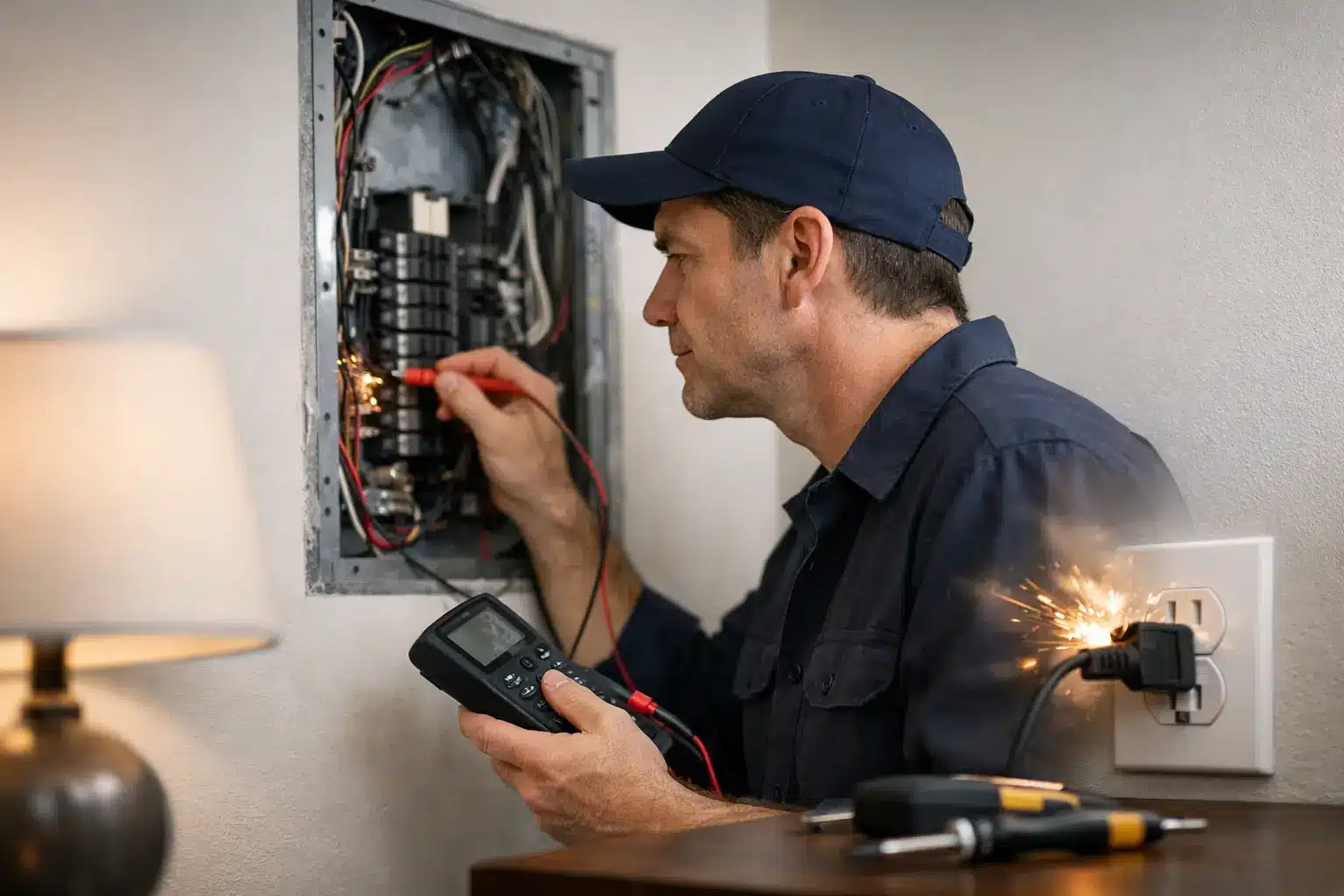
A tripping fuse board at 10pm, dead sockets in the kitchen, lights flickering in one room but nowhere else – electrical faults rarely arrive at a convenient time. This electrical fault finding guide is written for homeowners, tenants, landlords and small businesses who need clear, safe direction without the guesswork. The aim is simple: help you recognise what the fault may be, what you can check safely, and when it is time to get a certified engineer on site.
Why fault finding matters
Electrical faults are not just inconvenient. They can stop appliances working, knock out lighting, damage circuits and, in some cases, create a genuine fire or shock risk. The right diagnosis matters because the symptom is not always the cause. A cooker that keeps cutting out may look like an appliance problem, but the issue could be a damaged connection, a faulty isolator or an overloaded circuit. Equally, what seems like a house wiring problem may turn out to be one failed appliance pulling the circuit down.
That is why proper fault finding is more than swapping parts and hoping for the best. It is a process of testing, isolating and confirming the source of the problem before any repair starts. Done properly, it saves time, reduces repeat callouts and helps achieve a first-time fix.
Electrical fault finding guide: start with the symptoms
The fastest way to narrow down an electrical issue is to look at exactly what has failed and when. If the whole property has lost power, the fault may be external or at the main intake. If one circuit has gone off but the rest of the property is live, the issue is usually localised to that circuit, a connected appliance, or a protective device.
A few common patterns tell you a lot. If the RCD trips only when a certain appliance is used, that appliance is a strong suspect. If a lighting circuit trips when a switch is operated, the problem could be the fitting, the switch itself or moisture ingress. If sockets have power but an oven or hob does not, the fault may sit in the appliance supply, control switch or internal wiring rather than the general ring circuit.
Burning smells, buzzing, crackling, warm faceplates and visible discolouration should always be treated as urgent. Those signs suggest overheating or arcing, and they are not DIY territory.
Safe checks you can do before calling an engineer
There are a few sensible checks that can help identify the issue without putting yourself at risk. Start at the consumer unit. See whether a breaker has tripped or an RCD has moved to the off position. Reset it once only if there are no signs of damage, burning or water ingress. If it trips again immediately, leave it off.
Next, unplug portable appliances on the affected circuit and try the breaker again. Kettles, toasters, washing machines, dishwashers and tumble dryers are common causes of trips because heating elements, motors and pumps can develop earth faults over time. If the circuit holds with everything unplugged, reconnect items one at a time. That can quickly show whether one appliance is responsible.
Check whether the problem is limited to one room, one appliance or one type of fitting. A single dead socket may point to a loose connection or a spur fault. Several dead sockets together may indicate a break in the ring, a tripped fused spur or a failed connection at one point feeding the rest.
What you should not do is remove socket fronts, open control panels or work on fixed wiring. If testing requires exposed conductors, dead testing, insulation resistance checks or continuity testing, it needs the right instruments and a qualified person to use them.
The most common electrical faults in homes
Tripping circuits are high on the list because they can be caused by several different issues. Overload is the simplest one – too many high-demand appliances on one circuit. But repeated tripping more often points to a fault condition, such as earth leakage, a short circuit or a damaged accessory.
Loose connections are another regular culprit. They may not fail completely at first. Instead, they heat up, cool down and create intermittent issues: flickering lights, sockets that work occasionally, or a smell of hot plastic near a switch or spur. These faults can worsen quietly, which is why they should be dealt with promptly.
Lighting faults vary. Older fittings can fail at terminals due to heat. Bathroom and exterior lights can suffer from moisture ingress. LED circuits sometimes develop driver faults or incompatibility issues with dimmer switches. If one lamp keeps failing in the same fitting, the lamp may not be the real problem.
Appliance-related faults also blur the line between electrical work and appliance repair. Ovens, hobs, extractor hoods, washing machines and dishwashers can all trigger trips or lose supply for reasons that involve both the appliance and the installation. That crossover is where experienced diagnosis makes a real difference.
When the issue is the appliance, not the wiring
One of the biggest mistakes people make is assuming that any trip or power loss means the property wiring is at fault. In practice, many callouts come down to a single appliance with an internal fault. A washing machine heater, a dishwasher pump, an oven element or a fridge freezer compressor can all create symptoms that look like a wider electrical problem.
The challenge is that replacing the appliance without testing may be unnecessary, and blaming the wiring without checking the appliance properly can lead to wasted time. The right approach is to isolate the appliance, confirm whether the fault follows it, and test both the supply and the unit itself. For landlords and property managers, this matters even more because quick, accurate diagnosis keeps voids short and tenants less disrupted.
Electrical fault finding guide for landlords and rental properties
Rental properties bring extra pressure because faults affect safety, compliance and occupancy. If a tenant reports power loss, recurring trips or unsafe fittings, the response should be prompt and documented. Delays can turn a manageable repair into a larger problem, especially where heating, cooking or refrigeration is affected.
A landlord should also think beyond the immediate fix. Repeated electrical issues in the same property may point to ageing accessories, overloaded circuits, poor-quality previous work or deferred maintenance. A proper inspection can identify whether the fault is isolated or part of a wider condition that needs attention.
For managed properties, clear reporting matters. Knowing which circuit failed, what was tested, what was isolated and what repair was completed makes future maintenance far more efficient. It also supports compliance planning, particularly where EICRs and remedial works are involved.
When to stop checking and call a professional
If the breaker will not reset, if there is any sign of heat damage, or if the fault affects fixed wiring, stop there. The same applies if the issue involves a cooker circuit, shower circuit, consumer unit, outdoor supply or anything near water. These are not jobs for trial and error.
You should also call an engineer if the fault is intermittent. Intermittent faults are often the most time-consuming because they disappear just when someone takes a quick look. Proper diagnosis relies on methodical testing and experience, not guesswork. A no-nonsense engineer will work through the circuit, identify the cause and explain the repair clearly, including any trade-offs if more than one issue is present.
At FaultFree Engineering Group Ltd, that practical approach matters because many customers are dealing with urgent faults that cross over between appliances and electrical systems. Having one trusted provider for both can shorten diagnosis and reduce disruption.
What good fault finding looks like
A reliable electrical diagnosis should leave you with more than a temporary fix. You should know what failed, why it failed, what was tested, and whether anything else needs monitoring or upgrading. If a breaker tripped because of an overloaded circuit, the answer may be usage advice or circuit improvement. If a socket burned out because of a loose termination, the repair should include checking the surrounding condition, not just replacing one plate and leaving.
Transparent pricing matters here too. Some faults are straightforward and resolved quickly. Others take longer because circuits need isolating and testing in stages. An honest service explains that upfront. Speed is important, but so is accuracy.
Avoiding repeat electrical problems
Not every fault can be prevented, but many repeat issues have warning signs. Older accessories that feel loose, lights that flicker for weeks, sockets that stop gripping plugs properly, and appliances that trip circuits occasionally should not be ignored. Small faults often become urgent faults when left too long.
For homes and small businesses, periodic inspection is often the difference between planned maintenance and emergency callouts. For landlords, regular testing and timely repairs protect both the property and the people living in it. And for anyone relying on essential appliances every day, early diagnosis usually costs less than waiting for total failure.
If you are dealing with an electrical issue, keep the first step simple: stay safe, check only what you can check without opening anything up, and pay attention to the pattern of the fault. The faster the cause is identified properly, the faster normal service can be restored with confidence.