
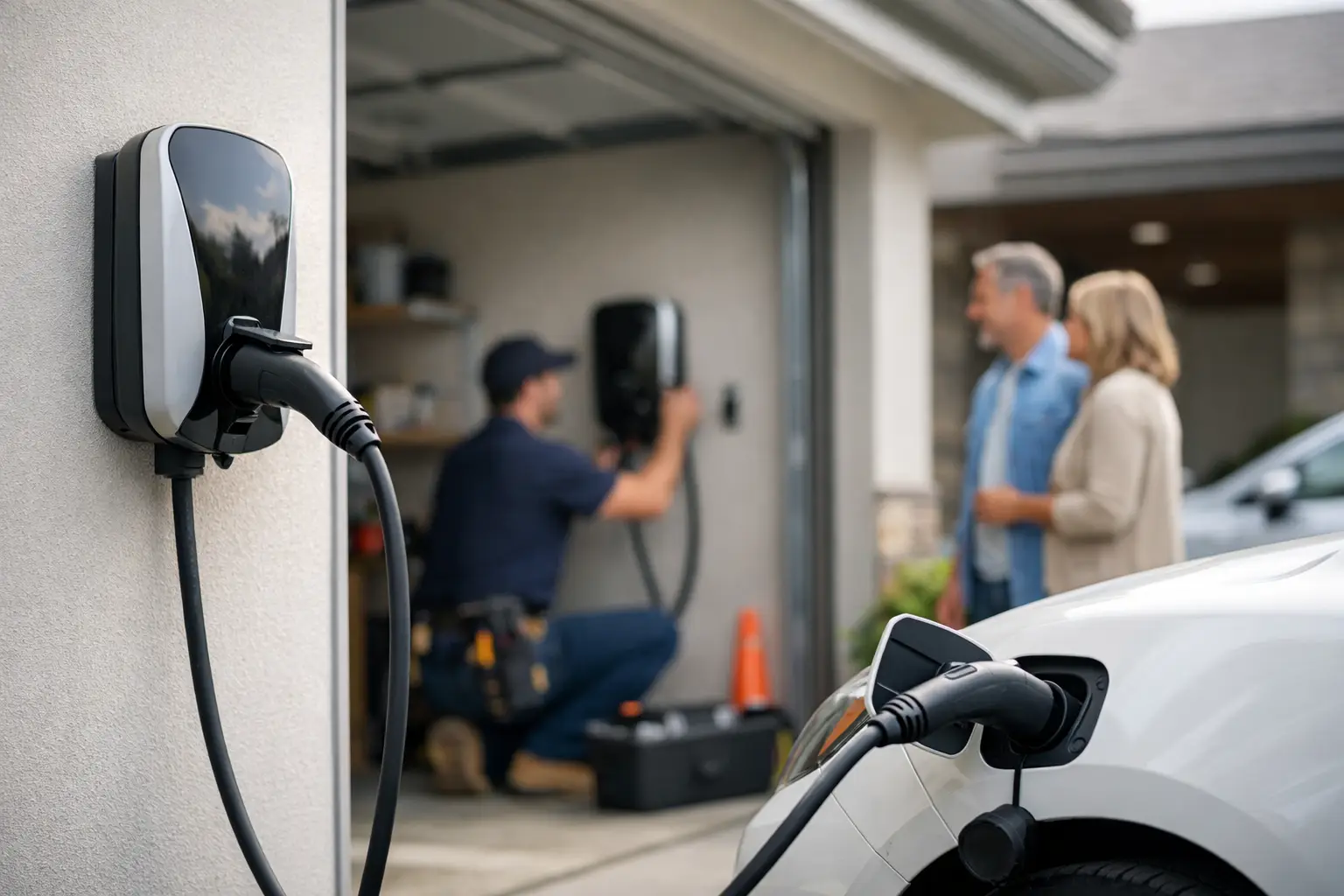
If you’re planning EV charger installation home, the main question is rarely just which charger to buy. It is whether your property can support it safely, how long the work will take, and whether the result will be reliable enough for everyday use. That matters even more in London homes, where parking layouts, older consumer units and shared access can complicate what looks simple on paper.
Why home charging needs proper planning
A home EV charger is not the same as plugging in a new appliance. It draws a significant electrical load for extended periods, often overnight, and that means the installation has to be assessed properly from the start. A rushed job can lead to nuisance tripping, poor charging performance, cable routing problems, or safety risks that should never have been left behind.
For most households, the real value of home charging is convenience. You park, plug in and wake up with the car ready to go. But that convenience only holds up when the charger is matched to the property, the vehicle, and the way you actually use it. A larger unit is not always better, and the cheapest installation is not always the one that causes the least disruption later.
EV charger installation home – the first checks that matter
Before any installation is booked, the electrical supply needs a proper look. A qualified engineer should assess the consumer unit, earthing arrangement, available capacity and the route from the board to the charger position. This is where experience matters. On some properties, the work is straightforward. On others, especially period houses, converted flats and rental stock, there may be limitations that need dealing with first.
One of the most common issues is an older consumer unit that is not suitable for a modern charger circuit. If protective devices are outdated or there is no safe way to add a dedicated circuit, an upgrade may be needed before the charger can go in. That adds cost, but it also avoids a half-finished solution that is unsafe or unreliable.
Parking arrangement is the other early factor. Off-street parking makes life much easier, but even then the cable run needs thinking through. If the charger is placed too far from the vehicle position, the install can become more expensive and visually messy. If it is placed badly, using it every day becomes inconvenient. Good installation is not just about electrical compliance. It is also about practical use.
Can every property have a charger?
Not always, at least not without some extra work. A house with a driveway is usually the simplest case. A flat can be more complicated, particularly where parking is communal, the supply is shared, or landlord and freeholder permissions are involved. That does not mean it cannot be done, but it does mean the job needs careful review before promises are made.
For landlords, the decision often comes down to long-term value. A properly installed EV charger can make a rental property more attractive, but only if it is safe, documented and suitable for the tenant’s parking arrangement. Temporary fixes rarely stand up well in managed properties.
Choosing the right charger for your home
Most domestic installations centre on a 7kW charger, and for many drivers that is the sensible middle ground. It offers practical overnight charging without putting unnecessary strain on the installation or requiring a more complex setup than the property needs. For households with one EV and a normal daily commute, that is often enough.
There are cases where charging speed matters more. If mileage is high, vehicle battery size is larger, or more than one EV uses the property, charger choice becomes more important. Smart charging features can also make a real difference. Load management, scheduled charging and app control are not gimmicks when they help avoid peak-rate electricity use or manage demand within the home.
Brand matters too, but not in the way many people think. A well-known charger is useful, yet a good installation backed by proper testing matters more than a long feature list. The right unit is the one that works reliably with your supply, suits your routine and does not create avoidable maintenance issues.
Tethered or untethered?
This is often decided by habit rather than technology. A tethered charger has a fixed cable attached, which is convenient for daily use and usually quicker when arriving home late. An untethered charger has a socket only, so the cable is stored separately in the vehicle. That can look tidier and may suit some properties better.
Neither is universally right. If appearance and space matter, untethered may be preferable. If speed and convenience matter more, tethered tends to win.
What affects the installation cost
Homeowners often want a single flat number before anyone has looked at the property. In reality, pricing depends on the work involved. A straightforward install on a modern house with easy cable access will cost less than a job requiring a consumer unit upgrade, long cable runs or difficult wall construction.
The main cost factors are the charger itself, the distance from the consumer unit to the charge point location, the condition of the existing electrics, and whether any remedial work is required. Some installs also need additional containment, drilling, external weatherproofing or routing around finished interiors that the owner wants left neat and intact.
This is why transparent pricing matters. A proper quote should reflect the real scope of work rather than tempt with a low headline price that grows once the engineer arrives. For busy households and landlords, predictability is often as important as the final figure.
How long does an EV charger installation take?
A standard domestic installation can often be completed within a day, but that assumes the property is ready for it. If the board needs upgrading, permissions are outstanding, or cable routes are awkward, it may take longer or need to be scheduled in stages.
The best installers are direct about this. They do not promise a same-day turnaround on a property that clearly needs preparatory work. Speed is valuable, but not at the expense of testing, certification and a tidy finish.
In occupied homes, disruption should be kept to a minimum. That means clear communication on drilling points, temporary power isolation, parking access and where equipment will be mounted. Small details make a big difference when work is taking place around family life or tenant occupation.
Safety, compliance and testing
This is the part that should never be treated as optional. A home EV charger must be installed on a properly designed circuit, with the correct protective devices, suitable earthing considerations and full testing after completion. The charger should also be commissioned correctly so it operates as intended.
When this is handled properly, the result is simple for the customer. You know the charger has been installed by a qualified electrician, the system has been tested, and the paperwork is in order. That is especially important for landlords and property managers who need a clear service record.
If an installer glosses over testing or gives vague answers about certification, that is a warning sign. Charging equipment is not an area for guesswork.
Common problems that delay the job
The biggest delays are usually not caused by the charger. They come from hidden issues in the existing installation. An undersized or crowded consumer unit, poor earthing, limited spare capacity, blocked cable routes or unclear ownership of external walls can all slow progress.
Access is another practical issue. In some London streets, parking restrictions and narrow frontages affect where vans can stop, how ladders are used and how cables are run. In flats and managed buildings, approval from a freeholder or managing agent may be needed before work starts.
These are not reasons to avoid the project. They are reasons to get it assessed properly before dates are promised.
Who should carry out EV charger installation home work?
Use a qualified electrician with direct experience in EV charging, not just general wiring. There is a difference between being able to add a circuit and being able to design and install a charger setup that performs well day after day. The best results come from engineers who understand both compliance and real-world use.
That is especially useful when the property already has other electrical demands, or when appliance and electrical issues overlap. A service-led engineering company such as FaultFree Engineering Group can assess the wider condition of the installation rather than treating the charger as an isolated add-on.
Ask direct questions. What checks will be carried out before installation? Is remedial work quoted clearly? Will testing and certification be provided? A dependable contractor will answer plainly.
A good home charging setup should feel boring in the best possible way. You plug in, it works, and you do not have to think about it again. That is what proper workmanship looks like, and it is worth getting right first time.