
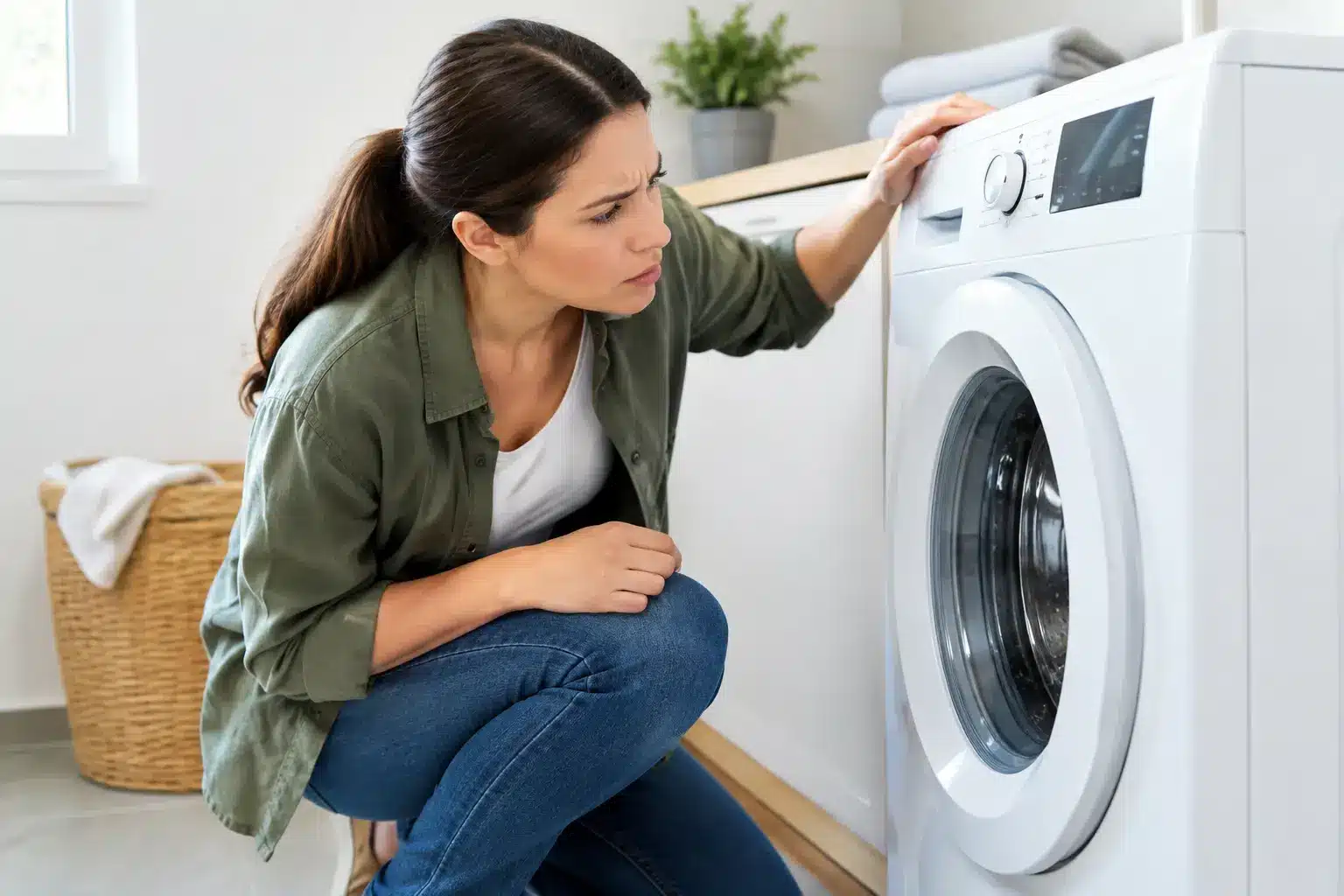
A washing machine that suddenly bangs, grinds or squeals can turn an ordinary wash into a concern about water damage, a failed appliance or an unhappy tenant. Knowing how to diagnose washer noise starts with identifying exactly when the sound occurs. The point in the cycle, the type of noise and whether the drum moves normally will usually narrow the fault down quickly.
Do not keep running a machine that is making a harsh grinding sound, repeatedly walking across the floor or showing signs of leaking. Switch it off at the mains, turn off the water supply if there is a leak, and arrange a proper inspection. A small mechanical fault can become a costly repair if the washer is allowed to run under strain.
Diagnose washer noise by when it happens
A washing machine does different work during filling, washing, draining and spinning. Noise tied to one stage is more useful than a general description such as “it is loud”. Before moving the machine or removing anything, run a short empty cycle only if it is safe to do so, and listen from a sensible distance.
Banging or thumping during spin
A heavy thud is often caused by an unbalanced load. Towels, bedding, trainers and a single bulky item can gather on one side of the drum, particularly in a high-speed spin. Stop the cycle, wait for the door to unlock, then spread the items evenly or remove part of the load before trying again.
If the machine bangs even when it is empty, check whether it is stable. Press gently on each corner. A washer should not rock. Adjustable feet that have worked loose, an uneven floor or a machine pushed against a cabinet can all create alarming vibration. Ensure the appliance has clearance from walls and units, then level it carefully.
On a newly installed appliance, confirm that the transit bolts have been removed. These bolts secure the drum for transport and must not remain in place during use. A machine operated with transit bolts fitted can shake violently and may suffer internal damage.
Rattling, clinking or scraping while the drum turns
Metallic rattling usually points to a foreign object. Coins, screws, bra wires, hair grips and small items left in pockets can slip between the drum and outer tub. They may be heard during washing, then become more obvious at spin speed.
First check the drum and the rubber door seal with the machine unplugged. Turn the drum slowly by hand and listen for a scrape. If you can see an object, do not force it out with a sharp tool. It is easy to damage the seal or drum. Objects that have dropped behind the drum may need access through the heater area or sump hose, which is a job for an appliance engineer.
A plastic rattle can also come from a loose detergent drawer, an item caught in the door seal or drain pipework knocking against the cabinet. These are less serious, but they still deserve attention if the sound is new.
Grinding or rumbling, especially on spin
A low rumble that becomes louder as the drum speeds up is one of the more concerning washer noises. It can indicate worn drum bearings. With the appliance switched off, open the door and lift the inner drum gently from the top edge. Noticeable up-and-down movement, a rough feel when turning it or brown staining around the rear of the drum can support this diagnosis.
Bearing repairs vary considerably by model. Some washing machines allow the bearings to be replaced separately, while others use a sealed outer drum and may require a more substantial repair. Continuing to use the appliance can damage the shaft, seal and drum assembly, so it is best to book a diagnosis promptly rather than waiting for a complete failure.
A grinding sound can also come from a damaged pump, particularly if it happens while draining rather than spinning. The timing matters.
Buzzing, humming or a harsh noise when draining
If the noise begins when water leaves the machine, inspect the pump filter if your model has one. Switch off and unplug the washer first. Place towels and a shallow tray beneath the filter access point because residual water will usually escape. Remove lint, buttons, coins and other debris, then refit the filter securely.
A pump that hums but does not drain may be obstructed, seized or electrically faulty. Do not repeatedly restart the cycle in the hope that it will clear itself. This can overheat the pump and leave dirty water trapped in the appliance. If the filter is clear and the washer still will not drain, an engineer should test the pump, hoses and relevant electrical connections.
Squeaking or squealing
A high-pitched squeal may come from the drive belt slipping, a worn motor component or a drum bearing beginning to fail. Belt-driven machines can squeak more when the load is heavy. On some models, a loose or worn belt is straightforward to replace, but the cause should be confirmed before fitting parts.
Modern washers may use inverter motors without a conventional belt, so assumptions based on an older machine can be misleading. The appliance make, model and age affect both the likely cause and the sensible repair route.
Safe checks before you call for washer repair
A few basic checks can save time and help an engineer arrive prepared. Do not remove the rear panel or work on internal wiring unless you are qualified to do so. Washing machines combine water, moving parts and mains electricity, so safety comes first.
Start by checking the load and the machine’s position. Remove loose items from the drum and seal, make sure the detergent drawer is seated correctly, and inspect the drain filter where accessible. Look behind the appliance for a trapped hose or a power cable rubbing against the casing. If the washer has moved, do not pull it forward by the door or detergent drawer.
Make a note of the following details before arranging a visit:
- the make and model number, usually found inside the door or on the rating plate;
- the sound itself: bang, rattle, rumble, squeal, grind or hum;
- when it happens: filling, drum rotation, draining or high-speed spin;
- whether there is vibration, poor draining, an error code, a burning smell or a leak.
These observations help separate a simple load or levelling issue from a pump, suspension, motor or bearing fault. They also reduce delays when replacement parts may be needed.
When washer noise needs an engineer
Call for professional appliance repair if the drum has play, the washer grinds, trips the electrics, leaks, smells hot or will not complete a cycle. The same applies if the machine is violently vibrating despite being level and correctly loaded. Suspension springs, shock absorbers, counterweights and internal mounts can loosen or fail, and these parts should be assessed properly.
For landlords and property managers, acting early is especially practical. A noisy washer can become an out-of-service appliance at short notice, disrupt a tenant and, in the case of a leak or electrical fault, create wider property damage. A documented repair assessment also gives a clearer basis for deciding whether repair remains cost-effective.
FaultFree Engineering Group provides washing machine fault finding and repair across London, with a focus on accurate diagnosis, transparent pricing and durable repairs. An experienced engineer can test the appliance under the correct conditions, identify the failed component and advise honestly where repair or replacement makes better financial sense.
The useful rule is simple: a one-off clink from a coin or a thump from an uneven duvet load may be easily resolved. A repeated mechanical noise, especially one that worsens at spin speed, is the machine asking for attention. Stop using it before the fault develops into damaged flooring, a failed drum or an avoidable emergency callout.