
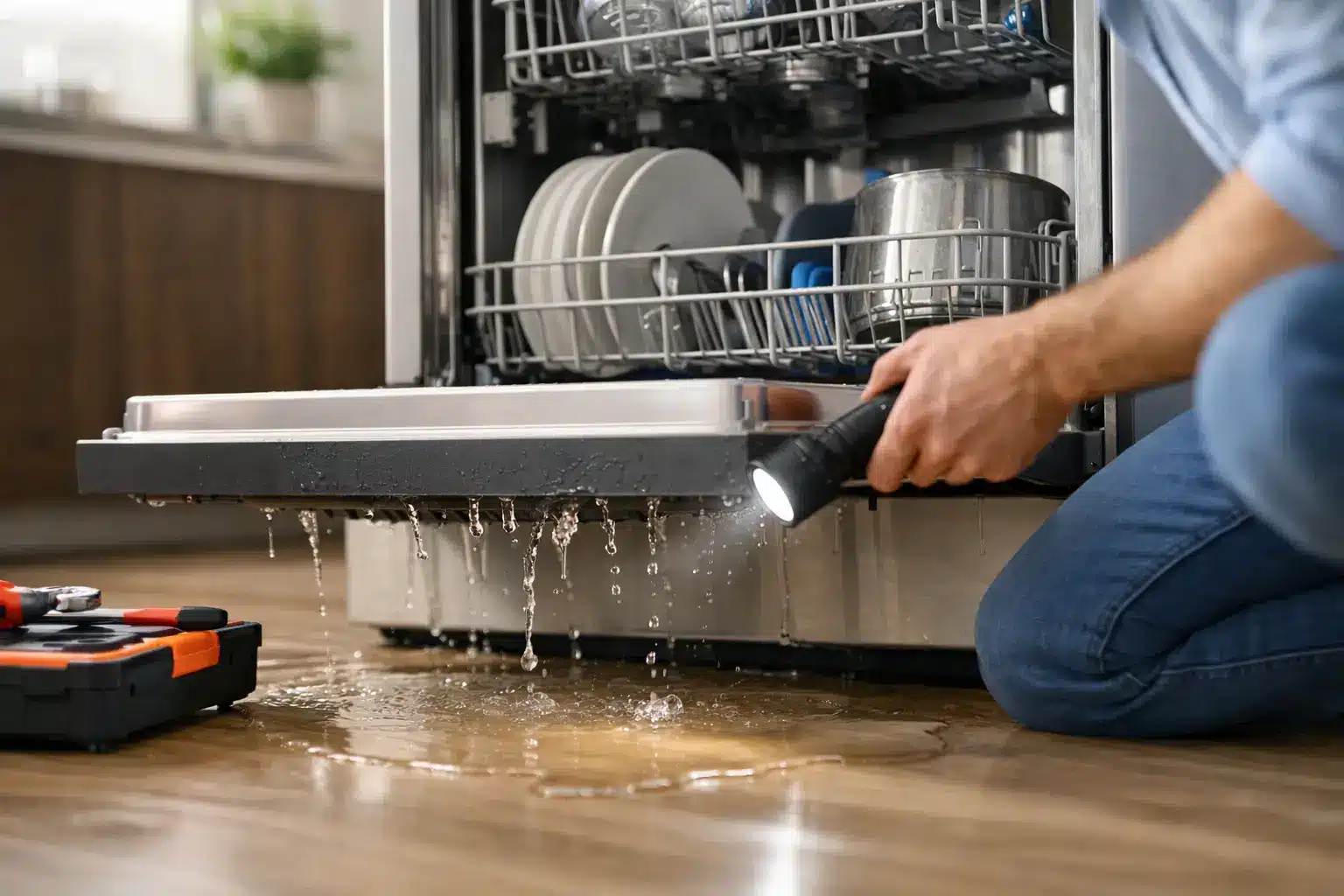
A puddle under the kitchen units is never something to ignore. If you are asking what causes dishwasher leaks, the answer can range from a simple blocked filter to a split hose, failed pump seal or installation fault. The quickest way to limit damage is to stop using the appliance, switch it off at the mains if safe to do so, close the water supply where possible, and establish where the water is appearing.
Dishwashers use pressurised water, heat and drainage systems in a compact space. A small fault can therefore create a surprisingly large leak, particularly once a cycle reaches its wash or drain stage. The location and timing of the leak often give a qualified engineer useful clues before the machine is even pulled out.
What causes dishwasher leaks in the first place?
Not every wet floor means the dishwasher itself has failed. Water can travel along pipework, underneath flooring, or out from a nearby sink waste connection. However, leaks generally come from one of four areas: the door and its seal, the water supply, the internal wash system, or the drain system.
If water appears at the front during a wash, the door seal, door alignment or excessive foaming may be responsible. Water at the back often points to inlet or drain hoses, plumbing connections, or the water inlet valve. A leak underneath can be caused by a pump, sump, internal hose or seal. Some models detect water in their base tray and stop working or display a fault code to prevent further flooding.
The following clues are useful, but they are not a substitute for safe diagnosis:
- Water leaking from the front usually occurs while the dishwasher is filling or washing.
- Water appearing after the cycle may indicate a drainage or waste-pipe issue.
- A leak only when the dishwasher is running can suggest an internal hose, pump or door problem.
- Water present even when the appliance is off can indicate a supply hose, isolation valve or plumbing connection fault.
A worn, dirty or damaged door seal
The rubber gasket around the dishwasher door is designed to contain water while the spray arms are operating. Over time, it can flatten, tear, harden or collect grease, food debris and detergent residue. Even a small gap may allow water to escape under pressure.
Inspect the seal with the dishwasher switched off and cool. Look for visible splits, loose sections and trapped debris, especially around the lower corners. Wiping the seal with a soft damp cloth may resolve minor build-up, but it will not repair a perished gasket. Forcing the door shut or adding extra detergent is not a fix and can make matters worse.
Door alignment matters too. A dishwasher that has moved forward, is not level, or has a damaged hinge may not close evenly against the seal. This is common after flooring work, kitchen fitting or when a built-in appliance has been removed and refitted. Correct levelling is precise work: adjusting the feet too far in one direction can affect door movement and drainage.
Too much foam can force water past the door
Using washing-up liquid instead of dishwasher detergent produces excessive suds very quickly. The foam can push through the door area and look like a serious mechanical leak. Overdosing detergent, using the wrong product, or leaving rinse aid spilled inside the machine can also increase foaming.
If this has happened, stop the cycle, avoid adding more detergent, and remove standing foam carefully once the appliance is safe to open. Several rinse cycles may be needed. If the dishwasher continues to leak afterwards, there may be a separate issue requiring inspection.
Blocked filters and spray-arm problems
Dishwasher filters catch food particles before the water reaches the pump. When filters are blocked or incorrectly refitted, water circulation and drainage can be affected. In some cases, water may build up inside the appliance and find its way through the door area.
Remove and clean the filters according to the manufacturer instructions, checking that they lock back into position correctly. Do not run a dishwasher without its filters fitted. Also check that the spray arms can rotate freely and that their holes are not blocked with debris or limescale.
A cracked or split spray arm can direct a concentrated jet of water at the door seal. This is an easily missed cause of dishwasher leaks because the appliance may otherwise seem to wash normally. If the leak happens only partway through the wash cycle, an engineer will often inspect the spray arms, filter seating and water circulation system early in the diagnosis.
Split hoses and loose plumbing connections
Every dishwasher has an inlet hose bringing clean water in and a drain hose carrying used water away. Both can become loose, kinked, worn or damaged. Older hoses may split, while connections can loosen after the appliance has been moved for cleaning, decorating or repair work.
Check visible pipework without pulling the dishwasher out aggressively. Look for drips around the water inlet connection, drain hose and sink waste trap. A drain hose should be routed and secured correctly. If it is crushed behind the machine or positioned incorrectly, it can restrict drainage, strain the hose, or allow water to escape from a connection.
Do not simply tighten every fitting with force. Plastic connectors can crack, and a leaking pipe may be damaged rather than loose. If the appliance is integrated, removing it without the right approach can damage cabinet doors, flooring or electrical connections.
Faulty pumps, valves and internal seals
Water escaping from beneath the dishwasher is more likely to require professional repair. The drain pump removes dirty water at the end of a programme, while the circulation pump sends water through the spray arms. Both contain seals and connections that can fail with age, wear or debris damage.
A failed pump seal may leak only during draining or washing. A damaged sump, hose clamp or internal pipe can cause similar symptoms. Mineral deposits and limescale can contribute to component wear, particularly in hard-water areas, while broken glass or small objects can damage pump components.
The inlet valve is another possible culprit. This valve controls the water entering the appliance. If it fails, sticks or develops a cracked housing, the dishwasher may overfill or leak from the rear or base. Some modern machines have anti-flood systems that shut off the water supply when a leak is detected, but this protection does not remove the need to find and repair the original fault.
Installation faults can cause leaks from day one
A dishwasher that has leaked since installation may not have a defective part at all. Incorrect hose routing, poorly secured waste connections, missing seals, uneven levelling or an incorrectly fitted door panel can all cause trouble. The risk is higher with integrated dishwashers, where the appliance must sit securely within the cabinet space while maintaining the correct plumbing and electrical clearances.
Installation faults should be corrected rather than managed with towels, sealant or a drip tray. Water can damage kitchen units, subfloors and adjacent electrical points long before the visible signs become obvious. For landlords and property managers, a recurring leak also risks disruption for tenants and more costly remedial work later.
When to stop checking and arrange a repair
Basic checks such as cleaning filters, inspecting the door seal and looking for obvious external drips are reasonable. Internal repairs are different. Do not remove side panels, dismantle pumps or work around live electrical connections unless you are trained and the appliance is safely isolated.
Arrange a qualified dishwasher repair if water is coming from underneath the appliance, the leak returns after cleaning the seal and filters, a hose or valve is damaged, the dishwasher trips the electrics, or there is a burning smell. A machine that has leaked near a socket, extension lead or electrical connection should remain switched off until it has been assessed.
FaultFree Engineering Group provides practical dishwasher fault diagnosis and repair for London households, landlords and businesses. A proper inspection identifies whether the issue is the appliance, its installation or the connected plumbing, so the repair addresses the cause rather than just the visible water.
A dishwasher leak rarely improves with continued use. Acting early protects your kitchen, reduces the chance of electrical risk and gives you the best chance of a straightforward repair rather than an avoidable replacement.