
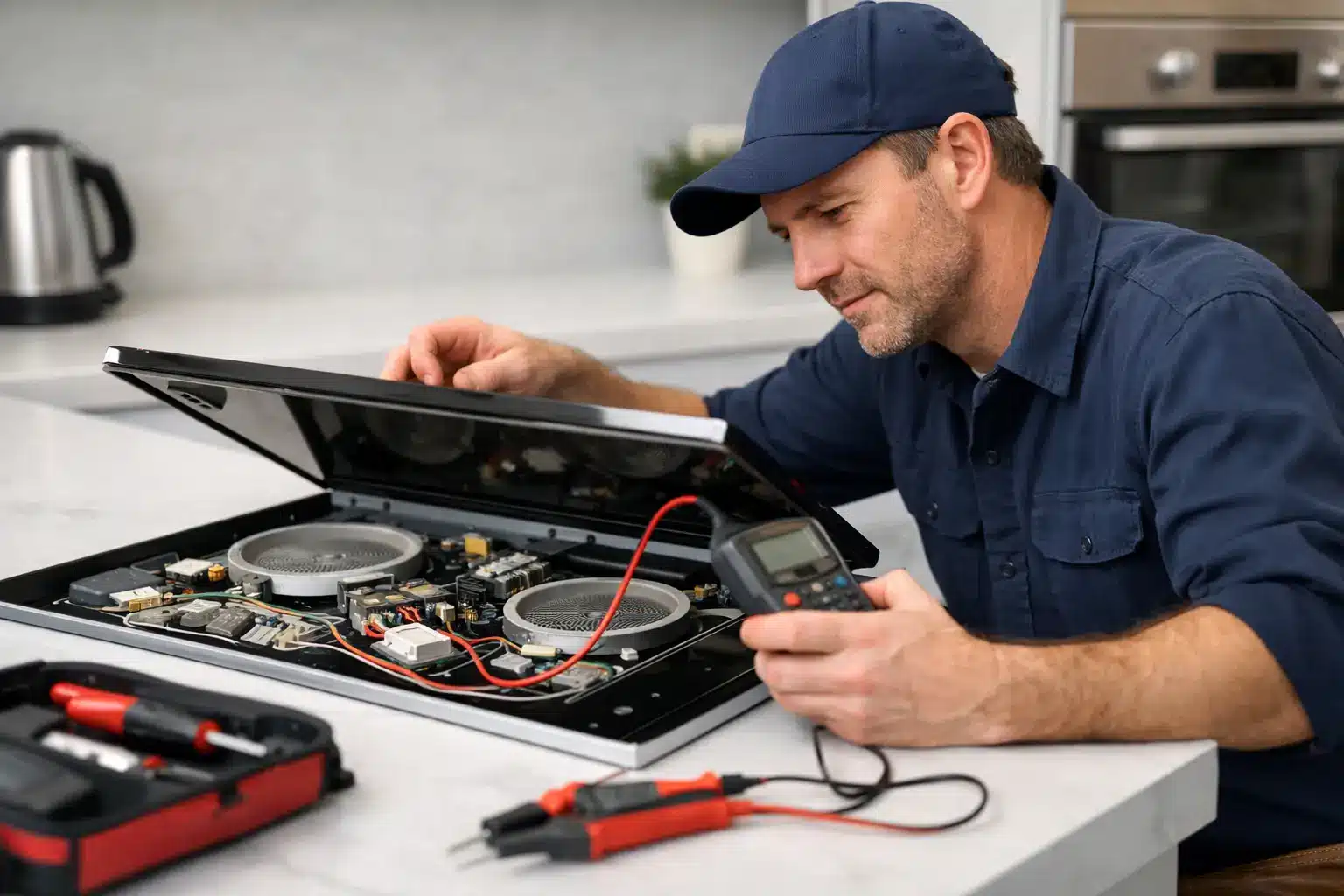
A hob that will not heat, keeps beeping, trips the electrics or shows an unfamiliar code can stop a kitchen in its tracks. This electric hob fault diagnosis guide helps you separate the simple checks from faults that need a qualified appliance and electrical engineer. The aim is not to encourage risky DIY repairs. It is to help you report the problem accurately, protect your property and get the right repair arranged without delay.
Electric hobs combine high-load electrical components, heat controls and, in the case of induction models, sensitive electronic boards. A fault can sit in the appliance itself, the supply cable, the connection point or the consumer unit. That distinction matters. Replacing a part before identifying the cause can waste time and money, while working on a live or hard-wired appliance can be dangerous.
Start with the fault, not the suspected part
The most useful information is what happened immediately before the hob failed. Did one cooking zone stop heating while the others still work? Did the display go blank after a power cut? Does the circuit trip only when a particular zone is selected? These details narrow down the likely cause quickly.
Before touching the hob, turn it off at its controls and allow every zone to cool fully. Do not remove the underside cover, pull out a built-in hob or access terminals while it is connected to the electricity supply. Hobs are often hard-wired, so switching off at the wall is not always enough to make the circuit safe.
A few safe observations are worth making. Check whether the cooker control switch is on, whether the display has an error code, and whether other appliances on the same circuit have lost power. If the hob has an obvious cracked glass surface, burning smell, scorch mark, loose control knob or signs of moisture, stop using it and arrange an inspection.
Common electric hob faults and what they suggest
One zone will not heat
When one zone fails but the display and remaining zones operate normally, the problem is usually local to that zone. On a ceramic hob, possible causes include a failed radiant element, faulty limiter or damaged wiring connection. On an induction hob, the issue may be the induction coil, temperature sensor, power module or pan-detection circuit.
Try a suitable pan on another zone. With induction, use a flat, magnetic pan that matches the zone size. A non-magnetic pan, warped base or pan that is too small can make a healthy induction zone appear faulty. If several compatible pans are not detected on one zone, the hob needs proper diagnosis.
The whole hob is dead
A completely blank hob may have lost its supply, but it is not safe to assume the appliance is at fault. Check the cooker switch first, then look at the consumer unit only if it is safe and accessible. A tripped breaker or RCD may indicate an overload, earth leakage or fault on the hob circuit.
You can reset a tripped device once. If it immediately trips again, leave it off. Repeated resetting can worsen damage and increases the risk of overheating. An engineer should test both the appliance and the fixed electrical circuit to establish where the fault lies.
The hob trips the breaker or RCD
This is one of the most urgent symptoms in an electric hob fault diagnosis guide. A breaker can trip when there is a short circuit or excessive current draw. An RCD may trip because electricity is leaking to earth, often through moisture, insulation damage, a failing element or electronic component.
Note whether the trip happens as soon as the hob is switched on, only after a certain zone is selected, or after it has heated for several minutes. That timing is valuable diagnostic evidence. Do not keep testing it repeatedly or use an extension lead as a workaround. A cooker circuit is designed for a high electrical load and needs an appropriate fixed connection.
The hob heats unevenly or gets too hot
A zone that cycles excessively, overheats or remains red-hot after the control has been turned down can have a failed energy regulator, thermostat, sensor or control board. On a ceramic model, the residual heat indicator may stay illuminated for a short time after cooking, which is normal. The element itself should not continue producing heat once the control is off.
If a zone will not regulate, switch the hob off at the cooker isolation switch if this can be done safely, then avoid using it. An uncontrolled heating fault can damage pans, worktops and the hob surface.
The controls beep, flash or show an error code
Modern induction and touch-control hobs communicate faults through lights, letters and codes. Some messages simply mean a zone is still hot, the control panel is wet, a pan is unsuitable or a child lock is active. Wipe the glass with a dry cloth, remove objects from the controls and allow the hob to cool.
If an error returns after the hob has been isolated and restarted, record the exact code rather than guessing. The manufacturer, model number and code help an engineer identify whether the likely issue is the fan, sensor, touch-control panel or power electronics. Error codes vary by brand, so one code does not always mean the same thing across different models.
Cracked glass or visible damage
A chipped or cracked ceramic or induction glass surface is not merely cosmetic. Spills can reach electrical components beneath the glass, and heat can make damage spread. Stop using the hob, especially if the crack crosses a cooking zone or extends to the edge.
Do not attempt to seal the crack or continue cooking around it. Replacement glass may be possible on some models, but the decision depends on the extent of damage, parts availability and the cost compared with replacing an older hob.
Safe checks you can make before booking a repair
A short, accurate fault report can speed up diagnosis and improve the chance of a first-visit repair. Have the make, model and serial number ready. These are usually found on the rating plate underneath the hob, within installation paperwork or on the original purchase information. Do not remove the appliance simply to find it.
It also helps to note the following in your booking request:
- whether the fault affects one zone or the entire hob
- any error code, unusual noise, smell or visible damage
- whether the cooker circuit trips, and at what point it trips
- whether the hob is ceramic, solid plate or induction
- whether there has been a recent power cut, water spill, installation or electrical work.
For an induction hob, checking the pan type is sensible. For any hob, cleaning moisture from the touch controls and confirming that the cooker switch has not been turned off are reasonable first steps. Beyond that, testing elements, terminals, boards or supply voltage requires the correct instruments and safe isolation procedures.
When the fault may be in the electrical installation
Not every apparent hob failure is an appliance repair. A loose connection at the cooker outlet, damaged cable, undersized circuit, faulty isolator or consumer unit issue can interrupt the supply or cause tripping. This is particularly relevant after a new hob installation, kitchen refurbishment or repeated electrical faults elsewhere in the property.
A qualified engineer can determine whether the defect is inside the hob or in the fixed wiring. That combined approach avoids the common frustration of replacing an appliance part when the real issue is at the connection point. For landlords and property managers, it also provides a clearer record of what was tested and what work is required to keep the property safe.
When to stop using the hob immediately
Turn off the hob and arrange professional help if you notice burning, smoke, sparking, a persistent electrical smell, a cracked surface, repeated tripping, exposed wiring or a zone that cannot be controlled. Do not pour water onto an electrical fire. If there is immediate danger, isolate the power only if it is safe to do so and follow emergency guidance.
If the hob is working intermittently, it may be tempting to carry on until it fails completely. That can be a false economy. Intermittent faults often become harder to trace after heat damage or repeated circuit trips, and a controlled inspection is safer than an emergency breakdown during service.
FaultFree Engineering Group can diagnose electric hob faults across London with appliance engineering and electrical fault-finding expertise in one visit where possible. You receive straightforward advice on whether repair is practical, what parts are required and whether the supply circuit needs attention.
A reliable hob should heat predictably, respond to its controls and operate without tripping the electrics. If yours does not, stop guessing at parts and record the symptoms. A proper diagnosis is the quickest route back to a safe, working kitchen.