
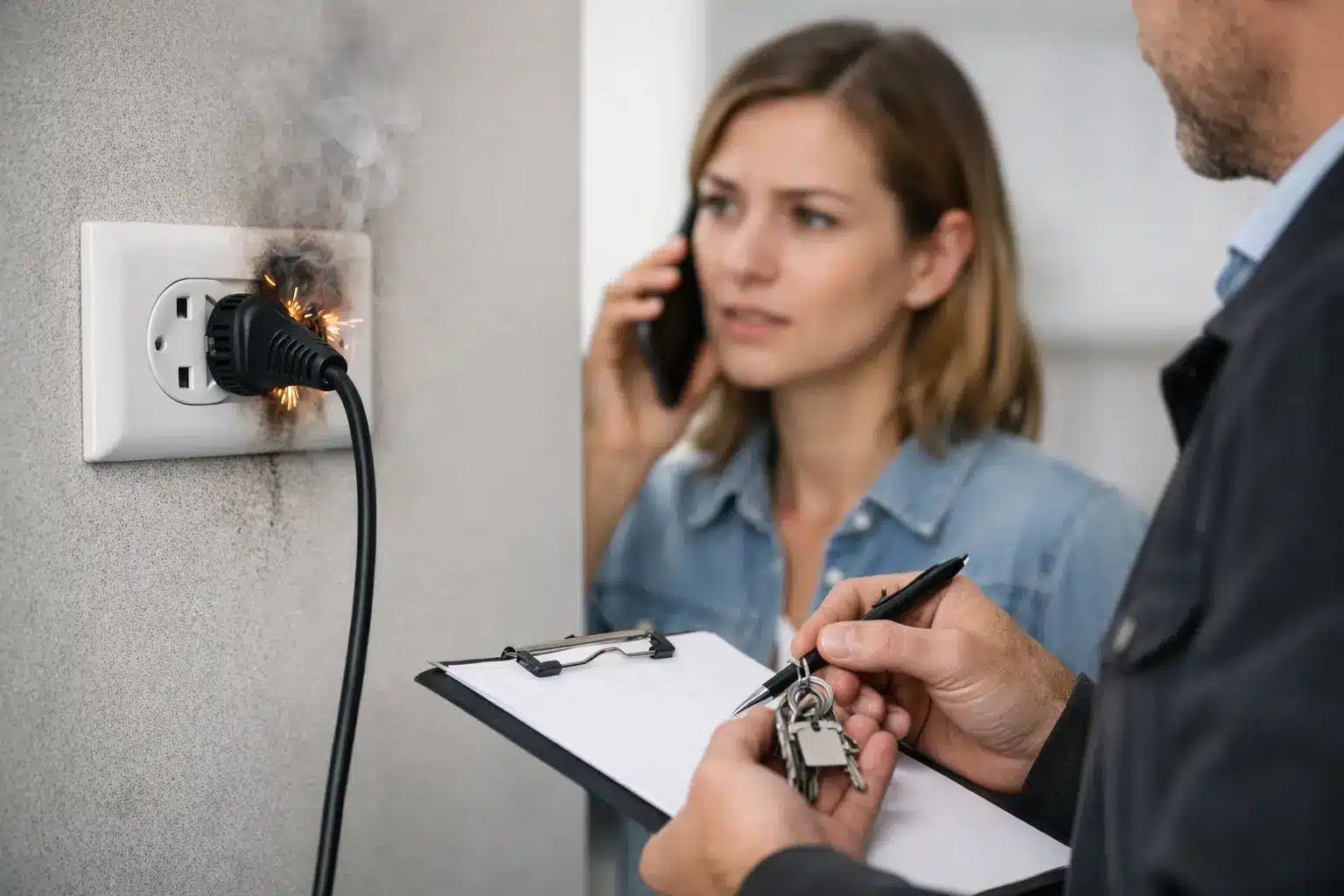
A tripping fuse board at 10pm, a socket that feels hot, or lights that flicker whenever the washing machine runs are not problems to leave until the next rent day. Reporting electrical faults to your landlord quickly and clearly protects the people in the property, creates a record of the issue, and gives the landlord the information needed to arrange the right repair.
For tenants, the priority is safety rather than proving exactly what has failed. For landlords and managing agents, a prompt, documented response helps keep the property safe, reduces the risk of a more expensive breakdown and supports ongoing compliance.
When an electrical fault needs urgent action
Some faults need attention immediately, even if the cause is not yet clear. Switch off power at the consumer unit only if it is safe to do so and you know which circuit is affected. Do not remove socket fronts, investigate wiring, or repeatedly reset a breaker that keeps tripping.
Treat a burning smell, smoke, sparking, visible scorch marks, electric shocks or a hot plug, switch or socket as an emergency. Keep people away from the affected area and call 999 if there is a fire or immediate risk to life. If there is a wider power cut affecting neighbouring homes, contact the electricity network operator on 105 rather than assuming the fault is within the rental property.
A loss of lighting, a repeatedly tripping circuit, a failed cooker supply or a damaged socket may not always require the emergency services, but it should still be reported straight away. A small fault can develop into a safety issue, particularly where water, damaged cables or high-load appliances are involved.
Reporting electrical faults to a landlord clearly
Send the report in writing, even if you first call the landlord or letting agent. An email, tenant portal message or text provides a time-stamped record and avoids confusion over what was said. Keep the message factual: explain what happened, when it started, what part of the property is affected, and whether there are any signs of danger.
A useful report should include the room and exact item involved, such as “double socket beside the kitchen sink” or “downstairs lighting circuit”. State whether the issue is constant or intermittent, whether a circuit breaker has tripped, and what was connected at the time. Photos or short videos can help, provided they can be taken without putting anyone at risk.
For example, instead of saying “the electrics are broken”, write: “The kitchen socket beside the fridge made a crackling sound at 7.15pm and is warm to touch. I have unplugged the fridge and switched off the kitchen socket circuit at the consumer unit. There is no smoke, but the socket should not be used.” That gives the landlord or contractor a much clearer starting point.
Ask for acknowledgement and confirm how access can be arranged. If the fault affects essential lighting, heating controls, cooking facilities or a supplied appliance, say so. This helps the landlord assess urgency and arrange the right engineer rather than sending someone without the appropriate electrical or appliance expertise.
Keep a simple record
Save copies of your messages, photos, appointments and any advice you receive. This is not about creating conflict. It simply ensures everyone can see when the issue was reported, what action was requested and whether the problem has changed.
If a contractor visits, note what was tested, what was isolated and whether you have been told not to use a circuit or appliance. Do not reconnect anything that has been identified as unsafe just because it appears to work again.
What is normally the landlord’s responsibility?
In most rented homes, the landlord is responsible for ensuring the fixed electrical installation is safe. This includes the consumer unit, fixed wiring, sockets, switches, light fittings and permanently connected equipment. Private landlords in England must also ensure the electrical installation is inspected and tested by a qualified person at the required intervals, generally at least every five years, with remedial work completed within the timescale stated on the report.
The situation can be less straightforward with appliances. If a landlord supplied the oven, washing machine or fridge freezer as part of the tenancy, they will usually be expected to address faults caused by age, normal use or an underlying electrical issue. If the appliance belongs to the tenant, its repair or replacement will normally be the tenant’s responsibility, unless the fault is caused by the property’s wiring or supply.
Damage caused by misuse is different from an ordinary failure. A cracked socket after accidental impact, for instance, should still be reported immediately because it may be unsafe. Responsibility for the cost can be discussed later. Safety should not wait for a dispute about liability.
Landlords should avoid diagnosing from a message alone. A cooker that will not turn on could be a failed appliance component, a faulty isolator switch, a tripped RCD or a supply issue. Sending a competent engineer to test before approving repairs prevents guesswork and helps achieve a proper first-time fix.
What tenants should do while waiting for repair
Once the fault has been reported, make the area safe without attempting a repair. Stop using the affected socket, switch, circuit or appliance. Unplug portable appliances by gripping the plug, not the cable, if this can be done safely. Keep children away from damaged fittings and do not cover hot electrical equipment or use extension leads as a long-term substitute for a failed socket.
If a circuit has tripped once and stays on after unplugging a particular appliance, leave that appliance unplugged and report the finding. Do not assume it is safe to continue using it elsewhere. Repeated tripping is a protective feature doing its job, and forcing it back on can create a more serious hazard.
Access matters too. Landlords need to arrange appointments with proper notice except in a genuine emergency, while tenants should make reasonable arrangements for an engineer to inspect the fault promptly. Delays are often caused not by the diagnosis itself, but by missed visits, unavailable keys or incomplete information about the problem.
A practical response for landlords and agents
A good response begins with acknowledgement. Confirm that the report has been received, ask tenants to avoid using any affected equipment, and establish whether there are signs of burning, shocks, smoke, water ingress or loss of essential services. Where there is a potential danger, arrange an urgent electrical attendance and give clear interim safety instructions.
The next step is matching the work to the fault. A qualified electrician should investigate fixed-wiring faults, consumer unit issues, circuits, sockets and lighting. An appliance engineer may be appropriate for a supplied washing machine, oven, dishwasher or fridge freezer, but electrical testing may still be needed where the appliance is tripping the circuit. One provider able to assess both sides can save time when the source is unclear.
After the visit, retain the engineer’s findings, invoices, test results and any electrical safety documentation. If remedial work is required, communicate the plan and timescale to the tenant. Transparent updates reduce frustration and demonstrate that the issue is being dealt with responsibly.
For London landlords managing busy properties, fast fault finding is especially valuable. FaultFree Engineering Group can diagnose fixed electrical faults and landlord-supplied appliance problems, helping avoid the delay of coordinating separate trades where the cause is uncertain.
When to escalate a delayed repair
If you have reported a potentially dangerous fault and receive no response, follow up in writing and restate the safety concern. Refer to the original report date, describe any worsening symptoms and ask when an engineer will attend. Keep your language calm and specific.
Where there is an immediate risk, take the urgent safety steps already described rather than waiting for a reply. For ongoing concerns about a landlord’s failure to deal with electrical safety, tenants can seek advice from their local council’s private sector housing team or an independent housing adviser. The correct route depends on the tenancy, the severity of the risk and whether the issue involves disrepair, an emergency or a wider dispute.
A well-reported fault gives everyone a better chance of resolving the problem before it interrupts a tenancy or puts someone at risk. Be clear, act early and leave electrical diagnosis and repair to qualified professionals.