
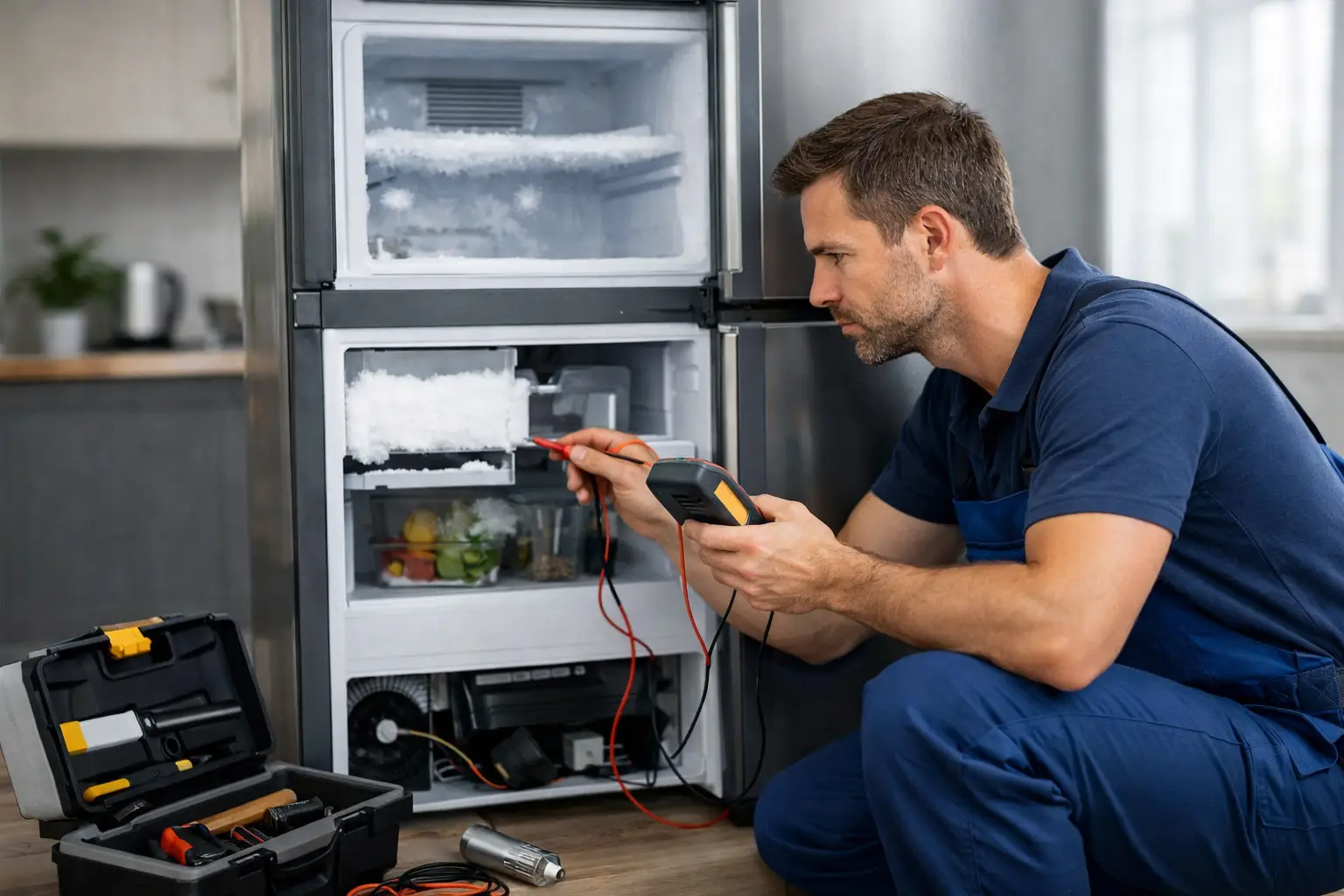
A fridge freezer rarely picks a convenient time to fail. It usually happens when the weekly shop is packed away, the freezer is full, and you suddenly notice warm milk, soft food or a puddle on the floor. This fridge freezer fault guide is built for that moment – when you need clear answers, quick checks and honest advice on whether the problem is minor or needs an engineer.
What this fridge freezer fault guide helps you identify
Most fridge freezer faults fall into a few clear categories. The appliance is not cooling properly, it is overcooling and freezing fresh food, it is leaking water, building up ice, making unusual noises, or cutting out completely. Sometimes the fault is mechanical. Sometimes it is electrical. Sometimes it is simply poor airflow, a blocked drain or a door seal that is no longer doing its job.
The key is not to guess. A fridge freezer can appear to be running while quietly failing to hold safe temperatures. That matters in any home, but especially in rental properties, shared households and small businesses where food loss and disruption quickly become expensive.
Fridge freezer not cooling properly
If both sections feel warm, start with the basics. Check the power supply, the plug, and whether the socket is live. Then look at the thermostat setting. It sounds obvious, but settings do get knocked, especially in busy kitchens or after cleaning.
Next, open the doors and listen. If the interior light works but the compressor is not starting, the issue may be with the start relay, control board, thermostat or compressor itself. If the fan is running but the appliance is still warm, you could be dealing with a sealed system issue, a failed evaporator fan, or a frost blockage stopping cold air movement.
Poor cooling can also come from simple airflow problems. If the fridge is packed tightly, cold air cannot circulate. If the unit is pushed too close to the wall, heat cannot escape efficiently from the condenser area. These are easy checks and worth doing before assuming the worst.
If only the fridge section is warm and the freezer still works, that often points to an airflow problem between compartments. On many models, the freezer creates the cold air and a fan or vent system shares it with the fridge. If that pathway is blocked by ice, or the fan has failed, the fridge warms up first.
Freezer working, fridge warm
This is one of the most common callouts because it feels confusing at first. Customers often assume the appliance is half working and safe to leave. In reality, this fault can worsen quickly.
The likely causes include a failed evaporator fan motor, a damper control fault, heavy ice build-up behind the rear panel, or a defrost system problem. The defrost heater, thermostat or sensor may have failed, allowing frost to build around the evaporator until airflow is restricted.
You can try a controlled reset by unplugging the appliance and leaving the doors open for several hours, with towels in place for water. This may temporarily clear an ice blockage. But if the fault returns, the underlying part failure still needs diagnosing. Repeated thawing is not a repair.
Water leaking from the fridge freezer
Leaks are often less dramatic than they look, but they should not be ignored. Water on the kitchen floor creates a slip risk and can damage cabinetry, flooring and nearby electrics.
A blocked defrost drain is a frequent cause. During normal operation, condensation and defrost water should pass through a drain channel and collect in an evaporation tray. If food debris, ice or residue blocks that route, water backs up into the fridge or onto the floor.
A damaged door seal can also create excess condensation, which then turns into pooling water. On plumbed models, a cracked water line or loose connection may be responsible. Less commonly, the appliance may be sitting unevenly, causing water to collect where it should not.
If you notice repeated leaking, check whether it appears after door openings, during defrost cycles, or only when the ice maker runs. That pattern helps pinpoint the source quickly.
Too much ice or frost build-up
A light frost coating in some older freezers can be normal. Heavy ice build-up is not. If drawers are jamming, rear panels are bulging, or food is trapped in ice, there is a fault somewhere in the defrost or sealing system.
Warm air entering through a worn gasket is a common reason. Every time humid room air gets in, moisture freezes inside. Over time, that frost becomes a solid blockage. Another cause is a door being left slightly ajar, which happens more often than people think when drawers are overfilled.
Where frost returns quickly after manual defrosting, the issue is more likely to be a failed defrost heater, sensor, timer or control board. At that stage, replacing parts based on guesswork can become expensive. Proper testing matters.
Fridge freezing food in the fresh food section
This fault is frustrating because the appliance appears to be cooling too well, yet it is still not operating correctly. Salad drawers freeze, milk forms ice crystals, and fresh food goes to waste.
Possible causes include a faulty thermostat, temperature sensor issue, damper fault or incorrect internal loading. Food placed directly against the back panel can freeze because that area is colder, especially in fan-assisted models. But if multiple shelves are affected and settings are already low, there is likely a control issue rather than a loading issue.
Some integrated and premium models use more advanced sensors and control boards. When they drift out of range, symptoms can look inconsistent – too cold one day, too warm the next. That is where accurate diagnostics save time.
Unusual noises – what is normal and what is not
Not every noise means a breakdown. Clicking, humming, light fan noise and occasional gurgling can all be normal parts of refrigeration. Refrigerant movement, compressor cycling and automatic defrost systems all create sound.
The concern starts when the noise changes sharply. A loud buzzing, repeated clicking without startup, grinding, rattling or squealing can point to a failing fan motor, compressor issue, loose component or drainage problem. If the noise is new and persistent, it is worth acting early. Components under strain often fail completely after a period of warning.
If the appliance has recently been moved, make sure it is level and not vibrating against cupboards or pipework. That simple adjustment can solve some noise complaints straight away.
When the appliance is completely dead
If there are no lights, no cooling and no sound, begin with the supply. Check the fuse in the plug, the consumer unit if relevant, and whether another appliance works from the same socket. If power is present but the fridge freezer is dead, internal electrical faults become more likely.
These may include a failed control board, wiring fault, thermostat issue, overload protector or compressor-related electrical failure. In some cases, especially after a power trip or surge, the fridge freezer fault is part of a wider electrical issue in the property rather than the appliance alone. That is one reason customers value an engineering team that understands both appliances and electrical systems.
When to stop troubleshooting and book a repair
A few checks are sensible. Ongoing trial and error is not. If food temperature is unsafe, there is burning smell, exposed wiring, repeated tripping, persistent leaking, or the appliance is warm despite power being present, it is time to book a professional diagnosis.
The same applies if you have already defrosted the unit, cleaned the drain, checked the seals and confirmed the settings. Once the easy causes are ruled out, further work often involves live testing, panel removal, continuity checks and part-specific diagnosis. That is not a good area for guesswork, especially in occupied homes or managed properties.
For landlords and property managers, speed matters as much as repair quality. A warm fridge freezer in a tenanted property quickly becomes a complaint, a hygiene issue and a potential replacement cost if not handled promptly.
A practical fridge freezer fault guide for avoiding repeat breakdowns
A fridge freezer will last longer with basic care, but maintenance has limits. Keep vents clear, avoid overpacking, wipe door seals, and make sure the doors close fully. Clean condenser areas where accessible, and do not ignore early signs like inconsistent temperatures, excess condensation or new noises.
That said, even well-maintained appliances fail. Fan motors wear out, sensors drift, boards fail and compressors age. Brand and build quality matter, but no model is immune. Miele, Samsung, LG, Bosch, Beko, Haier and other major makes all develop faults eventually. The difference is how quickly the issue is identified and whether the repair is done properly the first time.
If you need the fault dealt with quickly, a service-led company such as FaultFree Engineering Group will always focus on the same priorities: safe diagnosis, clear pricing, and a durable repair rather than a temporary workaround.
A fridge freezer fault does not always mean replacement. Often, it means acting early, checking the right things, and getting a tested, trusted engineer in before a small fault becomes a bigger one.