
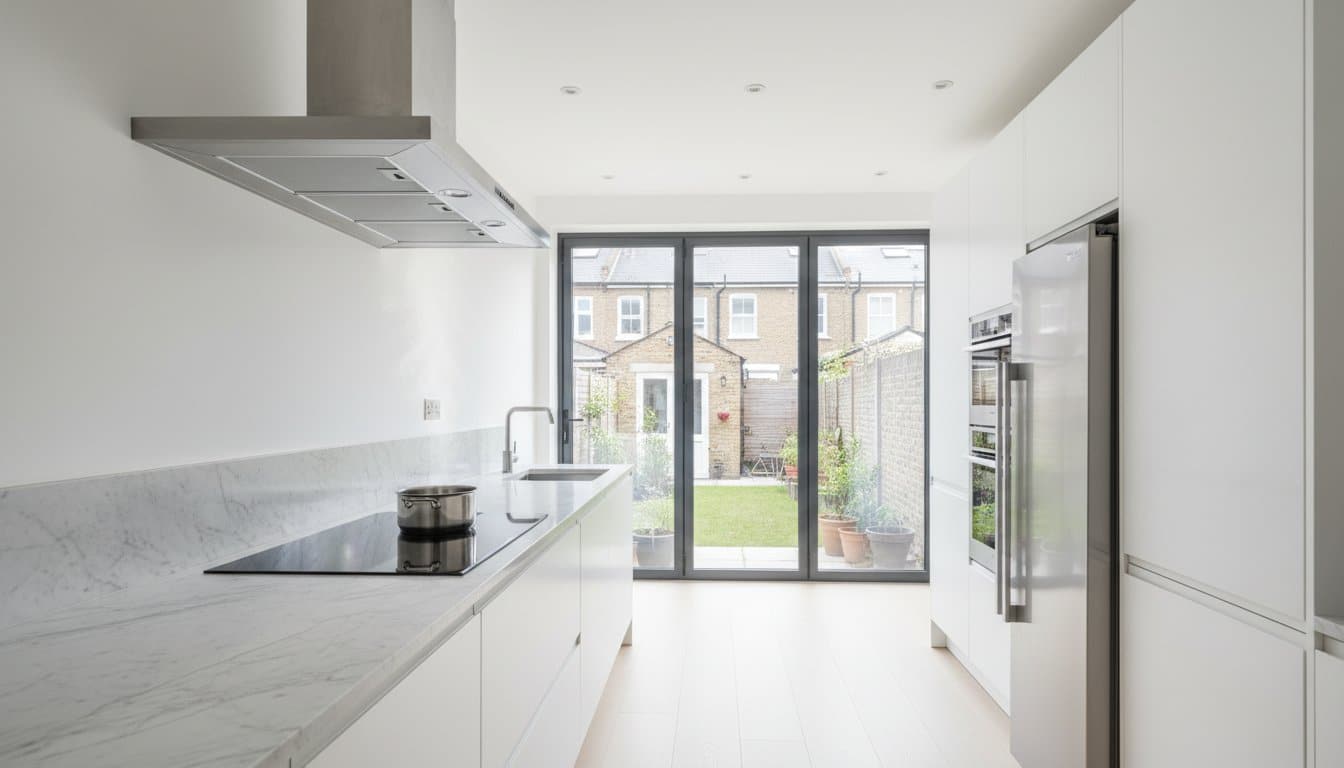
Last Tuesday, a homeowner in Fulham discovered that their poorly fitted extractor was merely circulating grease rather than removing it, leaving their open-plan living area thick with the scent of yesterday’s dinner. It’s a common London headache, especially when you’re unsure if your specific flat requires a ducted or recirculating setup to meet local building codes. Our professional cooker hood installation service solves these problems instantly, providing the expert touch needed to handle complex electrical wiring and heavy mounting safely.
We know you want a kitchen that stays fresh without the constant worry of DIY wiring faults or a hood that isn’t quite level. You’ve likely felt the frustration of lingering smells or the confusion of navigating Part P building regs on your own. We promise to deliver a securely mounted, fully compliant extraction system that clears the air on the very same day you book. This guide previews our transparent fitting process and explains how our certified engineers ensure your kitchen remains smoke-free and safe.
Key Takeaways
- Understand why fitting a hood requires a multi-disciplinary approach involving carpentry and electrical expertise to suit unique London property layouts.
- Learn to distinguish between chimney, canopy, and downdraft models to determine whether extraction or recirculation is the most effective choice for your kitchen.
- Discover the essential UK Building Regulations and electrical safety standards, including why a dedicated fused spur is vital for a safe cooker hood installation service.
- Master the mathematical formula to calculate the perfect extraction rate for your space while accounting for ducting bends and airflow resistance.
- Find out how to access fast, same-day appliance fitting across all London boroughs with our “Tested-Trusted” professional approach.
Professional Cooker Hood Installation Service in London: Why It Matters
Installing a kitchen extractor isn’t a simple Sunday afternoon task. It’s a complex, multi-disciplinary job that sits at the intersection of carpentry, electrical engineering, and ventilation science. You aren’t just hanging a heavy box on the wall; you’re integrating a high-powered electrical appliance into your home’s infrastructure. This requires securing the unit to structural points, wiring it to the mains according to current UK building regulations, and creating an efficient path for air to exit the building. When these elements don’t align, the result is often a noisy, ineffective unit that fails to protect your home.
London properties present a unique set of obstacles for any cooker hood installation service. In high-ceilinged Victorian terraces, standard chimney extensions often fall short, requiring bespoke carpentry to bridge the gap to the ceiling. Conversely, in compact modern apartments in areas like Canary Wharf or Stratford, space is at a premium. Every millimetre counts to ensure the unit doesn’t obstruct cabinet doors or interfere with integrated lighting. Our team handles these variables daily, ensuring the fit is seamless and structurally sound, regardless of the property’s age or layout.
We know that time is your most valuable asset, especially during a kitchen renovation or a quick landlord turnaround. A kitchen without a functioning extractor is a kitchen you can’t safely use for heavy cooking. FaultFree Engineering Group acts as your local specialist for both cooker repairs and new installations. We prioritise same-day and next-day availability because we understand the urgency of getting your home back to full working order. We don’t just deliver a service; we provide the peace of mind that comes from knowing the job was done right the first time.
The Health and Safety Benefits of Proper Extraction
Proper extraction does more than just stop your smoke alarm from sounding every time you sear a steak. It actively removes airborne grease, steam, and dangerous carbon monoxide produced by gas hobs. In London’s older building stock, poor ventilation quickly leads to damp and mould growth, which can cost over £1,200 to professionally remediate if left unchecked. A professional cooker hood installation service ensures the motor is mounted with precision to minimise vibration. This reduces operational noise by up to 12 decibels compared to a shaky DIY job. Understanding the different Types of Cooker Hoods, whether they are ducted to the outside or use charcoal filters for recirculation, is the first step in protecting your property’s structural integrity and your family’s respiratory health.
Why DIY Cooker Hood Fitting Often Fails in London Homes
DIY attempts often hit a wall when faced with specific UK safety standards. We frequently encounter hoods mounted at the wrong height. If a hood is closer than 650mm to a gas hob, it becomes a significant fire risk; if it’s too high, it’s effectively useless. Ducting is another common failure point. Every 90-degree bend in a flexible foil duct reduces airflow efficiency by roughly 15%. Our experts use rigid ducting where possible to maintain maximum suction. Furthermore, most manufacturers won’t honour a warranty if a non-certified person performs the electrical connections. “Roughly level” simply isn’t good enough for modern kitchen aesthetics. Precision is mandatory for a sleek finish that aligns perfectly with your cabinetry and splashbacks.
Understanding Different Types of Cooker Hoods and Extraction Methods
Selecting the right appliance for your kitchen depends on your layout, building constraints, and cooking habits. London kitchens often feature diverse architectural styles, from high-ceilinged Victorian terraces to compact modern apartments, each requiring a specific approach. Chimney hoods provide a classic professional look, usually mounted against a wall. Island hoods are designed for open-plan spaces, hanging directly from the ceiling to create a central focal point. For a seamless finish, integrated or canopy hoods sit hidden within kitchen cabinetry. Minimalist designs frequently utilise downdraft hoods, which stay flush with the worktop and rise only during use. Extraction rate is the volume of air moved by the fan per hour, measured in cubic metres (m³/h).
The aesthetic impact of these choices defines the room’s character. A stainless steel chimney hood adds an industrial feel to a renovated warehouse flat, while an integrated model preserves the clean lines of a bespoke handleless kitchen. Beyond looks, the technical setup determines how effectively your home stays free of grease and steam. Our professional cooker hood installation service ensures that whichever style you choose, it’s fitted safely and operates at peak performance. If you aren’t sure which model fits your cabinetry, our expert team provides honest assessments to help you decide.
Ducted Extraction: The Gold Standard for London Kitchens
Ducted systems, also known as extraction hoods, remove air from the kitchen and vent it directly outside. This method is the most effective way to eliminate heat, odours, and moisture. To maintain efficiency, these systems require specific ducting diameters, typically 120mm for smaller units or 150mm for high-powered models. Using a smaller pipe than recommended can increase noise levels by 15% and reduce the air flow significantly.
Compliance with UK Building Regulations for kitchen ventilation is vital, particularly regarding the flow rate in litres per second. For many London residents in listed buildings or shared flats, external venting isn’t always possible due to facade restrictions. In these cases, drilling a 150mm hole through a structural wall requires specific permissions and professional precision to avoid damaging the building’s integrity or violating local planning rules.
Recirculation Hoods: The Solution for Modern London Flats
Recirculation hoods offer a practical alternative when external ducting is prohibited or physically impossible. These units pull air through a grease filter and then through an activated charcoal filter to neutralise odours before releasing the scrubbed air back into the room. While they don’t remove heat or steam as effectively as ducted models, they are 100% compliant with regulations for flats where external wall alterations are banned.
Maintenance is the most critical factor for these models. Charcoal filters lose their effectiveness over time and generally require replacement every 4 months to prevent grease build-up. Recirculating systems are often 5dB to 7dB louder than ducted versions because the air must be pushed through denser filtration layers. When booking a cooker hood installation service, it’s essential to confirm whether your chosen model includes the necessary recirculation kit, as these are often sold separately from the main unit. Our technicians ensure these filters are seated correctly to prevent vibrations and maximise the lifespan of your motor.
UK Building Regulations and Electrical Safety for Kitchen Fans
Safety is our pride at FaultFree Group. Installing a kitchen extractor isn’t just about fixing a unit to the wall; it’s a matter of strict legal compliance. Kitchens are high-risk “wet” areas where water and electricity sit in close proximity. This is why Part P of the Building Regulations classifies kitchen electrical work as a priority for safety. Our certified electricians handle every cooker hood installation service to ensure your home meets these rigorous UK standards. We never cut corners because a faulty connection in a steam-heavy environment can lead to short circuits or electrical fires.
A professional installation requires a dedicated fused spur. You shouldn’t simply wire a high-power extractor into a standard plug socket behind a cupboard. A fused spur provides a permanent, safe connection with its own fuse, usually rated at 3 amps or 5 amps depending on the manufacturer’s specs. If our team needs to alter your existing consumer unit or extend a circuit, we’ll issue a Minor Works Certificate. This document is vital. It proves the work was tested and safe at the time of completion, which is essential for your home insurance validity.
Compliance with Part P Building Regulations
Part P regulations divide the kitchen into specific zones to manage risk. Electrical connections must sit a safe distance from water sources and heat zones. We focus heavily on earthing and circuit protection during every cooker hood installation service. Proper earthing ensures that if a fault occurs, the electricity has a safe path to the ground rather than through the appliance casing. For landlords, meeting these standards is mandatory for EICR (Electrical Installation Condition Report) compliance. We’ve seen many 5-year inspections fail simply because an extractor fan was poorly wired by an amateur.
Electrical Safety Checks and Connection Requirements
We start every job by testing your existing circuit’s load capacity. High-power chimney hoods can pull significant current, and we must ensure your kitchen ring main won’t trip under the added pressure. We position the isolation switch so it’s accessible in an emergency but shielded from direct heat and steam. We don’t use “plug-and-play” methods for permanent fixtures. Hard-wiring into a switched flex outlet is the only way to guarantee a long-lasting, reliable connection that won’t degrade due to grease buildup or moisture ingress. Our technicians verify every terminal is tight and every cable is correctly rated before we sign off the job.
Landlord Obligations for Kitchen Ventilation in London
The Homes (Fitness for Human Habitation) Act 2018 changed the game for London landlords. It mandates that properties must have adequate ventilation to prevent mould and dampness. The UK Building Regulations (Approved Document F) requires a minimum extraction rate of 30 litres per second for hoods located directly over a hob. Professional installation records are your best defence during safety audits or insurance claims. Many of our clients save time by bundling their ventilation upgrades with our other appliance repairs. We provide transparent pricing and same-day availability to ensure your rental property remains compliant and your tenants stay safe. If a setup isn’t safe or economical, we’ll tell you upfront.
How to Choose the Right Extraction Rate for Your Kitchen Space
Selecting the right extraction rate ensures your kitchen remains free from lingering smells and dampness. We use a specific mathematical formula to determine the minimum air flow required for your specific room dimensions. You calculate the volume of your kitchen in cubic metres by multiplying Length x Width x Height. Once you have this figure, multiply it by 12. This multiplier represents the 12 air changes per hour recommended by industry experts for a healthy cooking environment.
If your kitchen is 4m long, 3m wide, and 2.5m high, the total volume is 30m³. Multiplying 30 by 12 gives you a required extraction rate of 360m³/h. However, real-world conditions often require more power. Every metre of ducting and every 90-degree bend creates air resistance. A single sharp bend can reduce your hood’s effective power by as much as 20%. Our cooker hood installation service professionals often recommend a higher-rated unit to compensate for these physical restrictions, especially if your ducting path is longer than five metres.
The physical size of your hood must also match your cooking surface. A standard 60cm hob requires a hood that is at least 60cm wide, though a 90cm unit provides a much larger “capture zone” for rising steam. For 90cm or 110cm range cookers, you must never install a hood that is narrower than the appliance. Doing so allows grease and heat to escape around the sides, eventually damaging your kitchen cabinets and ceiling paint.
In London, where open-plan living is the standard for many modern flats, extraction becomes even more critical. Without a powerful motor, cooking odours quickly migrate to the living area and settle into soft furnishings like sofas and curtains. In these integrated spaces, we suggest looking for a motor that exceeds the 12-times-volume rule to ensure the air stays fresh across the entire floor plan.
Calculating the Ideal Extraction Rate (m³/h)
To measure your kitchen volume, take precise measurements from wall to wall and floor to ceiling. Don’t forget that high ceilings, common in Victorian London conversions, significantly increase the volume of air that needs moving. Over-speccing your hood is a smart move. Running a powerful hood on a medium setting is much quieter and more energy-efficient than running a smaller, underpowered unit at its maximum speed constantly.
Correct Mounting Heights for Gas vs. Electric Hobs
Safety is our priority during every cooker hood installation service. For electric or induction hobs, the minimum clearance is usually 650mm. Gas hobs require a higher clearance of 750mm because of the open flame. Mounting a hood too low creates a genuine fire hazard; grease trapped in the filters can ignite if it gets too hot. Conversely, mounting it higher than 800mm reduces the suction efficiency, allowing steam to dissipate into the room before the fan can capture it.
Don’t risk an underpowered or incorrectly fitted unit that leaves your home smelling like last night’s dinner. Book your professional cooker hood installation service today to ensure your kitchen air stays clean and safe.
Fast and Reliable Cooker Hood Installation in London with FaultFree
Choosing FaultFree means opting for a “Tested-Trusted” approach to home appliance safety. This methodology isn’t just a slogan; it represents a rigorous 15-point safety and performance checklist applied to every project. Our engineers are fully certified and carry the latest diagnostic tools to ensure your kitchen remains a safe environment. We serve the entire capital, providing comprehensive coverage from the high-traffic streets of Central London right out to the M25 boundary. Whether you live in a Victorian terrace in Clapham or a modern apartment in Canary Wharf, our local experts are never far away.
We understand that a broken or uninstalled extractor fan disrupts your entire household routine. That’s why we’ve streamlined our online booking and contact system to take less than 60 seconds of your time. You can select your preferred time slot and receive instant confirmation. To give you total peace of mind, every cooker hood installation service we perform comes with a 12-month workmanship guarantee. If any issue arises related to our installation within the first year, we’ll return and rectify it at no additional cost to you.
Same-Day and Next-Day Availability Across London
Our fleet of 18 London-based engineers is strategically positioned across North, South, East, and West London to ensure rapid response times. By maintaining a high density of technicians within the city, we drastically reduce travel intervals and avoid the delays typical of smaller firms. We recommend booking your appointment before 10:00 AM to secure a same-day slot. This is particularly beneficial for homeowners finishing a kitchen renovation who need that final appliance fitted to sign off the project. We take a no-nonsense approach to emergency electrical faults; we don’t just patch the problem, we identify the specific wiring or fuse issue and resolve it immediately to prevent future failures.
Our Transparent Pricing and Service Guarantee
Budgeting for home improvements shouldn’t involve guesswork. We provide a fixed-fee structure for all standard installations, ensuring you know the exact cost before our engineer arrives at your door. This transparent price includes the complete unboxing of your new unit, secure mounting to the wall or ceiling, professional electrical connection to the mains, and a full functional test. We check the extraction rate and noise levels to ensure the manufacturer’s specifications are met perfectly. If a repair is not economical or in the customer’s best interest, we say so clearly and upfront.
- Certified Expertise: All engineers are fully qualified to handle complex electrical connections.
- Full Testing: We verify airflow and electrical safety before leaving the site.
- Clean Workspace: Our team uses protective floor coverings and clears away all packaging materials.
- Fixed Rates: No hidden London surcharges or hourly “creep” on standard jobs.
Our commitment to integrity is what makes us “Rated, Reviewed, and Preferred” across the city. We don’t believe in temporary fixes or cutting corners with electrical safety. When you book a cooker hood installation service with FaultFree, you’re investing in a long-lasting solution that keeps your kitchen air clean and your home running smoothly. We pride ourselves on being the dependable choice for Londoners who value efficiency and honest professional advice.
Secure Your Kitchen’s Safety and Air Quality Today
Choosing the right extraction rate and ensuring compliance with Part F of the UK Building Regulations is non-negotiable for a healthy home environment. We’ve detailed how professional fitting prevents grease build-up and maintains vital electrical safety standards. FaultFree delivers a seamless cooker hood installation service across all 32 London boroughs. Our fully certified and insured engineers specialise in every extraction method, from complex external ducting to internal recirculation systems. We’re proud to be Tested-Trusted – Rated Reviewed and Preferred, maintaining a reputation for dependability and transparent pricing. You don’t have to wait weeks for a slot; we provide same-day and next-day availability across all London postcodes. Every engineer we send is equipped to handle the specific requirements of your kitchen space. We’ll ensure your new appliance runs at 100% efficiency from the moment it’s switched on. Let our experts take the stress out of your kitchen upgrade with a fast, reliable, and guaranteed service.
Book Your London Cooker Hood Installation Today
Frequently Asked Questions
How much does it cost to install a cooker hood in London?
A professional installation in London typically costs between £95 and £185 depending on the complexity of the job. This price covers a standard like-for-like replacement of an integrated or chimney hood. If your project requires new electrical wiring or a 150mm core drill for ducting, the total may reach £280. We offer transparent pricing and fixed quotes to ensure you’re never surprised by the final bill.
Can I install a cooker hood myself or do I need an electrician?
You should hire a qualified professional because cooker hoods require a safe electrical connection and often involve structural wall penetrations. Building Regulations in the UK require electrical work in kitchens to be compliant with Part P standards. Our certified engineers ensure your cooker hood installation service is safe, fully insured, and completed to the highest industry standards. Don’t risk your safety with a DIY attempt.
Do I need to vent my cooker hood to the outside?
No, you don’t have to vent to the outside, but it’s the most effective method for removing steam. You can choose between extraction, which sends air through a 150mm duct, or recirculation, which uses charcoal filters to scrub the air. Extraction removes 100% of moisture and cooking smells from the room. Recirculation is a great alternative if your hob is located on an internal wall without easy access.
How long does a professional cooker hood installation take?
A standard like-for-like replacement usually takes between 60 and 90 minutes to complete properly. If we need to install brand new ducting or drill a 125mm exit hole through a brick wall, the process takes closer to 3 or 4 hours. We offer same-day and next-day availability across London to ensure your kitchen is back in full working order as quickly as possible without any unnecessary delays.
What is the best height to install a cooker hood above the hob?
Electric hobs require a minimum clearance of 650mm, while gas hobs need at least 750mm for safety and efficiency. Maintaining these specific distances prevents heat damage to the appliance and reduces fire risks. Our engineers measure every installation to the millimetre. We follow the manufacturer’s manual strictly to ensure your warranty remains valid and your kitchen stays safe for daily use by your whole family.
Can you install a cooker hood if there is no existing ducting?
Yes, we can install a hood even if your kitchen currently lacks any ducting or ventilation holes. Our team specialises in core drilling 150mm paths through external masonry to create a direct extraction route. If your property’s layout makes external venting impossible, we’ll convert the unit to recirculation mode. This involves fitting high-quality charcoal filters that neutralise 95% of cooking odours before releasing the air back into the room.
Do you provide the ducting materials and charcoal filters?
We carry a full stock of 125mm and 150mm ducting kits and universal charcoal filters on our service vans. If your cooker hood installation service requires specific decorative chimney sections or specialised adapters, just let us know during the booking process. We provide an honest assessment of the materials needed and offer transparent pricing on all parts. This ensures a fast, reliable, and hassle-free setup for every customer.
Are your engineers Part P certified for London kitchen work?
Every engineer on our team is Part P certified and fully qualified to handle kitchen electrical work in the UK. This certification ensures that all wiring meets current safety legislation and building codes. We pride ourselves on being Tested-Trusted, Rated Reviewed and Preferred by thousands of London residents. You’ll receive a professional service that prioritises your home’s safety and delivers long-lasting, dependable results every single time.
Tags: appliance installation, building regulations, cooker hood installation, electrical safety, extractor hood fitting, Home Improvement, kitchen ventilation, london services