
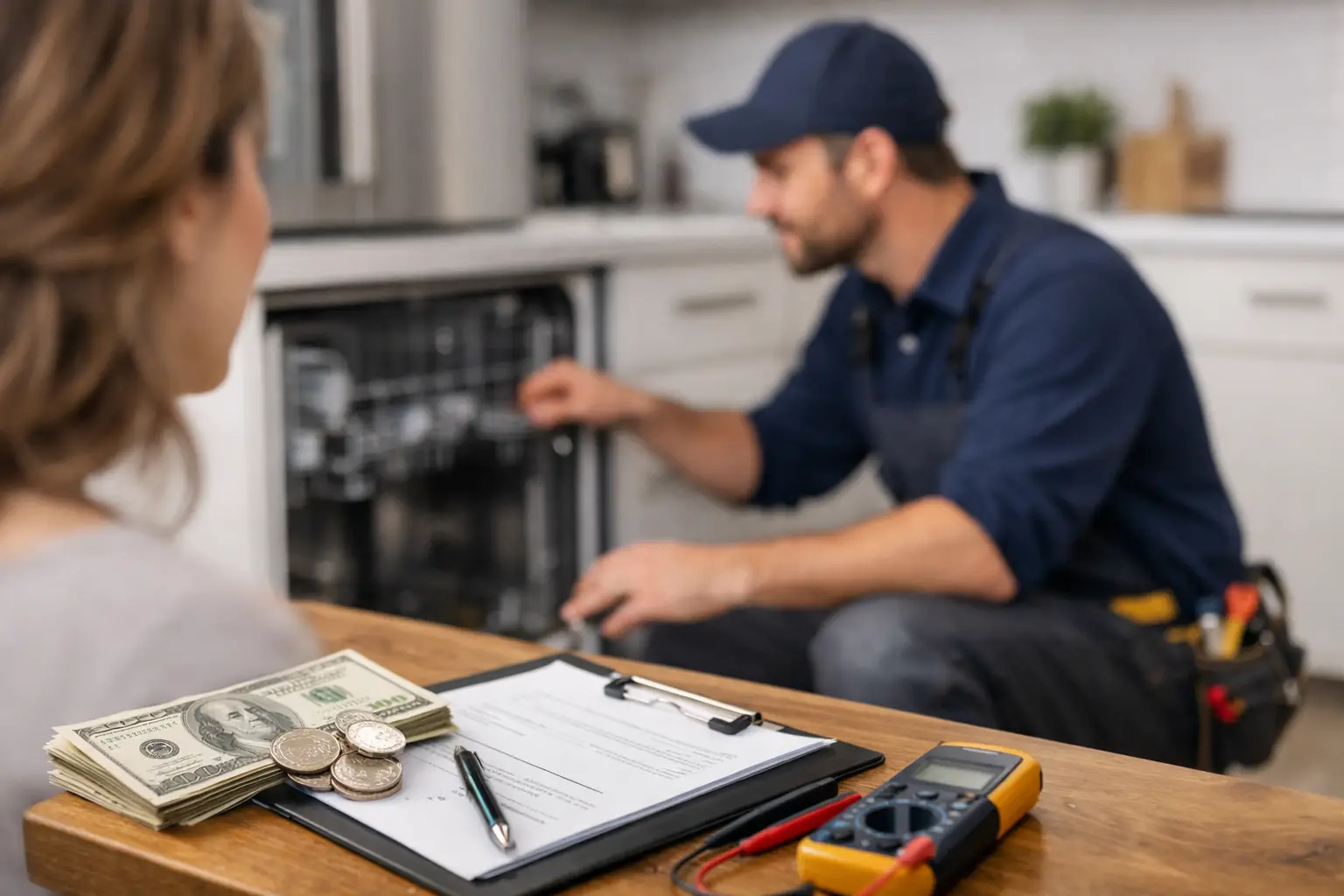
When a washing machine stops mid-cycle or an oven trips the electrics just before dinner, the first question is usually not technical – it is financial. The cost of appliance repair service call matters because it tells you what you will pay before any parts are fitted and before any full repair is carried out. For most London households, landlords and small businesses, that first visit is about speed, diagnosis and getting a clear answer without wasting time.
A service call charge is not simply a fee for knocking on the door. In a professional repair business, it covers the engineer’s travel, booked time slot, fault diagnosis, safety checks and the practical expertise needed to identify the problem properly. If the appliance can be fixed there and then, that visit often becomes the turning point between a quick return to normal use and a drawn-out breakdown.
What the cost of appliance repair service call usually covers
A proper service call should give you more than a vague look at the appliance. In most cases, the engineer will inspect the machine, test the fault, check the relevant electrical supply, and confirm whether repair is viable. For appliances such as washing machines, dishwashers, ovens, cookers, tumble dryers and fridge freezers, diagnosis is where experience saves money.
That matters because many faults present as one thing and turn out to be another. A washing machine that will not drain may have a blocked pump, a failed pump motor, a pressure issue or a control fault. An oven that appears dead may be suffering from a tripped circuit, a faulty element, a damaged selector switch or a wider electrical issue. The value of the callout is in narrowing that down accurately.
In London, the service call may also reflect congestion, parking, route planning and the reality of same-day or next-day attendance. A company offering fast response with certified engineers and proper diagnostic equipment is not pricing the visit in the same way as someone offering an unstructured cash job with no accountability.
What affects the cost of appliance repair service call
There is no single flat rate that fits every job. The final figure depends on the appliance, the urgency, the location and how much diagnostic work is required.
The type of appliance makes a difference. Freestanding machines such as washing machines and tumble dryers are often simpler to access than integrated dishwashers, built-in ovens or extractor hoods. If the engineer needs to remove housing panels, isolate supplies or work in a tight installation space, the appointment takes longer and the charge may reflect that.
Brand can also affect the price. Premium appliances from manufacturers such as Miele, Bosch, AEG or Samsung may require brand-specific knowledge, different test procedures or harder-to-source components. That does not always mean the service call is far higher, but it can influence both diagnosis time and the likely repair route.
Timing is another factor. A weekday booked slot is different from an evening emergency or weekend attendance. If the appliance failure is urgent – for example a fridge freezer not cooling, a cooker down in a rental property, or an electrical fault connected to the appliance – priority response may carry a higher callout charge.
Then there is the nature of the fault itself. Straightforward symptoms can often be diagnosed quickly. Intermittent faults are another story. If an appliance only fails occasionally, the engineer may need more time to test safely and rule out wiring, control boards, sensors or user-setting issues.
Cheap callouts are not always cheaper
A low advertised callout can look attractive, especially when you need help quickly. But the headline number only tells part of the story. Some companies keep the service call low and recover margin through vague labour charges, inflated parts pricing or additional fees that appear once the engineer is on site.
Transparent pricing matters more than the cheapest first figure. A reliable provider should explain whether the service call includes diagnosis only, whether labour is included if the repair is completed on the first visit, and what happens if parts are needed. That is the difference between a clear job and an awkward conversation in your kitchen.
It is also worth checking whether the callout is waived or absorbed into the total when you proceed with the repair. Some firms structure pricing that way, which can make good sense if the appliance is worth fixing. Others keep diagnosis and repair labour fully separate. Neither model is wrong, but you need to know which one you are agreeing to.
When paying the service call is worth it
In many cases, the service call saves money even if the appliance is not repaired on the day. That may sound counterintuitive, but it is true when the diagnosis prevents a bad decision.
If an engineer confirms that a ten-year-old appliance needs an expensive control board and has signs of wider wear, you can choose replacement with confidence rather than throwing money at an uncertain repair. If the fault is minor – a door interlock, heating element, pump, belt or thermostat – you may find that repair is far better value than replacing a major domestic appliance.
For landlords and property managers, the service call has another value. It creates a documented, professional assessment that helps you act quickly, protect the tenant experience and avoid repeated complaints. Fast diagnosis also reduces downtime in managed properties and small commercial settings where a failed appliance affects daily operations.
How to keep the cost fair and avoid surprises
The best way to manage the cost is to ask the right questions before booking. You do not need a long checklist, but you do need clarity.
Ask whether the quoted amount covers diagnosis, whether any labour is included, and whether parts are charged separately. Confirm if parking, congestion or out-of-hours attendance changes the price. If the appliance is integrated or difficult to access, mention that early. If the appliance is tripping electrics, report that too, because it may require both appliance and electrical fault finding.
You should also give the make, model and clear fault symptoms where possible. That helps the engineer prepare and improves the chance of a first-time fix. A vague report like “it has stopped working” is less useful than “the dishwasher powers on but does not fill” or “the oven heats unevenly and trips after ten minutes”.
Photos of the model plate and installation space can be useful as well, especially for built-in appliances. Good preparation does not just help the engineer – it helps protect you from extra delay and repeat visits.
Repair or replace after the service call?
This is where honest advice matters. Not every appliance should be repaired, and a good engineer will tell you that plainly.
If the unit is relatively modern, in otherwise sound condition and needs a common replacement part, repair is often the sensible route. If it is older, unreliable, heavily worn or facing multiple likely failures, replacement may be the more cost-effective option. The service call gives you the information needed to decide properly.
For London customers, the decision is often about more than the machine itself. Replacing an integrated oven, dishwasher or extractor hood can involve new measurements, installation adjustments and disposal planning. In some cases, a repair that restores safe operation quickly is the less disruptive option even if the price is not minimal.
That is why straightforward diagnosis has real value. You are not only paying for someone to identify a failed part. You are paying for an accurate decision at the right time.
What good service looks like
A professional appliance repair visit should feel organised from the first call. You should know the booking window, understand the likely charges and receive a clear explanation once the fault is found. If the appliance can be repaired, the next step should be practical and specific. If it cannot, the advice should be honest, not sales-driven.
For a company like FaultFree Engineering Group, the standard is simple: fast response, transparent pricing, certified engineers and repairs that are built to last. That is what households, landlords and local businesses need when an essential appliance fails.
If you are weighing up the cost of a service call, focus less on the cheapest number and more on what that visit actually delivers – speed, safety, proper diagnosis and a clear route forward.