
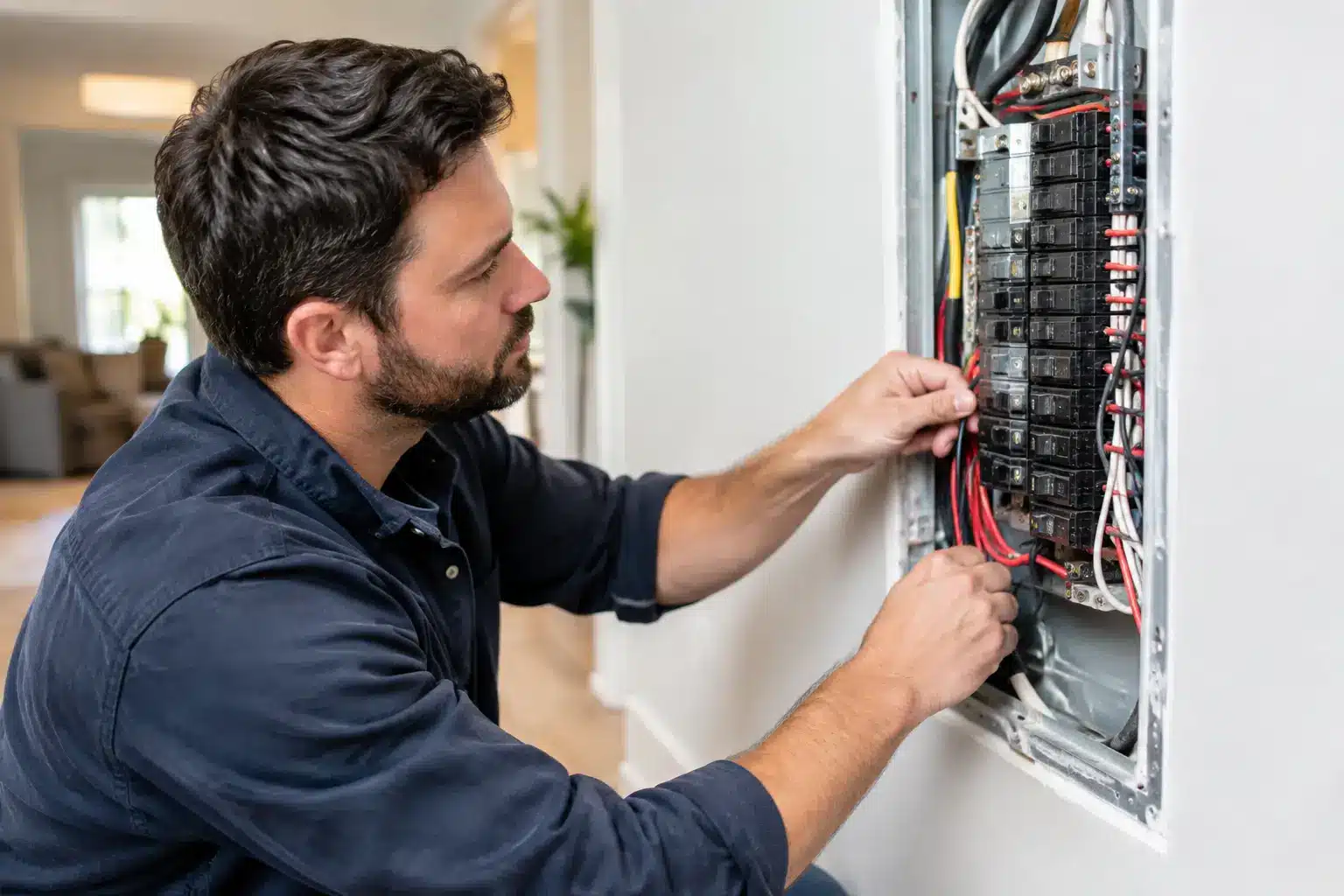
A consumer unit that trips once after a storm is not necessarily a rewiring job. A circuit that trips repeatedly, sockets that feel hot, and lights that flicker for no clear reason are different. The best signs of rewiring needed are usually a pattern of ageing, overloaded or unsafe electrical installation issues, not one isolated inconvenience.
For homeowners, landlords and property managers, the practical question is not whether the wiring looks old. Most cables are hidden behind walls and under floors. The question is whether the installation can safely support how the property is used now: appliances, home working equipment, electric showers, induction hobs, chargers and everyday extension leads all place demands on circuits.
The best signs of rewiring needed
Repeated tripping at the consumer unit
A modern consumer unit is designed to disconnect power when it detects a fault. That protection is doing its job, but frequent tripping should never be ignored or simply reset again and again.
One circuit may trip when a particular appliance is plugged in, which can point to an appliance fault rather than fixed wiring. If several circuits trip, or the issue remains after the appliance has been checked, the cause may be damaged cable, poor connections, moisture ingress or an overloaded circuit. A qualified electrician can test the installation and separate an appliance problem from a wiring fault before recommending any wider work.
Flickering lights, dimming and unreliable sockets
Lights that briefly dim when a high-load appliance starts can occur in some properties, but persistent flickering is not normal. Neither are sockets that work intermittently, switches that crackle, or lights that take a moment to come on.
These symptoms can be caused by loose terminals, deteriorating connections or a fault in the circuit. Loose electrical connections generate heat, which makes them a genuine fire risk. Do not wait for a socket to stop working completely before arranging fault finding.
Warm faceplates, burning smells or discolouration
A socket, plug, switch or consumer unit should not feel hot during normal use. Slight warmth from a plugged-in charger can be expected, but heat in the faceplate itself, brown marks, melted plastic or a burning smell needs prompt attention.
Turn off the affected circuit if it is safe to do so, avoid using the outlet and arrange an urgent inspection. Do not cover the smell with air freshener, continue charging devices there, or assume replacing the visible socket alone will solve the fault. The overheating may have started at a connection behind the accessory or elsewhere on the circuit.
Old wiring materials or an outdated fuse board
The age of a property does not automatically mean it needs a full rewire. A well-maintained installation may remain serviceable, while poorly altered wiring in a newer flat may need substantial remedial work. Still, certain features warrant a professional assessment.
Old rubber, fabric-covered or lead-sheathed cables can deteriorate over time. Very old fuse boards with rewireable fuses, dated wooden backing, missing circuit protection or no residual current device protection may also fall short of what a modern household needs. A consumer unit upgrade is sometimes the right answer, but it is not a substitute for repairing defective circuits. The existing wiring must be tested first.
Too few sockets and constant extension leads
A room full of adaptors and extension leads is often a sign that the installation no longer suits the way the property is used. Kitchens are a common pressure point, especially where several appliances share limited outlets. Bedrooms converted into workspaces can also end up carrying monitors, chargers, heaters and printers from one overloaded socket.
A full rewire may not always be necessary. Additional sockets, a new dedicated circuit or a properly planned partial rewire can be enough in some homes. The right solution depends on the condition of the existing cables, circuit capacity and the work required to access the route safely.
Electric shocks or tingling sensations
A shock from a tap, appliance casing, switch or socket is an urgent warning sign. Even a mild tingle can indicate inadequate earthing, a damaged appliance or a serious fault in the electrical installation.
Stop using the affected item and avoid touching metal parts until the issue has been assessed. If the concern involves water, such as a shower, boiler cupboard, kitchen sink area or washing machine, treat it as particularly urgent. Electrical and plumbing faults can create a dangerous combination.
When a partial rewire may be enough
Rewiring is not all or nothing. A complete rewire is often considered when an installation is substantially old, has widespread defects, has been repeatedly altered without clear records, or is being renovated back to bare walls. It gives the electrician the opportunity to replace circuits, cables, accessories and consumer unit protection as one coordinated system.
However, a targeted solution can be more sensible where testing shows that most of the installation is sound. Common examples include rewiring a new kitchen, replacing a damaged circuit, adding safe supplies for an extension, or installing dedicated circuits for an electric oven, induction hob, shower or EV charger.
The trade-off is access and future planning. Replacing only one area may reduce immediate disruption and cost, but it should not leave known defects elsewhere untouched. A competent electrician should explain what has failed, what remains serviceable, and what work can reasonably be phased.
Why an inspection should come before a rewire quote
No responsible electrician should diagnose a full rewire solely from a photograph of a fuse board or the age of the house. Electrical testing matters because it reveals the condition of circuits that cannot be seen: insulation resistance, earthing arrangements, polarity, protective device performance and continuity.
For landlords, an Electrical Installation Condition Report can identify observations that need attention and help establish whether remedial work is required for the property to remain safe. For homeowners, an inspection brings clarity before major renovation work begins. It can also prevent the expense of decorating a room only to reopen walls later for necessary electrical upgrades.
A clear report should distinguish between urgent safety issues, recommended improvements and work that can be planned for a later date. This is where transparent pricing matters. You should know whether you are paying for fault diagnosis, remedial work, a consumer unit upgrade, additional circuits or a complete rewire, rather than receiving one vague figure.
What to do while waiting for an electrician
If there are visible burn marks, smoke, sparking, electric shocks or a strong burning odour, isolate power at the consumer unit only if you can do so safely. Keep people away from the affected area and seek urgent professional help. Do not remove socket covers, touch exposed wiring or attempt a temporary repair with tape.
For less immediate concerns, make a note of what happens and when. Does the circuit trip when the washing machine heats? Do kitchen lights flicker when the oven is on? Does one bedroom socket fail only after rain? These details help an electrician diagnose efficiently and avoid unnecessary work.
If an appliance appears to be involved, unplug it where safe and avoid using it until it has been checked. FaultFree Engineering Group can assess both appliance-related electrical faults and fixed wiring concerns, which can save time when the source of the problem is unclear.
Electrical faults rarely improve with continued use. Acting when the first warning signs appear gives you more options, less disruption and, most importantly, a safer property for everyone using it.