
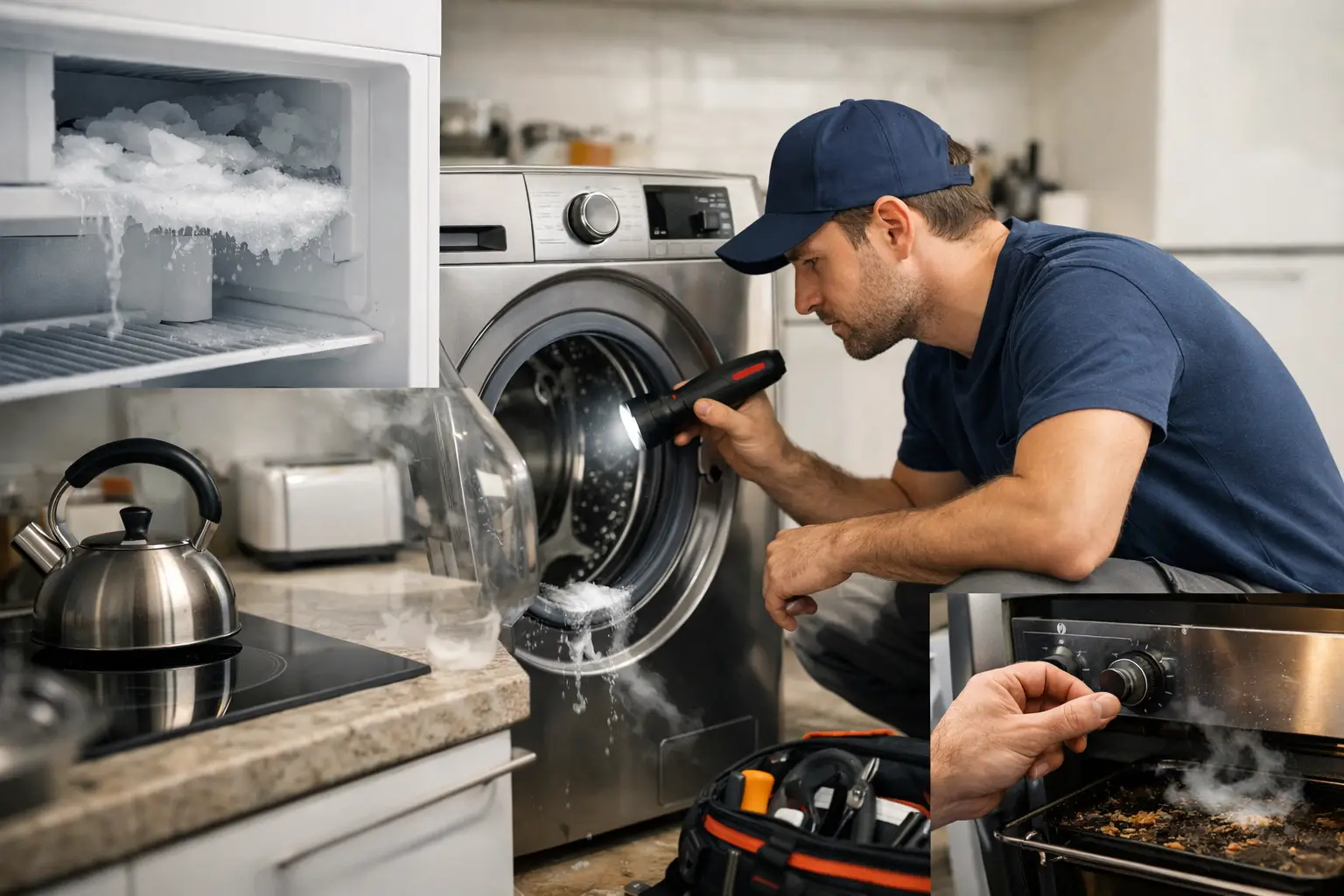
A washing machine that suddenly sounds like it is trying to leave the utility room, an oven that takes twice as long to heat up, or a fridge that is no longer properly cold should not be ignored. These are among the top signs the appliance needs servicing, and acting early can often prevent a complete breakdown, water damage or an avoidable replacement bill.
For busy London homes, rental properties and small businesses, an appliance fault is rarely convenient. The right response depends on the symptom, the appliance’s age and whether there is any immediate safety risk. Some issues need simple cleaning or a settings check. Others need a qualified engineer without delay.
The top signs your appliance needs servicing
Unusual noises that were not there before
Appliances make some normal operating sounds. A dishwasher may hum during a cycle, a fridge compressor may click on and off, and a washing machine will spin loudly at high speed. What matters is a new, persistent or harsh noise.
Grinding, scraping, banging, squealing and repeated knocking can point to worn bearings, a loose component, a damaged pump or an item trapped where it should not be. With washing machines and tumble dryers, continuing to use the appliance can turn a manageable repair into damage to the drum, motor or belt.
First, check for obvious causes such as an unbalanced wash load, loose coins in pockets or an appliance sitting unevenly on the floor. If the noise returns on the next cycle, arrange an inspection rather than hoping it will settle down.
Performance has dropped noticeably
A gradual fall in performance is easy to live with until the appliance stops working altogether. Clothes may come out wet after a full wash, dishes may remain cloudy or greasy, food may take longer to cook, or a fridge freezer may struggle to hold a safe temperature.
Poor performance can have straightforward causes. A blocked dishwasher filter, scaled kettle element, dirty condenser or an overloaded fridge can all affect results. But where cleaning and correct use make no difference, the fault may involve a heating element, thermostat, fan, motor, pump, door seal or control system.
Do not compensate by repeatedly running longer cycles or turning temperatures higher. This raises energy use and can place extra strain on already failing parts. A clear diagnosis is usually the more cost-effective option.
Water is leaking, pooling or appearing where it should not
Any unexplained water around a washing machine, dishwasher or fridge freezer deserves prompt attention. A small puddle may be caused by a split hose, loose connection, blocked drain, worn door seal or faulty pump. It can also travel beneath flooring or into neighbouring areas before it becomes obvious.
Turn the appliance off and isolate the water supply if it is safe to do so. Avoid using it again until the source has been identified, particularly if water is near a socket, extension lead or other electrical connection. Water and electricity are a serious combination, not a fault to monitor for a few more days.
For landlords and property managers, swift action also protects the property from secondary damage and reduces disruption for tenants. Document the issue, arrange access and have the appliance assessed before the next use.
Tripping electrics, burning smells or signs of overheating
This is one of the clearest occasions to stop using an appliance immediately. If it trips the consumer unit, gives an electric shock or tingling sensation, smells of burning, produces smoke, or has a plug or socket that feels hot, switch it off at the mains if it is safe. Do not repeatedly reset a tripped circuit to keep the appliance running.
The cause could be an internal short circuit, failed heating component, damaged wiring, overloaded connection or a fault within the property’s electrical installation. The appliance may be at fault, but that cannot be assumed without proper testing.
FaultFree Engineering Group can assess appliance faults alongside wider electrical issues, which is particularly useful where the cause is unclear. Safety is the priority: an engineer should test the appliance and its supply rather than relying on guesswork.
Error codes, flashing lights and controls that behave unpredictably
Modern appliances are designed to flag certain problems through an error code or flashing indicator. It is worth checking the user manual for basic steps, such as cleaning a filter, closing the door properly or checking the water supply. However, an error code that keeps returning is a service signal, even if the appliance temporarily starts again.
Unresponsive buttons, a display that flickers, programmes that stop mid-cycle or settings that change without input can indicate a control-board, sensor, wiring or door-lock issue. These faults are not always visible from the outside, and opening a machine to investigate can create further damage or risk.
Take a photo of the code and note when it appears. This gives the engineer useful information and can speed up diagnosis on the visit.
Excessive frost, heat or temperature changes
Fridge freezers should maintain stable temperatures, not develop thick ice, warm food compartments or constantly run at full effort. Excessive frost can result from a failing door seal, defrost fault, sensor problem or air circulation issue. If chilled food is not staying cold, move perishable items to another working fridge where possible and arrange servicing promptly.
The opposite applies to ovens, cookers and hobs. An oven that burns food at one end, takes too long to preheat or cannot maintain temperature may have a failing element, thermostat, fan or door seal. Uneven cooking is frustrating, but it can also make food preparation unreliable, especially in a busy household or commercial kitchen.
With electric hobs, a ring that stays too hot, cuts out unexpectedly or does not respond correctly needs professional attention. Do not use cookware or covers to try to manage an overheating zone.
Doors, seals and moving parts no longer work properly
A washing machine door that will not lock, a dishwasher door that drops open, a tumble dryer drum that does not turn, or an oven door that no longer closes tightly are practical warning signs. Door and latch faults can stop an appliance from operating safely, while damaged seals waste energy and allow heat, steam or water to escape.
It may be tempting to force a stiff door, prop it shut or continue with a workaround. That approach often damages the latch, hinge or seal further. Servicing is usually simpler while the fault is limited to one component.
When to stop using the appliance straight away
Not every appliance issue is an emergency, but some symptoms should never be worked around. Stop using the appliance and seek professional support if you notice any of the following:
- Burning smells, smoke, sparks or a hot plug, cable or socket.
- Water leaking near electrical connections or across the floor.
- Repeated circuit tripping or an electric shock sensation.
- A damaged power cable, cracked plug or exposed wiring.
- A fridge freezer that cannot keep food safely chilled.
If there is immediate danger, isolate the appliance only if it is safe to do so. Never handle damaged wiring or touch an appliance standing in water.
Repair, service or replacement: what makes sense?
Servicing does not automatically mean replacement. Many common faults, including pumps, heating elements, belts, seals, door locks and selected electrical components, can be repaired when the appliance is otherwise in good condition. A professional diagnosis gives you a clear view of the fault, the repair required and the likely cost before you decide.
Age matters, but it is not the only factor. A well-built appliance with a single failed component may be worth repairing after many years. Conversely, repeated failures, major corrosion, unavailable parts or a repair that approaches the cost of a reliable replacement may point the other way.
For landlords, consistency matters too. An unreliable appliance can create repeat call-outs, tenant inconvenience and avoidable gaps between tenancies. Timely maintenance and an honest repair assessment help keep the property operational.
Small checks that can prevent a call-out
Routine care cannot prevent every fault, but it reduces strain on major appliances. Clean filters and detergent drawers, avoid overloading washing machines and tumble dryers, inspect door seals, remove lint after each dryer use, and keep fridge vents clear. Use the correct detergent and programme, as excess foam or unsuitable settings can mimic a fault.
Do not attempt repairs involving live electrical parts, internal wiring or heating components. The cost of an incorrect repair can be higher than a service visit, particularly where safety systems or water connections are involved.
When an appliance changes how it sounds, heats, drains, cools or responds, treat that change as useful information. Booking a service while the fault is contained gives you the best chance of a straightforward repair, less disruption and a safer home or property.