
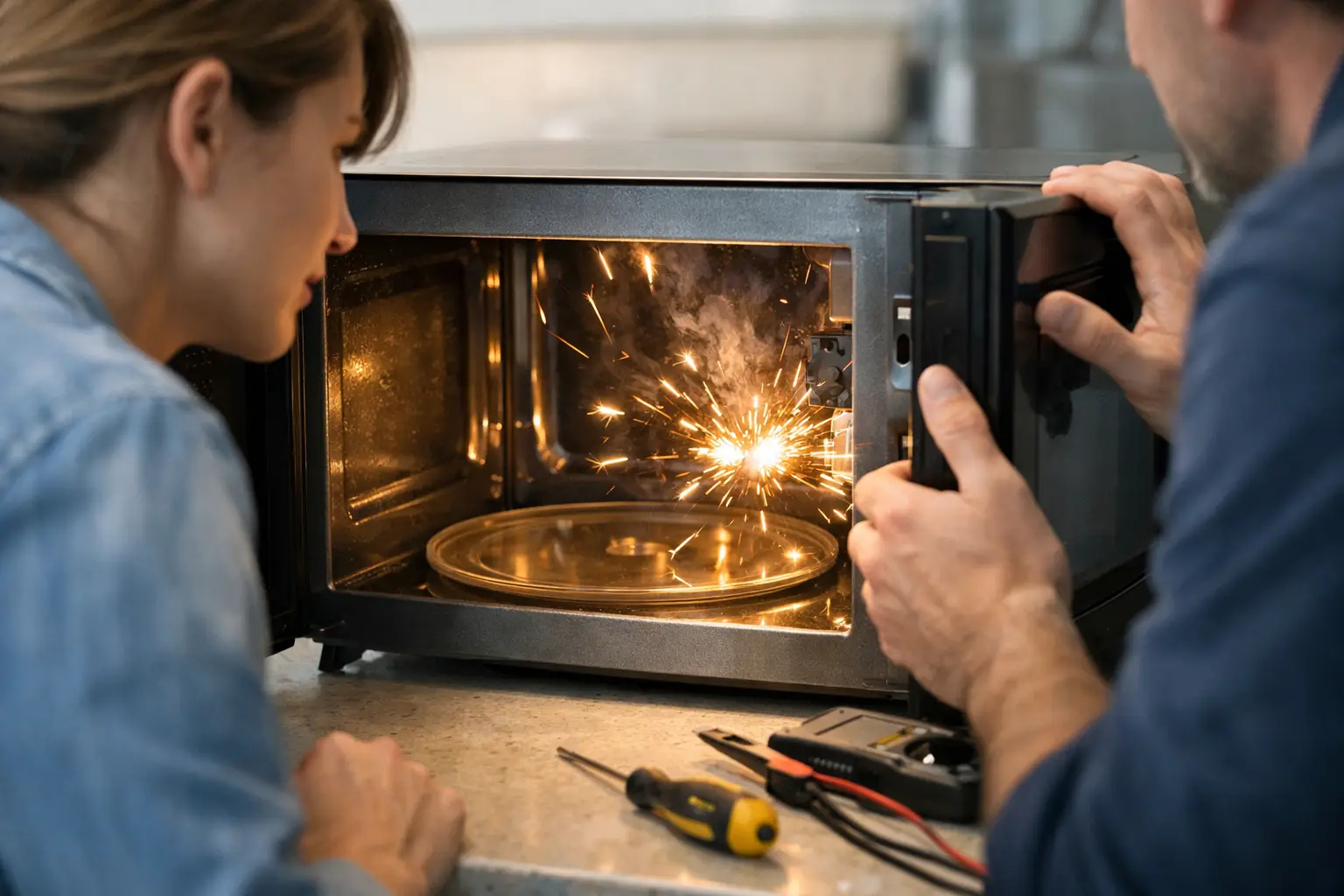
A bright flash inside a microwave is not something to ignore or “test again later”. Microwave sparking inside usually means an electrical arc has formed where it should not – and repeated use can damage the cavity, burn internal components or create a fire risk.
The good news is that not every spark means the microwave is beyond repair. A piece of foil, baked-on food or a damaged waveguide cover can all cause arcing. The right response is to stop the appliance, identify obvious safe-to-check causes, and arrange a professional diagnosis if the sparking returns.
What to do when a microwave sparks
Press stop immediately. If the sparking continues, switch the microwave off at the socket only if you can do so safely, then unplug it. Leave the door closed until the appliance has stopped completely and any smoke has cleared.
Do not put another item in and run a quick test. Do not keep using the microwave if you can see scorch marks, melted plastic, peeling internal coating or a damaged door. A spark can appear small, but microwave ovens contain high-voltage parts that should never be opened or handled by an untrained person.
Once unplugged and cool, inspect the inside of the cavity using good lighting. Remove loose food debris and check whether a metal item, foil, twist tie, takeaway container trim or metal-rimmed plate has been used. If you find an obvious item that caused the arc and there is no damage inside the appliance, it may be safe to use again with a microwave-safe container. If you are unsure, treat it as a fault rather than taking a chance.
Common causes of microwave sparking inside
Metal or unsuitable cookware
Metal reflects microwave energy, which can create electrical arcs. Foil is a frequent cause, including small fragments left on a ready meal or wrapped around food. Cutlery, travel mugs, plates with metallic decoration and containers with metal handles can cause the same problem.
Some microwave instructions allow carefully shaped, small amounts of foil for shielding food. That does not make household foil safe as a general rule. Unless the appliance manual specifically permits it and explains how to use it, keep metal out of the microwave.
Food residue and grease build-up
Splashes of fat and food can carbonise on the cavity walls, roof or floor. Once this residue becomes burnt, it can act as a point where electricity jumps and creates a visible spark. This is particularly common around the waveguide cover on one side wall or on the roof of the cavity.
Clean the microwave only after unplugging it and allowing it to cool. Use a soft cloth with warm water and mild washing-up liquid, then dry the interior fully. Avoid abrasive pads, harsh oven cleaners and anything that can scratch the protective cavity coating.
A burnt or damaged waveguide cover
The waveguide cover is usually a small flat panel made from mica or similar heat-resistant material. It may be beige, grey or brown and is often positioned on a side wall. Its job is to protect the area where microwave energy enters the cavity from food and moisture.
If the cover is greasy, burnt, cracked or has a hole, it can spark. A replacement may be straightforward for the correct model, but the cause still needs checking. Fitting a new cover without removing the source of arcing can lead to the same damage again. It must also be the correct material and size, fitted correctly.
Damaged cavity coating or rust
A chipped, blistered or peeling internal coating exposes metal beneath the surface. Rust can do the same. When microwave energy reaches that exposed metal, arcing may occur.
Minor staining is not always a safety issue, but visible exposed metal, deep rust or repeated burn marks are warning signs. Depending on the location and extent of the damage, a repair may not be economical or safe. An engineer can assess whether the cavity remains serviceable rather than guessing from a photograph.
Faulty internal components
If there is no metal, no debris and no obvious cavity damage, the fault may be internal. Problems with the magnetron, high-voltage diode, capacitor, transformer, wiring, door switches or turntable system can produce unusual noises, burning smells, sparks or intermittent heating.
These parts can retain a dangerous electrical charge even after the plug has been removed. Do not remove the microwave casing to inspect them. This is not like changing a light bulb or clearing a blocked filter – microwave repair requires the right test equipment and safe procedures.
Sparks, flames and normal microwave noises
A microwave should not produce visible sparks during normal use. A brief flash caused by a forgotten fork is still a reason to inspect the cavity carefully before using the appliance again. Repeated flashes in the same area are more likely to point to residue, a waveguide issue or damaged internal surfaces.
Flames, smoke, a strong burning smell or a popping sound are more urgent. Switch off, unplug if safe, and do not reopen the door while there is active flame. If a fire does not go out after the microwave stops, follow your household fire safety procedure and call emergency services where necessary.
A low hum, fan noise and turntable movement are normal. Loud buzzing, crackling, grinding or a humming microwave that no longer heats food are not. They can indicate a failing component even if no spark is visible.
Can you use the microwave after it has sparked?
It depends on what caused it. If a piece of foil created a single small spark, you removed it promptly and the cavity is clean with no marks or damage, the appliance may be usable. Use a microwave-safe glass or ceramic container for the next use and monitor it closely.
Do not use it again if any of the following applies:
- The sparking happens more than once or occurs with microwave-safe cookware.
- There are burn marks, exposed metal, rust, peeling coating or a damaged waveguide cover.
- The microwave smells burnt, trips the electrics, makes an unusual loud noise or stops heating.
- The door is bent, does not close properly, or the seal area is damaged.
For landlords and property managers, taking a sparking microwave out of service is the sensible route. A tenant should not be left to decide whether a damaged appliance is safe, particularly where the cause is unknown.
Why a professional inspection is worth it
Microwaves combine mains electricity with a high-voltage system, so the apparent fault is not always the real one. An engineer can identify whether arcing came from contamination, a replaceable waveguide cover, cavity damage or a component failure. That diagnosis matters because replacing parts blindly can waste money and leave a safety risk resolved.
Repair versus replacement depends on the model, age, condition and fault. A quality built-in microwave, combination oven or premium appliance may justify repair, especially where matching kitchen units makes replacement disruptive. For an older low-cost countertop model with severe cavity corrosion or major high-voltage failure, replacement can be the more sensible option.
A proper assessment should give you a clear explanation of the fault, the likely repair required and the cost before work proceeds. That is more useful than a vague recommendation to replace an appliance that may have a straightforward, repairable problem.
Preventing future arcing
Keep the cavity clean, particularly after heating foods that spit or release grease. Cover food with a microwave-safe lid, wipe spills promptly once the appliance has cooled, and check the waveguide cover during routine cleaning. Use containers marked as microwave-safe and transfer food out of foil trays unless the manufacturer’s instructions say otherwise.
Avoid running the microwave empty. Without food or liquid to absorb energy, the appliance can be damaged. Also make sure the turntable and roller ring are correctly seated, as uneven movement can contribute to spills and overheating in some models.
If your microwave is sparking inside, taking it out of use quickly is the safest decision. FaultFree Engineering Group can diagnose microwave faults across London with straightforward advice on whether a durable repair is practical or replacement is the better route.