
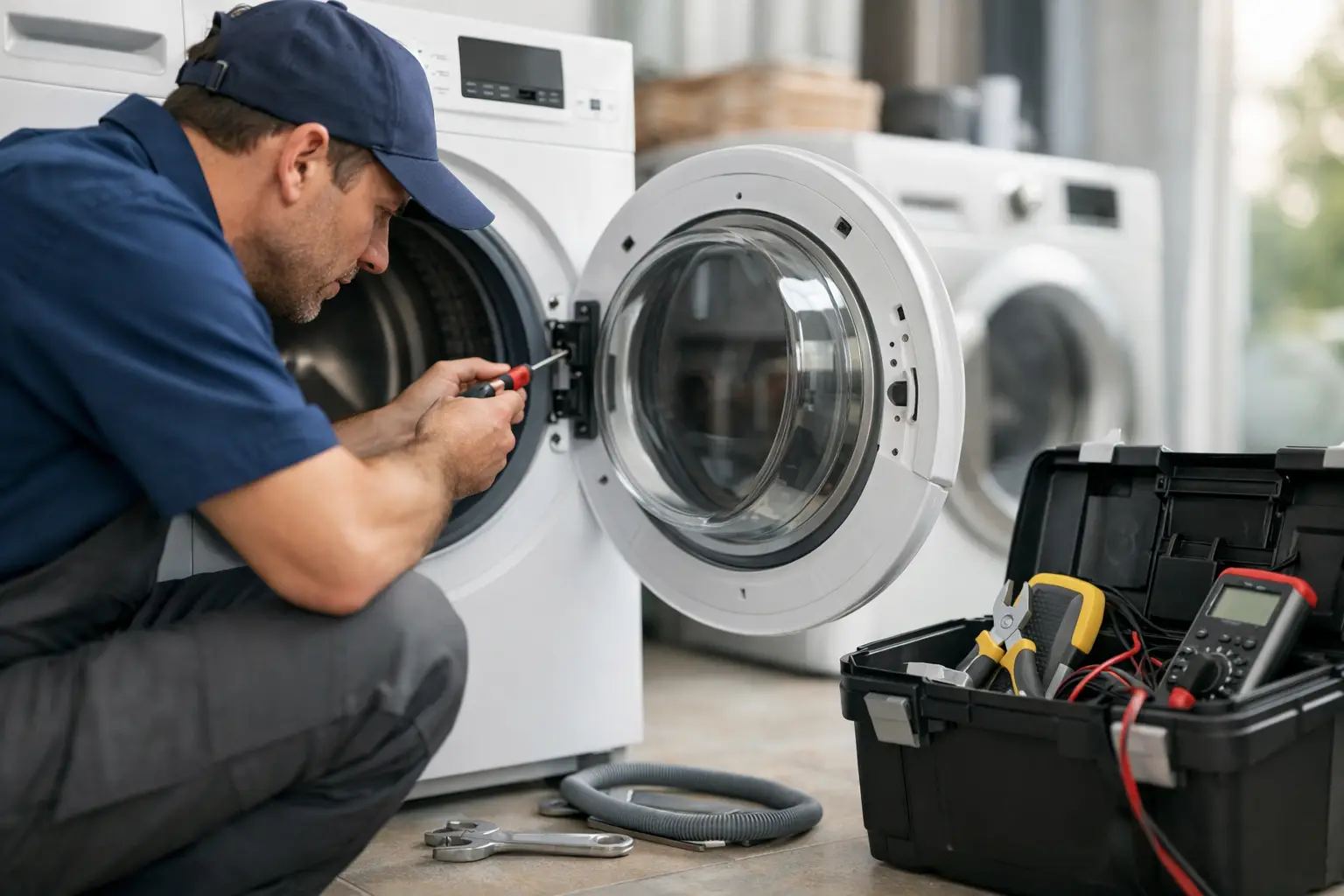
A washing machine that stops mid-cycle, leaves a pool on the kitchen floor or refuses to spin can bring a household to a standstill. This washing machine repair guide explains the safe checks worth making first, what common symptoms usually mean, and when a professional repair is the sensible option.
Before touching the appliance, switch it off at the mains and unplug it. Turn off the water supply if there is a leak. Never remove panels, test live wiring or attempt a repair around damaged cables, burning smells or water near electrical connections. Safety is not optional – particularly in rented properties, busy family homes and commercial premises where disruption can quickly become costly.
Start with the checks that prevent unnecessary call-outs
Not every washing machine fault is an internal failure. A loose plug, tripped circuit breaker, closed water valve or overloaded drum can all stop a cycle. Taking a few minutes to check the basics can save time and help an engineer diagnose the issue faster if a visit is needed.
Confirm that the socket has power by testing it with another suitable appliance. If the circuit has tripped, do not repeatedly reset it and restart the washing machine. A recurring trip can indicate an appliance fault, moisture ingress or a wider electrical issue that needs qualified fault finding.
Check that the water isolation valve is fully open and that the inlet hose is not kinked, crushed or leaking. Then look at the machine display for an error code. Make a note of it, along with the make and model, as this gives useful direction before a repair appointment.
Finally, avoid overloading the drum. Heavy towels, bedding and a full load of wet clothes can leave the machine unbalanced, especially during spin. Remove a few items, spread the remaining laundry evenly and try a spin-only programme once. If the problem continues, there may be a mechanical or drainage fault behind it.
Washing machine repair guide: match the symptom to the likely fault
The machine will not start
If the display is blank, begin with the plug, socket and consumer unit. If there is power but the programme will not begin, the door may not be locking correctly. Modern machines will not fill or turn unless the door interlock confirms that it is shut securely.
Check for trapped clothing around the door seal and close the door firmly without slamming it. A worn door catch, failed interlock, control board fault or damaged wiring can all cause the same symptom. These components should be tested by an experienced appliance engineer rather than replaced by guesswork.
It fills with water but will not wash or spin
A drum that does not turn may point to worn carbon brushes on some older motors, a faulty motor, a broken drive belt, a capacitor issue or an electronic control fault. On belt-driven machines, a failed belt can sometimes be visible from the rear, but removing covers carries risks and is rarely the best first step for an untrained person.
Listen to what happens after the machine fills. A quiet click followed by no drum movement gives a different clue from a loud hum, grinding noise or repeated attempts to start. Describe these details when booking a repair. Accurate symptoms help support a first-visit fix.
The machine will not drain
Standing water in the drum is one of the most common call-out reasons. Often, the cause is a blocked pump filter or an obstruction in the drain hose. Coins, hair grips, tissues, small clothing items and lint can prevent water from leaving the machine.
If your model has an accessible filter, consult the manufacturer instructions first. Place towels and a shallow tray beneath it because water may escape quickly. Open the filter slowly, remove visible debris and make sure the filter is refitted correctly. Do not force it if it is stuck.
If the filter is clear but the machine still will not drain, the pump itself, pressure system, hosework or control circuit may be faulty. Continuing to run drain cycles can strain the pump and cause further damage.
It leaks from the front, back or underneath
The location of a leak matters. Water at the front often relates to the door seal, detergent drawer or an overloaded drum creating excess foam. Water at the back may come from inlet hoses or the drain connection. A leak underneath can involve the pump, internal hose, tub seal or dispenser system.
Stop using the appliance immediately if water is reaching the plug, socket or surrounding electrical fittings. Drying the floor is sensible, but it does not remove the electrical risk or identify the source. A proper inspection should establish whether the leak is repairable and whether any nearby electrical equipment needs checking.
Use the correct amount of detergent for your machine and local water conditions. Too much detergent creates foam that can escape through seals and drawers, making a healthy machine appear to be leaking.
It is noisy, vibrating or moving across the floor
Some vibration during spin is normal. Violent shaking, banging or the machine walking forward is not. First, check that all four feet are firmly on the floor and the appliance is level. An uneven floor can make a minor imbalance feel much worse.
For a newly installed machine, confirm that transit bolts have been removed. These bolts secure the drum during delivery and must not remain in place during operation. If a machine has become progressively louder over months, worn shock absorbers, drum bearings, suspension components or a foreign object between the drums could be responsible.
A deep rumble during spin is often associated with bearing wear. This can become a major repair, and whether it is economical depends on the machine’s age, condition, brand and the availability of parts. An honest diagnosis is more useful than spending money on a repair that does not make financial sense.
The washing comes out cold, dirty or covered in residue
Poor wash results are not always caused by the heater. Check the programme temperature, detergent dosage and whether the drawer is clean and dispensing properly. A blocked dispenser, low water flow or overloaded drum can all leave detergent or soil behind.
If the machine consistently fails to heat, a failed heating element, temperature sensor, wiring fault or control issue may be involved. Heating faults can also trip the electrical supply. Do not continue resetting a tripping circuit, as repeated use may create a greater risk and obscure the original fault.
When a DIY check is sensible – and when it is not
Home checks are appropriate when they are external, low-risk and clearly described in the appliance manual. Checking the water tap, redistributing laundry, cleaning an accessible filter and inspecting for a kinked hose are reasonable examples.
The line should be drawn at electrical testing, internal repairs and faults involving water leakage, heat, burning smells or repeated tripping. Washing machines combine mains electricity, moving parts and large volumes of water. Replacing parts without confirmed diagnosis can waste money, damage the appliance or create an unsafe installation.
For landlords and property managers, a fast professional response also protects the property. A small hose leak can damage flooring, ceilings and neighbouring flats. An appliance that trips the circuit may affect essential sockets or expose tenants to an avoidable hazard.
Help an engineer repair the machine efficiently
A few details make a real difference. Have the appliance make, model number and any error code ready. Explain when the fault occurs: at the start of a cycle, while filling, during heating, when draining or only at high-speed spin. Mention recent changes too, such as a move, new installation, power cut, plumbing work or an earlier intermittent fault.
Clear access is equally helpful. Move laundry, cleaning products and stored items away from the front and, where safe, allow access to the socket and water connections. Do not pull the machine out if hoses or cables are tight, damaged or hidden behind fitted units.
FaultFree Engineering Group provides practical diagnostics and washing machine repairs across London, with transparent advice on whether repair is the right route. Where a fault is linked to the appliance supply or surrounding electrical installation, the benefit of an engineering and electrical team under one provider is straightforward: the issue can be assessed properly rather than treated as separate problems.
A washing machine rarely fails without giving clues. Act on leaks, unusual noises, poor draining and electrical trips early, and you are more likely to avoid a larger repair, water damage or a completely unusable appliance at the worst possible moment.