
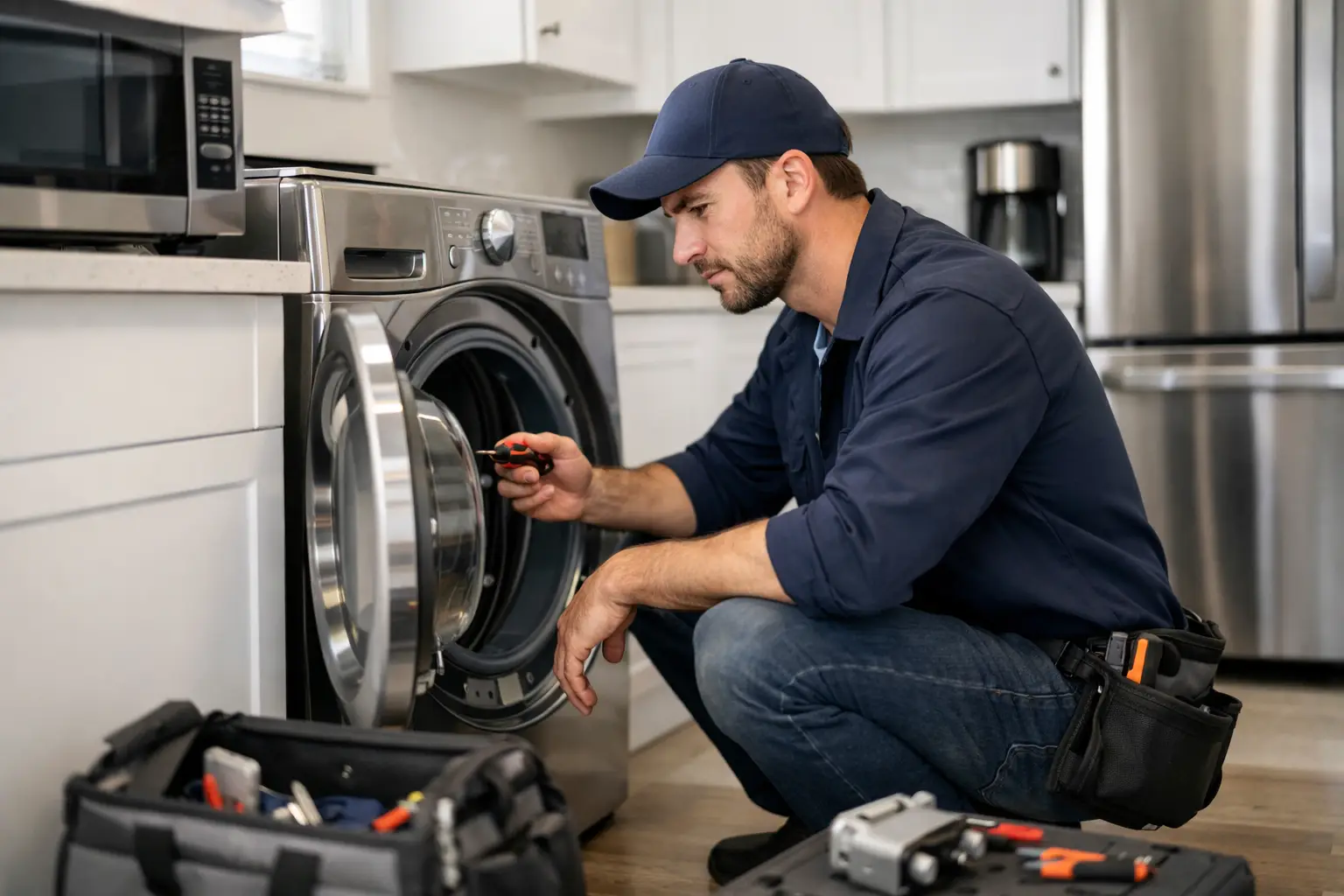
A washing machine stops mid-cycle, the oven will not heat properly, or the fridge freezer starts making a noise it has never made before. That is usually the point people ask, what is appliance repair service, and do I need one now or can it wait? In simple terms, appliance repair service is the professional diagnosis, testing, repair, and safety checking of domestic or commercial appliances when they develop a fault.
For most households and landlords, it is not just about getting a machine running again. It is about avoiding spoilage, preventing further damage, reducing disruption, and making sure the appliance is safe to use. A proper repair service should give you a clear diagnosis, transparent pricing, and a realistic answer on whether the unit is worth repairing.
What is appliance repair service and what does it include?
Appliance repair service covers far more than replacing a broken part. A qualified engineer starts by identifying the actual fault, because symptoms can be misleading. A dishwasher that will not drain may have a blocked pump, a damaged drain hose, a failed sensor, or an electrical issue affecting operation. The job is to pinpoint the cause, not guess.
In practical terms, the service often includes fault finding, electrical and mechanical testing, replacement of defective components, performance checks, and final safety inspection. On many visits, the biggest value is the diagnosis itself. Once the fault is confirmed, you can make an informed decision instead of spending money blindly.
This applies to a wide range of appliances. Most repair companies deal with washing machines, tumble dryers, dishwashers, electric ovens, cookers, hobs, fridge freezers, microwaves, and extractor hoods. Some also handle commercial appliances and broader electrical work, which can be especially useful when an appliance problem is linked to the property wiring, circuit protection, or power supply.
How an appliance repair visit usually works
A good repair service is structured and efficient. First comes the booking, usually based on the type of appliance, the fault symptoms, the make and model, and how urgent the issue is. If the freezer has failed or an oven is down in a busy rental property, response time matters.
When the engineer arrives, they inspect the appliance, ask a few direct questions, and carry out tests. That may involve checking heating elements, thermostats, motors, pumps, belts, control boards, door interlocks, sensors, wiring, and power supply. On modern appliances, accurate diagnostics matter even more because many faults sit behind error codes, intermittent behaviour, or failed electronic components.
Once the problem is identified, the next step is usually straightforward advice. If the repair is sensible, the engineer explains what needs doing and what it will cost. If the appliance is uneconomical to repair, you should be told that clearly. Honest advice is part of the service, not an extra.
Where parts are available and commonly carried, some faults can be resolved on the first visit. That first-time fix matters because it cuts downtime and avoids repeat appointments. If a specific part needs to be ordered, the service should still leave you with a clear plan rather than uncertainty.
What appliance repair service is not
It helps to be clear about what this service does not mean. It is not a general cleaning service, and it is not a cosmetic makeover for an old appliance. It is not simply swapping parts until something works. And it is not the same as installation, though many engineering firms offer both.
It is also not always the cheapest option in the short term. If a low-value appliance has a major control board failure, replacement may make more financial sense. The right engineer will say so. The goal should be a durable repair where possible, not selling a repair at any cost.
When it makes sense to repair rather than replace
This is where context matters. A repair is often the better option when the appliance is otherwise in good condition, the fault is isolated, and the cost is reasonable compared with replacement. That is common with items such as washing machines that need a new pump, ovens with failed heating elements, or dishwashers with drainage issues.
Replacement becomes more likely when several components are failing, parts are obsolete, or the appliance has reached the point where repeated breakdowns are expected. Age alone does not decide it. Brand quality, usage level, and maintenance history all play a part.
For landlords and property managers, the calculation includes tenant disruption and compliance responsibilities. For homeowners, it often comes down to reliability and convenience. A fast, correctly diagnosed repair can save money, but only if it is likely to last.
Common faults appliance repair services deal with
Most callouts follow a familiar pattern. Washing machines may not spin, drain, fill, or start at all. Tumble dryers often lose heat or stop turning. Ovens can trip electrics, fail to reach temperature, or heat unevenly. Dishwashers may leak, leave dishes dirty, or stop mid-programme. Fridge freezers can run warm, over-freeze, or become noisy.
Some faults are clearly mechanical. Others are electrical, and that distinction matters. If a cooker keeps tripping the circuit, or an appliance appears dead despite having power at the socket, the issue may involve wiring, internal components, or the consumer unit. This is one reason customers often prefer a company with both appliance and electrical expertise. It removes the gap between trades and speeds up fault finding.
Why professional diagnosis matters
A lot of people try online fixes first, and sometimes that is reasonable. Resetting an appliance, checking a filter, or clearing a simple blockage can save time. But there is a limit. Once you are dealing with heating circuits, live components, control boards, or hidden faults, guesswork becomes expensive and potentially unsafe.
Professional diagnosis matters because modern appliances are not simple machines. Even a basic washing machine now relies on sensors, safety interlocks, and programmed cycles. Replacing the wrong part wastes money. Missing the real issue can cause further damage.
There is also a safety point that should not be ignored. Faulty ovens, microwaves, hobs, and fridge freezers can present electrical and fire risks if they continue operating with damaged components. A proper repair service is there to restore safe function, not just basic operation.
What to expect from a reliable service provider
If you are booking an engineer in London, speed matters, but so does workmanship. A reliable provider should offer clear communication, sensible appointment windows, transparent pricing, and an honest view of whether the appliance is repairable.
You should also expect the engineer to be qualified, methodical, and respectful of your property. Good service is not only technical. It means arriving prepared, diagnosing accurately, explaining the fault in plain language, and carrying out repairs to a standard you can trust.
FaultFree Engineering Group Ltd works in this space with a practical approach that suits busy households, landlords, and local businesses. The real value in that kind of service is not just the repair itself. It is the combination of fast response, sound diagnosis, and the ability to deal with both appliance faults and related electrical issues without sending you elsewhere.
Is appliance repair service worth it for older machines?
Sometimes yes, sometimes no. If an older appliance is from a strong brand, has been reliable up to this point, and needs a straightforward repair, it may be well worth fixing. If it has a history of repeated issues and the current fault is major, replacement may be the better decision.
The key is avoiding blanket rules. An eight-year-old oven with a failed element is not the same as an eight-year-old fridge freezer with a sealed system problem. One may be a sensible repair. The other may not. That is why a proper inspection is more useful than assumptions based on age alone.
What is appliance repair service really buying you?
At its best, appliance repair service buys certainty. It tells you what has failed, whether it is safe, what it will cost to put right, and whether repair is the sensible route. That clarity matters when you have a family routine to keep moving, a tenant waiting on a fix, or a business that cannot afford unnecessary downtime.
It also buys time. Replacing an appliance is not always immediate. You may need to compare models, arrange delivery, and organise installation. A good repair can restore normal use quickly and prevent the knock-on stress that comes with a major breakdown.
If an appliance in your home or property starts behaving oddly, the most practical step is not to hope it sorts itself out. It is to get it tested properly, get a straight answer, and deal with the fault before it becomes a bigger and more expensive problem.