
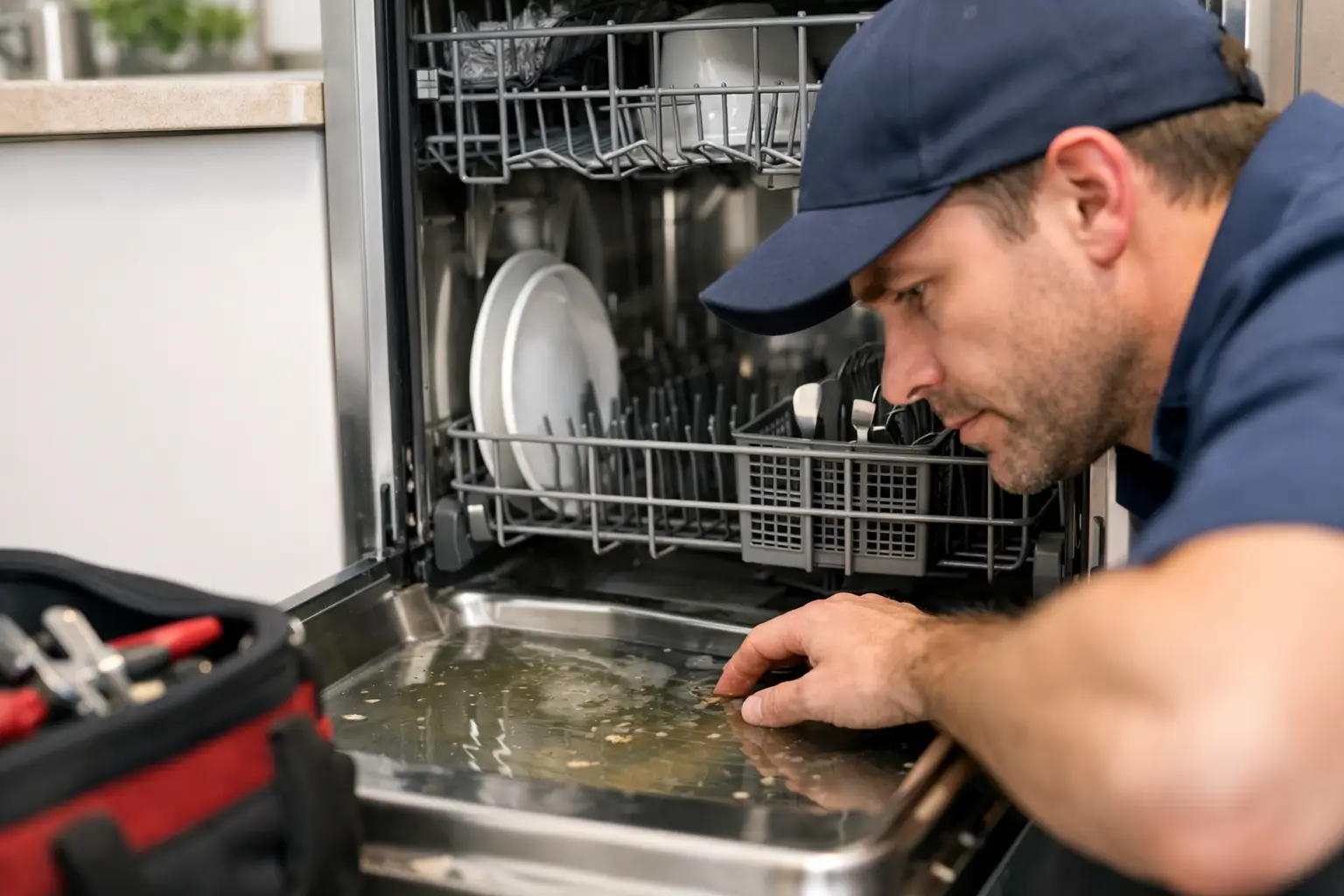
You open the dishwasher expecting clean plates and instead find a pool of dirty water sitting at the bottom. If you are asking why is dishwasher not draining, the fault is usually one of a small number of problems – and some are straightforward, while others need proper repair before they turn into leaks, odours or pump damage.
A dishwasher that will not empty is not just inconvenient. In busy homes, rental properties and commercial kitchens, it quickly becomes a disruption issue. The longer standing water is left inside, the more likely you are to get bad smells, greasy build-up and strain on other components. The key is to work out whether you are dealing with a simple blockage, a drainage installation issue or an electrical or mechanical fault.
Why is dishwasher not draining after a cycle?
In most cases, poor drainage comes down to blocked filters, a clogged waste hose, a problem at the sink connection, or a failed drain pump. Sometimes the machine itself is working as designed but cannot push water out because the path is obstructed. In other cases, the path is clear but the dishwasher is not activating the drain stage properly.
That distinction matters. A blocked filter may be a quick maintenance job. A seized pump, faulty sensor or control board issue is different and usually needs an engineer with the right tools and testing process.
Start with the simplest causes first
The filter assembly at the bottom of the dishwasher is the first place to check. Food scraps, labels from jars, broken glass, grease and limescale can all restrict water flow. Even a partial blockage can leave water sitting in the sump area after the programme ends.
Take the lower rack out and inspect the filter and surrounding sump carefully. If the filter is coated in sludge or debris, clean it thoroughly with warm water. While doing that, check for anything trapped around the pump cover. Be careful with sharp fragments, especially if a glass has broken inside the machine.
The next likely issue is the drain hose. If it is kinked behind the unit, crushed during installation or clogged with waste, the dishwasher may try to drain but fail to move water through properly. This is particularly common after a dishwasher has been recently installed, moved or replaced. A poor hose route can cause repeat drainage faults even when the appliance itself is in good condition.
The sink waste connection is often overlooked
Many dishwashers drain through a spigot connection on the sink trap. If that connection is blocked with grease or food waste, the dishwasher cannot empty as it should. This is easy to miss because people tend to focus on the appliance rather than the plumbing it connects to.
If the dishwasher and sink share drainage, signs often overlap. You might notice the sink draining slowly, bad smells under the cabinet, or water backing up near the waste pipe. In those cases, the dishwasher may not be the real source of the problem.
This is one of those situations where it depends on the property setup. In some London flats and rental kitchens, tight pipework arrangements, poor previous installations or ageing trap assemblies create repeat drain issues that look like appliance failure. Good diagnosis matters more than guesswork.
Why is dishwasher not draining if the filter is clean?
A clean filter does not rule out a fault. If the machine still leaves water behind, attention usually turns to the drain pump, non-return valve, pressure system or control components.
The drain pump is responsible for pushing water out of the dishwasher during the drain phase. If the pump is blocked, jammed or electrically faulty, the machine may hum, stop mid-cycle, or leave standing water inside. Sometimes the pump impeller is obstructed by debris. Sometimes the motor has simply worn out.
A non-return valve can also cause trouble. Its job is to stop waste water flowing back into the dishwasher. If it sticks open, becomes damaged or gets blocked, dirty water can re-enter the machine after draining. That can make it seem as though the dishwasher never drained in the first place.
Pressure switches and level sensors are another possibility. These parts help the machine detect water levels. If they misread the level, the dishwasher may not move correctly into the drain stage or may stop the cycle prematurely. This is less common than a blockage, but it does happen, especially in older machines or appliances affected by grease and detergent residue over time.
Installation faults can cause repeat draining problems
Not every drainage issue is a breakdown. Sometimes it is an installation problem from day one.
The drain hose needs the correct height and routing to avoid siphoning and backflow. If it is laid too low or connected incorrectly, dirty water can run back into the appliance. If the hose has been extended badly or pushed too far into the standpipe, drainage can become unreliable.
This is especially relevant in rental properties, refurbishments and kitchen refits where appliances are disconnected and reconnected by different trades. A dishwasher may appear faulty when the real issue is that it has not been installed to the correct drainage arrangement.
For landlords and property managers, this is worth taking seriously. Repeated call-backs, tenant complaints and avoidable appliance replacements often come from poor diagnosis of what is really a connection or plumbing issue.
Warning signs that point to a bigger fault
If the dishwasher is not draining and you also hear grinding noises, repeated humming, flashing error codes or tripped electrics, stop using it. These signs suggest the problem may be beyond basic cleaning.
Water left inside the base can affect other components. On some models, leaks or overflow conditions trigger safety systems that interrupt normal operation. On others, a failing pump may continue drawing power without moving water properly. Neither is something to leave unresolved.
Bad odours, dirty residue on dishes and water appearing in the machine between cycles are also signs that the appliance is not draining or isolating wastewater correctly. If the issue keeps returning after you clean the filter, it is time for proper fault finding rather than repeated resets.
What you can safely check yourself
There are a few sensible checks most people can do before booking a repair. Isolate the appliance first and avoid forcing any parts.
Check the filter, sump area and visible drain hose for obvious blockages or kinks. Look at the sink trap connection if the dishwasher drains through it. If your dishwasher has an accessible pump cover, inspect for trapped debris with care. Also check whether the machine has completed its programme or stopped part-way through with an error code.
What you should not do is start dismantling panels, probing live electrical parts or tipping the machine around without knowing the fault. That often creates more work, especially if water reaches electrical components or hidden leaks start after reassembly.
When to call an engineer
If you have cleaned the filter, checked the hose route and confirmed the sink waste is clear, but the dishwasher still will not drain, the next step is a proper diagnostic visit. The same applies if the machine is showing fault codes, making unusual noises, leaking, tripping power or repeatedly filling with dirty water.
An experienced engineer will usually test the drain pump, inspect the hose and outlet path, check the level system and confirm whether the issue is mechanical, electrical or installation-related. That matters because replacing the wrong part wastes time and money.
For households and landlords who need a fast result, this is usually the more efficient route. FaultFree Engineering Group handles dishwasher faults across London with the same practical focus customers expect from a tested, trusted, rated, reviewed and preferred service – clear diagnosis, transparent pricing and repairs built to last.
The cost question most people are really asking
When people ask why is dishwasher not draining, they are often also asking whether the repair is worth doing. The answer depends on the age of the appliance, the brand, the fault and whether damage has spread.
A blocked filter or hose is usually minor. A pump replacement may still be worthwhile on a quality machine from brands such as Bosch, Miele, AEG or Samsung. But if the appliance is older and the drainage issue is linked to multiple failing parts, replacement can make more sense.
That is why honest diagnosis matters. A good engineer should tell you when repair is sensible and when it is not. Speed matters, but accuracy matters more.
Standing water in a dishwasher is never something to ignore. The sooner the fault is identified, the better your chances of keeping the repair simple, the kitchen hygienic and the disruption short.