
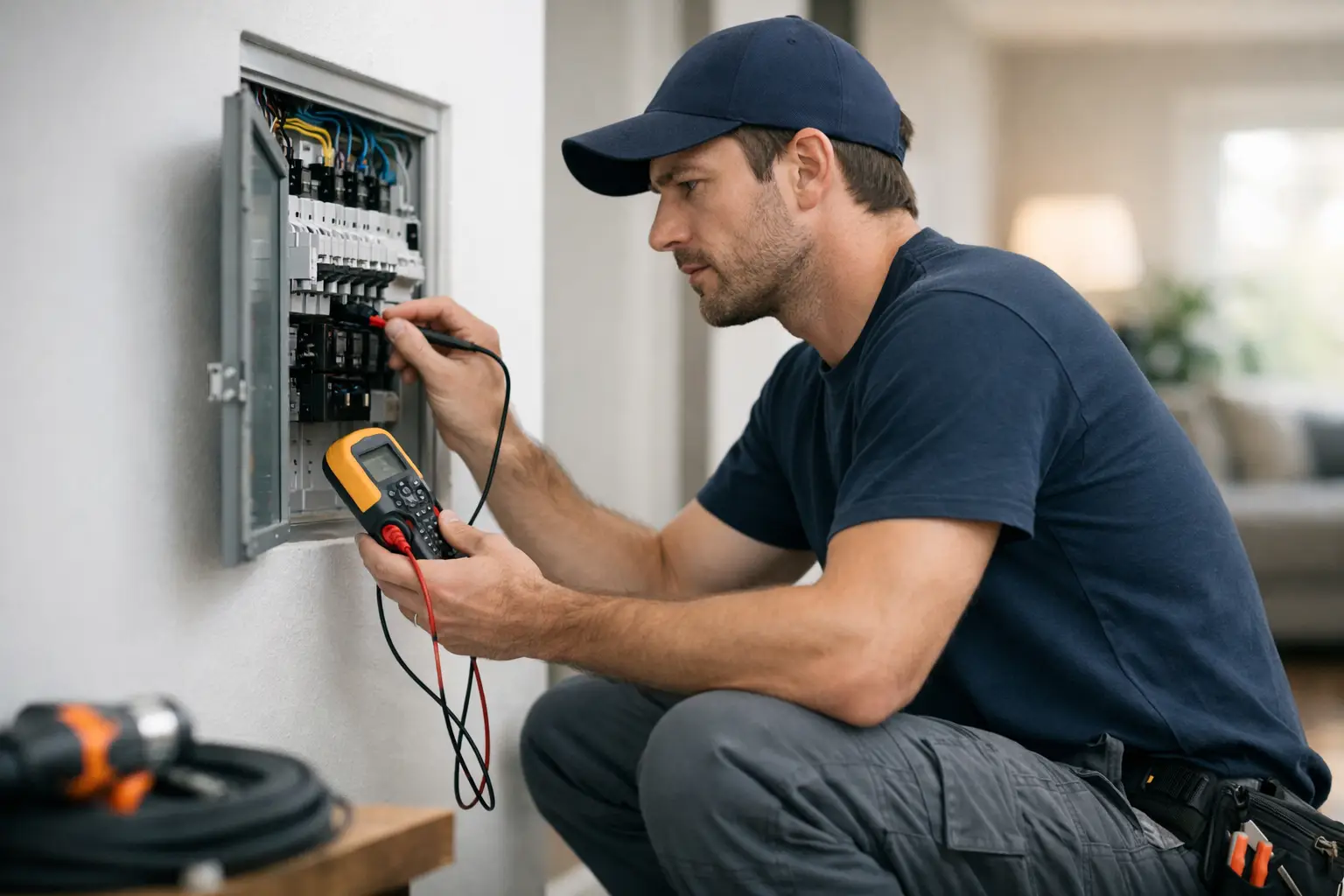
You usually notice tripping electrics at the worst possible moment – the oven cuts out mid-meal, the washing machine stops halfway through a cycle, or half the sockets in the property suddenly go dead. If you are trying to work out how to fix tripping electrics, the first job is not guessing. It is narrowing the fault down safely, so you know whether you are dealing with one faulty appliance, an overloaded circuit, moisture, or a more serious wiring issue.
A consumer unit is designed to trip for a reason. It is there to protect people, appliances and the property itself. So while an occasional trip can point to a simple fault, repeated tripping should never be ignored or forced back on without a proper check.
How to fix tripping electrics without taking risks
Start at the consumer unit and identify what has actually tripped. In many London homes and rental properties, this will either be an MCB, which protects a circuit from overloads and short circuits, or an RCD, which trips when it detects current leaking to earth. That distinction matters, because it helps tell you where the problem is likely to be.
If one circuit breaker has tripped and the rest remain on, the issue is usually isolated to that circuit. If the RCD has tripped, the fault may involve one appliance or fitting on any of the circuits protected by it. Before you reset anything, switch off and unplug appliances on the affected circuit where possible. That includes obvious suspects such as kettles, washing machines, dishwashers, tumble dryers, microwaves and portable heaters.
Once everything is unplugged, reset the breaker or RCD. If it stays on, plug appliances back in one at a time. Leave a short gap between each one and switch them on properly rather than just plugging them in. If the electrics trip again when a specific appliance is connected, you have likely found the cause.
That is often the fastest route to a first-time fix, especially in properties where large domestic appliances share kitchen circuits and the fault is not in the fixed wiring at all.
The most common reasons electrics keep tripping
In practice, most recurring trips come down to a handful of causes. The trick is knowing which ones are realistic and which ones need immediate professional attention.
Faulty appliances
A faulty appliance is one of the most common causes of tripping electrics. Heating elements, motors, pumps and internal wiring can all deteriorate over time. Washing machines, ovens, dishwashers and tumble dryers are regular offenders because they combine heat, water and moving parts. If the electrics trip only when one specific appliance starts a cycle or reaches a heating stage, that is a strong clue.
It depends on the appliance, though. A fridge freezer may trip intermittently because of compressor issues, while an oven may only trip once it gets up to temperature. That is why the timing of the trip matters as much as the trip itself.
Overloaded circuits
An overloaded circuit happens when too many high-demand items are running together. This is common in kitchens, extensions, garden offices and older properties that were never designed for modern electrical loads. Kettles, air fryers, microwaves, washing machines and portable heaters can quickly exceed what a circuit can comfortably handle.
This type of fault may seem straightforward, but there is a trade-off. If reducing the load solves it once, that is useful. If the same circuit still trips under a normal household load, the issue may be poor circuit design, a weakening breaker or an underlying fault.
Moisture and water ingress
Moisture is another regular cause, particularly around outdoor sockets, extractor fans, kitchens, utility rooms and bathrooms. Water and electrics do not need much contact to create a fault to earth. If tripping happens after heavy rain, after cleaning, or when using an appliance that takes in or drains water, moisture should be high on the list.
Damaged sockets, switches or wiring
A cracked socket, loose connection, trapped cable or damaged insulation can all cause repeated tripping. Sometimes there are visible signs such as scorching, buzzing, a burning smell or discolouration. Sometimes there are none at all. That is where electrical fault finding becomes more than a reset job.
A safe step-by-step way to narrow the problem down
If you want a practical approach to how to fix tripping electrics, keep it methodical.
First, turn off appliances and lights on the affected circuit. Reset the breaker. If it will not reset even with everything off, stop there. That points to a fixed wiring fault, a faulty breaker, or something still connected that you cannot isolate safely.
If it does reset, bring items back one by one. Start with plugs, then fixed loads like lighting if they are on the same circuit. Watch for patterns. Does it trip when the kettle boils, when the oven heats, when the washing machine fills, or when outside lights come on? Small details save time.
Check for obvious damage, but do not remove covers or start opening sockets, appliances or the consumer unit. If a plug is cracked, a flex is frayed, or a socket faceplate is loose, leave it switched off and arrange a proper repair.
In rental properties and commercial spaces, this process is especially useful because it helps separate user load issues from landlord maintenance issues. That can make repairs faster and keep disruption to a minimum.
When not to try fixing tripping electrics yourself
There is a limit to what a sensible homeowner, tenant or landlord should do. Resetting a breaker once, unplugging appliances and checking for patterns is reasonable. Beyond that, safety comes first.
Do not keep forcing a breaker back on if it trips immediately. Do not use extension leads to work around a suspect socket. Do not ignore signs of overheating. And do not assume the fault is minor because the power comes back temporarily.
You should stop and call a qualified electrician if the consumer unit will not reset, if there is any smell of burning, if sockets or switches are warm, if lights flicker before tripping, or if the issue involves outdoor circuits, shower circuits or anything near water. The same applies if the fault is affecting tenants, shared areas or business premises where downtime and compliance both matter.
How appliance faults and electrical faults overlap
This is where many people lose time. They book an electrician for a tripping issue, only to find the washing machine is faulty. Or they replace an appliance, only to discover the circuit itself is the problem.
Because major appliances sit right at the overlap between electrical systems and day-to-day use, accurate diagnosis matters more than guesswork. A dishwasher with an earth leakage fault can trip an RCD. A cooker with a failing element can trip only when heat is called for. A damaged socket supplying the appliance can create similar symptoms. The fault can look the same from the consumer unit, but the repair is completely different.
That is why a service-led approach works best. The right engineer tests the circuit, the outlet and the appliance rather than jumping to the first likely answer. For London households, landlords and property managers, that saves repeat visits and unnecessary replacement costs.
Preventing tripping electrics from happening again
Some faults are sudden. Others build up slowly and give warning signs first. If your electrics have tripped more than once in recent months, it is worth treating that as an early warning rather than a one-off nuisance.
Avoid overloading extension leads and double adapters, especially in kitchens. Replace damaged plugs and leads promptly. Keep outdoor electrical fittings weatherproof and properly maintained. If appliances are ageing, tripping intermittently, or showing signs of poor performance, get them checked before they fail completely.
For landlords, regular inspections matter just as much as emergency callouts. A property can appear fine between tenancies and still have hidden electrical wear, damaged accessories or appliances starting to fail. Early testing is usually cheaper than emergency repair, and far less disruptive.
FaultFree Engineering Group sees this regularly across London – one fault reported as a general power issue turns out to be a specific appliance, while a supposed appliance fault turns out to be unsafe wiring. The value is in getting the diagnosis right first time.
If your electrics are tripping, treat it as a safety system doing its job. A calm, methodical check can often identify the likely cause, but repeated trips, hidden faults and anything involving heat, water or damaged wiring should be left to a qualified engineer. The quickest route back to normal is not trial and error – it is a safe diagnosis and a repair that actually lasts.