
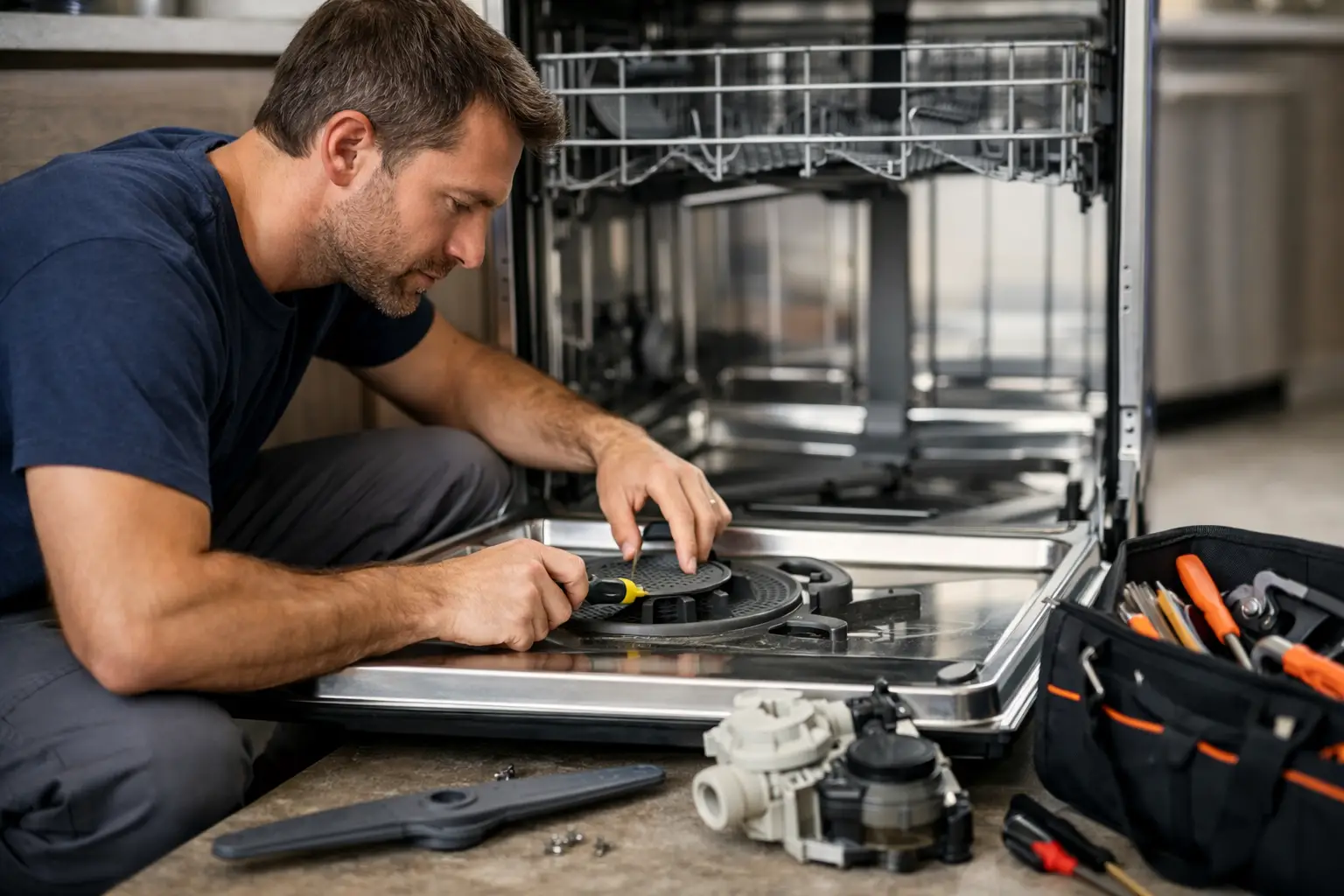
A dishwasher usually picks the worst possible moment to stop working – just after dinner, before guests arrive, or in the middle of a busy week when nobody has time to wash up by hand. When that happens, most people want the same thing from dishwasher repair: a fast diagnosis, a clear answer, and a proper fix that lasts.
That is exactly how the job should be approached. Some dishwasher faults are minor and easy to rule out. Others point to failed pumps, heaters, sensors, door locks or electrical supply issues that need a trained engineer. The key is knowing the difference, because a delay can turn a manageable repair into water damage, poor hygiene, or a complete appliance replacement.
When dishwasher repair is worth it
In many cases, repair is the sensible option. A good-quality dishwasher that has developed one clear fault often has plenty of service life left, especially if the drum, racks and outer cabinet are still in sound condition. Replacing a pump, heater, drain hose, inlet valve or control component is usually far more cost-effective than buying a new machine and arranging installation.
It does depend on the age of the appliance, the brand, and the fault history. If a dishwasher is already nearing the end of its working life and has had repeated breakdowns, replacement may be the better long-term decision. But if the issue has appeared suddenly and the machine was working well beforehand, a professional diagnosis is usually the best first step.
For landlords and property managers, this matters even more. A non-working dishwasher can quickly become a tenant complaint, and if the fault is causing leaks or tripping electrics, it moves from inconvenience to urgent maintenance. Fast attendance and accurate fault finding help keep the property operational and avoid wider disruption.
The most common dishwasher faults
One of the most frequent callouts is a dishwasher that will not start. Sometimes the cause is simple – a faulty door latch, a tripped circuit, a power issue at the socket, or controls that need resetting. In other cases, the problem sits within the main control board, interlock system or internal wiring. If the machine is completely dead, it is worth checking the power supply first, but beyond that, electrical testing should be left to a qualified engineer.
A dishwasher that fills but does not wash is another common problem. You may hear it take in water, then little else happens apart from a faint hum. This can indicate a failed circulation pump, blocked spray arms, capacitor issues or motor faults. If water is entering but not being pushed through the system properly, dishes will come out dirty and the machine may stop mid-cycle.
Drainage faults are equally common. If dirty water is left standing in the bottom, the machine may have a blocked filter, obstructed waste hose, jammed drain pump or problem with the sink connection. Food debris, grease and glass fragments are frequent culprits. In some homes, poor installation or a badly routed drain hose can also create repeat drainage issues.
Heating problems tend to show up more gradually. Dishes come out wet, cycles take longer, or glasses look greasy despite using detergent correctly. A failed heating element, faulty thermostat, temperature sensor issue or control fault can all affect wash performance. This type of problem often gets mistaken for poor detergent quality when the real issue is that the water is not reaching the correct temperature.
Leaks should always be taken seriously. A damaged door seal, split hose, cracked sump, worn pump seal or overfilling issue can all put water onto the kitchen floor. Even a small leak can damage units, flooring and adjacent electrics if ignored. If the appliance is leaking from underneath, stop using it until it has been inspected.
What to check before booking a repair
A few basic checks can save time. First, confirm the dishwasher is receiving power. If it is hardwired or on a fused spur, make sure the isolator has not been switched off. If it uses a plug, check the socket with another appliance if safe to do so.
Next, inspect the filter and remove any obvious debris. A blocked filter can affect drainage and wash quality. Check the spray arms as well. If the holes are clogged with food particles or limescale, water flow will be reduced.
Look at the water supply valve to make sure it is open, and check whether the waste hose appears kinked or crushed behind the appliance. If the machine shows an error code, make a note of it. Error codes do not always identify the exact failed part, but they give a useful starting point.
What you should not do is dismantle electrical components, bypass safety devices or keep resetting a machine that is tripping the power. Those are signs that the fault may go beyond routine maintenance.
Signs you need professional dishwasher repair
If the dishwasher is tripping the electrics, not heating, leaking, showing persistent fault codes, or failing to complete a cycle, professional attention is the right move. The same applies if there is a burning smell, unusual noise from the pump or motor, or evidence that the appliance has an internal wiring issue.
Modern dishwashers are far more complex than they appear from the outside. Many faults overlap. A machine that will not drain could have a pump problem, a control fault, a pressure issue, or a blockage. A dishwasher that seems not to start may actually be failing a safety check because of a door lock issue or flood protection trigger. Without proper testing, it is easy to replace the wrong part and still have the same problem.
That is why professional diagnosis matters. A proper engineer does not guess. They test components, confirm the root cause, and advise clearly on whether the repair is economically worthwhile.
Why first-time diagnosis makes a difference
For most customers, the real issue is not just the breakdown itself. It is the disruption around it. Time off work, missed appointments, a kitchen out of action, tenants waiting for updates, or a business trying to keep things moving. A fast but inaccurate visit does not solve that.
Good dishwasher repair depends on getting the diagnosis right early. That means checking the appliance, the installation and, where relevant, the electrical supply feeding it. Because FaultFree Engineering Group also works across wider electrical faults, there is practical value in having engineers who understand both appliance behaviour and the circuits behind it. Sometimes the dishwasher is the issue. Sometimes the supply to it is the real problem.
For London households and landlords, that joined-up approach reduces wasted time. It helps avoid the cycle of replacing parts blindly or booking separate trades when one qualified team can identify the fault properly.
Repair or replace?
There is no one-size-fits-all answer. If the repair cost is reasonable, the machine is otherwise in good condition, and spare parts are available, repair is usually the best route. This is especially true for premium brands where replacement costs are much higher.
If the appliance has severe corrosion, repeated electronic failures, major water damage internally, or poor parts availability, replacement may be the more sensible choice. Honest advice matters here. Customers do not need pressure. They need a straightforward assessment of cost, risk and likely lifespan after repair.
That same honesty is important in rented properties. A cheaper short-term fix is not always the best option if the machine is likely to fail again soon. In many cases, a durable repair saves more over time than repeated callouts for the same underlying problem.
Preventing repeat dishwasher faults
No appliance is fault-proof, but a few habits do reduce avoidable breakdowns. Clean the filters regularly, keep spray arms clear, and do not overload the racks so badly that water cannot circulate. Use the correct detergent and salt where required, especially in hard water areas.
It also helps to pay attention to early warning signs. If cycles are taking longer, dishes are coming out dirty, the pump sounds louder than usual, or a small leak has appeared at the door, act early. Small faults are often cheaper and simpler to resolve before they develop into full component failure.
Installation quality matters too. Poor drainage setup, kinked hoses, unstable levelling and incorrect electrical connection can all shorten the life of the appliance. What looks like a product fault is sometimes an installation fault showing up later.
When a dishwasher stops doing its job, the aim is not a temporary patch. It is a safe, accurate repair that gets the kitchen working again without guesswork, delay or repeat failure. If the signs point beyond a simple filter clean or reset, getting it checked properly is usually the quickest route back to normal.