
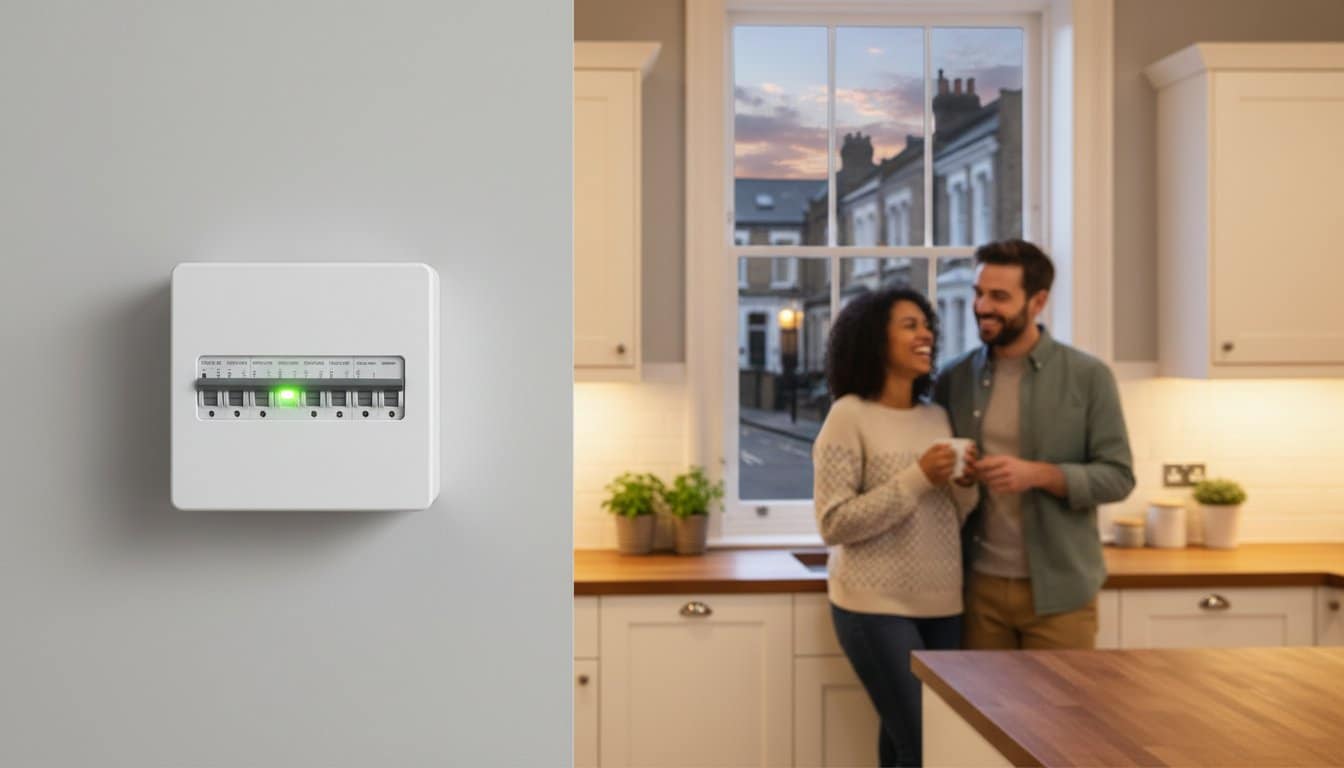
Imagine it is 7:30 PM on a rainy Tuesday in Wandsworth when your kitchen lights suddenly flicker and die. You find yourself staring at an ancient, humming metal box in the hallway, wondering if that faint smell of singed plastic is a serious fire risk or just your imagination. Most London homeowners feel this exact anxiety when dealing with an outdated household fuse box. You deserve to feel safe in your own home, yet frequent power cuts and confusing technical terms like RCD or SPD often leave you feeling overwhelmed and vulnerable.
Our professional guide gives you total clarity on your electrical system. You will learn how to spot the warning signs of a failing unit and understand the mandatory 2026 UK electrical regulations that affect your property. We promise to replace confusion with confidence, ensuring you know exactly when to request a same-day inspection from a qualified expert. We will walk through the essential upgrades that protect your appliances and provide the peace of mind that comes from a Tested-Trusted, compliant home.
Key Takeaways
- Learn how your consumer unit acts as the electrical heart of your home to prevent fires and electrocution.
- Understand why circuits trip and how to identify if your home’s safety features are working correctly.
- Recognise the clear warning signs that your household fuse box is no longer fit for purpose under 2026 regulations.
- Stay compliant with legal EICR requirements for London landlords to ensure tenant safety and property insurance validity.
- Discover how to secure professional same-day assistance for urgent electrical faults across all London boroughs.
Understanding Your Household Fuse Box: The Heart of Your London Home
Your household fuse box is the most critical component of your home’s electrical system. It acts as the central hub where the main power supply enters your property before being safely distributed to various circuits. In a city like London, where 54% of the housing stock consists of flats or maisonettes, the integrity of this unit isn’t just a matter of convenience; it’s a fundamental safety requirement. A properly functioning board prevents cable overheating and protects your family from the risk of electric shocks.
London’s architectural landscape is incredibly diverse. You might reside in a 19th-century Victorian terrace in Fulham or a modern high-rise in Stratford. Each property type places different demands on its electrical infrastructure. According to London Fire Brigade statistics, electrical faults cause approximately 2,000 house fires across the capital every year. Many of these incidents stem from outdated or poorly maintained distribution equipment. Ensuring your household fuse box is up to current British Standards (BS 7671) is the most effective way to safeguard your property.
Modern units are designed to handle the heavy electrical loads of 21st-century life. We now plug in everything from electric vehicle chargers to high-powered induction hobs. Older boards were simply never built for this level of consumption. When a circuit becomes overloaded, a modern unit reacts in under 40 milliseconds to cut the power. This rapid response is what separates a minor inconvenience from a potentially life-threatening fire. If your lights flicker when the kettle boils, your system is likely struggling to cope.
Fuse Box vs. Consumer Unit: What is the Difference?
While people often use the terms interchangeably, there’s a vital technical distinction. A consumer unit is the modern, safer version of the legacy fuse box. Older boxes use “rewirable” fuses where you must manually replace a strand of wire if it blows. These offer limited protection against modern electrical surges. Upgrading to a modern unit makes future electrical works and maintenance much simpler. Our certified team provides same-day assessments to determine if your current board meets the 18th Edition Wiring Regulations.
Why London Properties Present Unique Electrical Challenges
Many London townhouses were converted into multiple occupancy flats during the mid-20th century. This often resulted in “daisy-chained” wiring that struggles with today’s high demand. In these high-density buildings, an electrical fault in one flat can endanger the entire block. Accessibility is another major factor. In multi-storey London properties, your main shut-off switch must be easily reachable in an emergency. If your board is tucked away in a damp basement or a high, unreachable cupboard, it’s time for a professional, honest assessment of your home’s safety.
FaultFree Engineering Group prioritises your peace of mind by delivering dependable results that keep your home running smoothly. We don’t believe in jargon; we believe in transparent pricing and long-lasting repairs. If your unit is showing signs of age, such as a burning smell or physical damage, don’t wait for a total failure. Our same-day and next-day availability ensures that a qualified technician can diagnose the issue before it escalates into a costly emergency. Safety is our pride, and we’re here to ensure your London home remains a secure environment for everyone. We’re tested, trusted, and preferred by residents across the city because we provide an honest assessment every time.
Anatomy of a Modern Consumer Unit: Key Components Explained
Your household fuse box, technically known as a consumer unit, is the most critical safety feature in your property. It acts as the central hub where the external electrical supply is divided into separate circuits for your lights, sockets, and heavy appliances. Modern units use a sophisticated internal logic designed to prevent fires and fatal accidents before they occur. Understanding these components helps demystify that grey box under the stairs and ensures you know when to seek professional help.
The Main Switch and Circuit Breakers (MCBs)
The Main Switch is the master control for your entire home. It allows you to isolate all power instantly in an emergency or during maintenance. Beneath or beside this switch are the Miniature Circuit Breakers (MCBs). These protect specific zones, such as the kitchen, lounge, or upstairs bedrooms. If a circuit draws too much current, perhaps by plugging in too many high-wattage appliances at once, the MCB will trip. This trip mechanism is a protective behaviour, not a failure; it prevents the internal wiring from overheating and causing a fire. FaultFree Group provides same-day diagnostics if your board is constantly tripping without a clear cause.
RCDs and RCBOs: The Life Savers
Residual Current Devices (RCDs) are designed to prevent fatal electric shocks by monitoring the balance of electricity flowing through a circuit. If they detect a leakage of even 30 milliamperes, they cut the power in less than 40 milliseconds. While traditional boards often use one RCD to cover multiple circuits, modern standards are shifting. Replacing a consumer unit with a “High Integrity” board is now the preferred approach for 2026 safety goals. These boards use Residual Current Breaker with Overcurrent (RCBO) technology.
- Circuit Independence: RCBOs combine the functions of an MCB and an RCD into one single device.
- Fault Isolation: If a faulty kettle trips the kitchen circuit, your lights and fridge freezer stay on.
- 2026 Standards: New regulations favour RCBOs to ensure that a single fault doesn’t plunge an entire house into darkness.
Surge Protection Devices (SPD)
In a modern London home office, it is common to find over £5,000 worth of sensitive electronics, including laptops, high-end monitors, and smart appliances. Surge Protection Devices (SPD) are now a standard requirement under the 18th Edition (Amendment 2) regulations to protect this equipment from voltage spikes caused by lightning or grid switching. An SPD is a component that redirects transient overvoltages away from your devices to the earth. Without an SPD, a single power surge can fry the circuit boards of your washing machine or boiler, leading to expensive repairs.
The concept of “zoning” electricity is central to modern consumer unit design. By separating essential items like smoke alarms and security systems from general-use sockets, you ensure that a minor fault in a toaster doesn’t compromise your home’s safety. If your current household fuse box lacks these modern components, it may be time for an upgrade. Our certified electricians can provide a transparent assessment of your current board to ensure it meets the latest UK safety regulations and protects your family effectively.
Why Your London Fuse Box Keeps Tripping: Common Causes
Few things are as frustrating as a sudden blackout while you are mid-dinner in a busy London terrace. When your household fuse box trips, your first instinct might be to grumble at the inconvenience. However, that click of the switch is actually a life-saving event. It means your consumer unit has detected a fault that could lead to an electrical fire or a lethal shock. A trip is a safety feature working exactly as designed. It cuts power in milliseconds to protect your property and your family. Resetting the switch repeatedly without investigating the cause is dangerous. If a circuit trips three times in a row, you have a genuine fault that requires a professional diagnosis.
Faulty Appliances and Overloaded Circuits
Faulty domestic appliances are the leading cause of electrical call-outs across Greater London. A common culprit is a failing heating element in an oven. When the internal casing of the element degrades, it allows electricity to leak to the earth, triggering an immediate RCD trip. If your power cuts out the moment you turn on the grill, you likely need professional oven repairs to replace the shorted component.
In smaller London apartments, space is at a premium, leading many residents to “daisy-chain” extension leads. Plugging multiple high-draw devices like kettles and heaters into a single socket creates an overloaded circuit. This draws more current than the household fuse box can safely manage, causing the circuit breaker to trip to prevent the wires from melting. Use this checklist to identify the source of the problem:
- Unplug every device on the affected circuit, including lamps and chargers.
- Flip the tripped switch back to the “on” position at the consumer unit.
- Plug your appliances back in one by one and turn them on.
- Identify which specific device causes the power to drop out again.
Deteriorating Wiring and Damp Issues
London’s unique architecture presents specific challenges for modern electrics. Many Victorian and Edwardian conversions feature damp basements or cellars where moisture ingress is a constant threat. When water enters an electrical fitting, it creates a path for electricity to escape. This leads to “nuisance tripping,” where the power cuts out intermittently without an obvious cause. If your home hasn’t been rewired in the last 25 years, the insulation on your cables may also be breaking down.
Older rubber or lead-sheathed cables become brittle and crack over time. When the live wire touches the neutral or earth, the fuse box shuts down the circuit instantly. Adhering to UK consumer unit safety regulations is essential for maintaining a safe home environment. If you notice a burning smell near your sockets or if the tripping becomes frequent, you must book professional fault finding immediately. Our certified teams specialise in diagnosing these hidden issues, providing same-day solutions to ensure your electrical system remains dependable and safe. We provide an honest assessment of your wiring’s condition, prioritising your safety over a quick fix.
When to Upgrade: Regulations and Safety Signs
Your household fuse box is the heart of your property’s electrical system. It manages every circuit in your home. If this unit is over 25 years old, it likely lacks the modern safety features required to protect your family from fire or electric shock. Technology has moved fast. Older units weren’t designed for the high power demands of modern induction hobs, electric vehicle chargers, or powerful power showers. Ignoring an outdated unit puts your property at risk. Safety is our pride, and we believe every homeowner should recognise the red flags of a failing system.
Top 5 Signs You Need a Fuse Box Upgrade
Visible physical defects are the most urgent warnings. If you spot any of these, you need a professional assessment immediately.
- Wooden backing or cast iron casing: These units are relics from the 1960s. They’re highly combustible and offer zero protection against internal electrical fires.
- Lack of RCD protection: Look for a “Test” button. If your unit doesn’t have one, it lacks a Residual Current Device. This life-saving switch cuts power in milliseconds if a fault is detected.
- Flickering lights or burning smells: These are symptoms of arcing or overheating. If the plastic casing feels warm or smells like ozone, it’s a critical fire hazard.
- Rewireable fuses: If you’re still replacing actual wire when a fuse blows, your system is obsolete. These don’t trip fast enough to prevent modern appliance damage.
- Frequent “blowing” of fuses: Modern circuits shouldn’t fail regularly. Frequent issues suggest your household fuse box is overloaded and struggling with your daily power needs.
The EICR and Legal Compliance for Landlords
For London landlords, electrical safety isn’t optional. Since 1 June 2020, the Electrical Safety Standards in the Private Rented Sector Regulations have made 5-year inspections mandatory. An Electrical Installation Condition Report (EICR) identifies defects. If your unit is an old-style fuse board with no RCD, it’ll likely receive an “Unsatisfactory” rating. You have 28 days to fix these issues. Failure to comply can result in local authority fines of up to £30,000. Our certified engineers provide the transparent, honest assessment you need to stay legal and keep tenants safe.
The 18th Edition Amendment 2 standards, which are the current benchmark leading into 2026, require consumer units to be made from non-combustible material, usually steel. These regulations also strongly recommend Surge Protection Devices (SPDs) to protect sensitive electronics from voltage spikes. By 2026, the industry expects even tighter mandates on Arc Fault Detection Devices (AFDDs) in domestic rentals to prevent fires caused by damaged cables. We stay ahead of these regulatory shifts to ensure your home remains compliant for years to come.
Replacing a consumer unit is a precision task that takes between 4 and 6 hours. We start by isolating the mains and removing the old unit. We then install the new metal-clad board, wiring each circuit into dedicated RCBOs for maximum reliability. Once installed, we perform a rigorous suite of tests on every circuit. We don’t just walk away. We provide a Part P building regulations certificate and an Electrical Installation Certificate (EIC). This documentation is essential when you sell your home or renew your insurance policy.
Don’t leave your home’s safety to chance. If you’ve noticed flickering lights or have an old wooden unit, our team offers fast, reliable solutions. Book your professional consumer unit upgrade today for total peace of mind.
FaultFree Group: Professional Consumer Unit Services in London
FaultFree Group delivers expert electrical solutions across all 32 London boroughs, from the busy streets of Camden to the residential hubs of Bromley. We recognize that a malfunctioning household fuse box causes more than just a dark room; it disrupts your entire daily routine and compromises your home’s safety. Our team bridges the gap between complex electrical infrastructure and domestic appliance health. We don’t just look at the wires. We examine the entire electrical eco-system of your property to ensure every component works in harmony.
When an RCD trips, the root cause is frequently a faulty appliance rather than the board itself. A leaking washing machine or a degraded heating element can trigger your safety switches instantly. Because our engineers specialise in both electrical installations and appliance repair, we provide a definitive diagnosis in a single visit. This holistic approach saves London homeowners an average of £95 compared to booking separate specialists for the board and the machine. We focus on delivering long-lasting repairs that prevent recurring faults.
Certified Engineers and Transparent Pricing
Our London-based electricians are fully qualified to the latest 18th Edition Wiring Regulations (BS 7671:2018). We maintain a strict policy of integrity that defines our brand. If our diagnostic shows that a household fuse box repair isn’t economical, we tell you upfront. You won’t face hidden costs or unnecessary upsells. Every installation we perform comes with a 12-month warranty on both parts and labour. This guarantee ensures your peace of mind long after our engineer has left your property. We’ve built our reputation on honest assessments and dependable results that keep your home running smoothly. Safety is our pride, and we never cut corners on compliance or component quality.
Booking Your Emergency Electrical Callout
We offer same-day availability for urgent electrical faults because we know safety cannot wait. Our “Tested-Trusted” status is backed by a 4.9-star average rating from clients across Greater London. We’ve streamlined our booking process to be fast and responsive. In 92% of emergency cases recorded in 2023, we reached the customer’s doorstep within four hours of the initial call. Whether you’re dealing with a total power loss or a burning smell from your consumer unit, our experts are ready to assist. We provide free maintenance tips during every visit to help you avoid future disruptions. Don’t leave your home’s electrical health to chance. Contact FaultFree Group for an urgent electrical inspection today and experience a service that provides beyond your expectations.
Secure Your London Home Before the 2026 Regulation Changes
Don’t wait for a total power failure to inspect your electrical system. The 2026 London safety standards require modern consumer units to handle higher loads and provide advanced surge protection. If your current household fuse box is more than 10 years old or shows signs of scorching, it’s likely failing to meet the latest BS 7671 requirements. Upgrading now prevents costly emergency call-outs and ensures your property is fully protected against electrical fires. Safety isn’t just a preference; it’s a necessity for every modern household.
FaultFree Group provides total peace of mind with our same-day and next-day availability across all London postcodes. Our certified engineers specialise in EICR inspections and consumer unit upgrades, ensuring every installation is compliant and durable. You’ll always get an honest assessment and transparent pricing with no hidden fees. If an upgrade isn’t the most economical choice for your specific situation, we’ll tell you clearly and upfront. We’ve built our reputation on being tested, trusted, and preferred by homeowners throughout the city.
Book a Certified London Electrician for Your Fuse Box Upgrade
Take the first step toward a safer, more efficient home today.
Frequently Asked Questions
How much does it cost to replace a fuse box in London in 2026?
Expect to pay between £550 and £950 for a consumer unit replacement in London by 2026. This price includes a certified 18th Edition metal-clad unit, professional installation, and the mandatory Electrical Installation Certificate. Costs fluctuate based on whether you require a 6-way or 12-way board. We provide transparent, upfront quotes so you won’t face hidden charges during the process.
Can I replace a household fuse box myself?
You can’t replace a household fuse box yourself because it’s a legal requirement under Part P of the Building Regulations. Only a qualified, registered electrician can carry out this work and certify the installation. Attempting a DIY replacement risks fire, electrocution, and invalidates your home insurance. We prioritise your safety by providing certified experts for every single installation.
How long does a consumer unit upgrade take?
A standard consumer unit upgrade typically takes between 4 and 6 hours to complete. This timeframe includes the physical installation and the essential safety testing of every circuit in your property. If our technicians find existing faults during the testing phase, the process might take longer to ensure everything is safe. We offer same-day service to get your power back on quickly.
What happens if my fuse box does not have an RCD?
If your household fuse box lacks an RCD, you’re at a 20% higher risk of fatal electric shocks and electrical fires. Residual Current Devices (RCDs) disconnect the power in under 40 milliseconds if they detect a fault. Current UK wiring regulations, specifically BS 7671, mandate RCD protection for almost all domestic circuits. Upgrading is the most reliable way to protect your family from hidden faults.
Why is my fuse box making a humming or buzzing noise?
A humming or buzzing noise usually indicates a loose wire connection or a failing component like a doorbell transformer. Loose terminals generate heat and can lead to electrical fires in 15% of cases if you leave them unaddressed. You should book an emergency inspection immediately to diagnose the fault. Our team provides fast, dependable results to keep your home running smoothly and safely.
Will a new consumer unit stop my appliances from breaking down?
A new consumer unit fitted with a Surge Protection Device (SPD) protects your appliances from sudden voltage spikes. While it won’t fix mechanical wear, it prevents 99% of electronic damage caused by external power surges or lightning strikes. This is especially important for expensive items like your washing machine or fridge freezer. We always provide an honest assessment of your protection needs.
Do I need to rewire my whole house if I get a new fuse box?
You don’t usually need to rewire your entire house just because you’re getting a new unit. If your existing cables pass the mandatory safety tests and aren’t the old rubber-coated variety from before 1960, they can stay. However, if our 100% transparent inspection reveals perished insulation, we’ll tell you clearly and upfront. Most upgrades are completed without disturbing your walls or decor.
How do I find my fuse box in a London flat conversion?
You’ll typically find the fuse box in a London flat conversion high up on a wall in the hallway or inside a cupboard near the main entrance. In 40% of Victorian conversions, the units are hidden in communal basements or under-stair cupboards. If you can’t locate it, check the area immediately surrounding your electric meter. Our local London electricians are experts at navigating these unique property layouts quickly.
Tags: 2026 regulations, consumer unit, EICR, electrical safety, electrician london, fuse box, home maintenance, RCD protection