
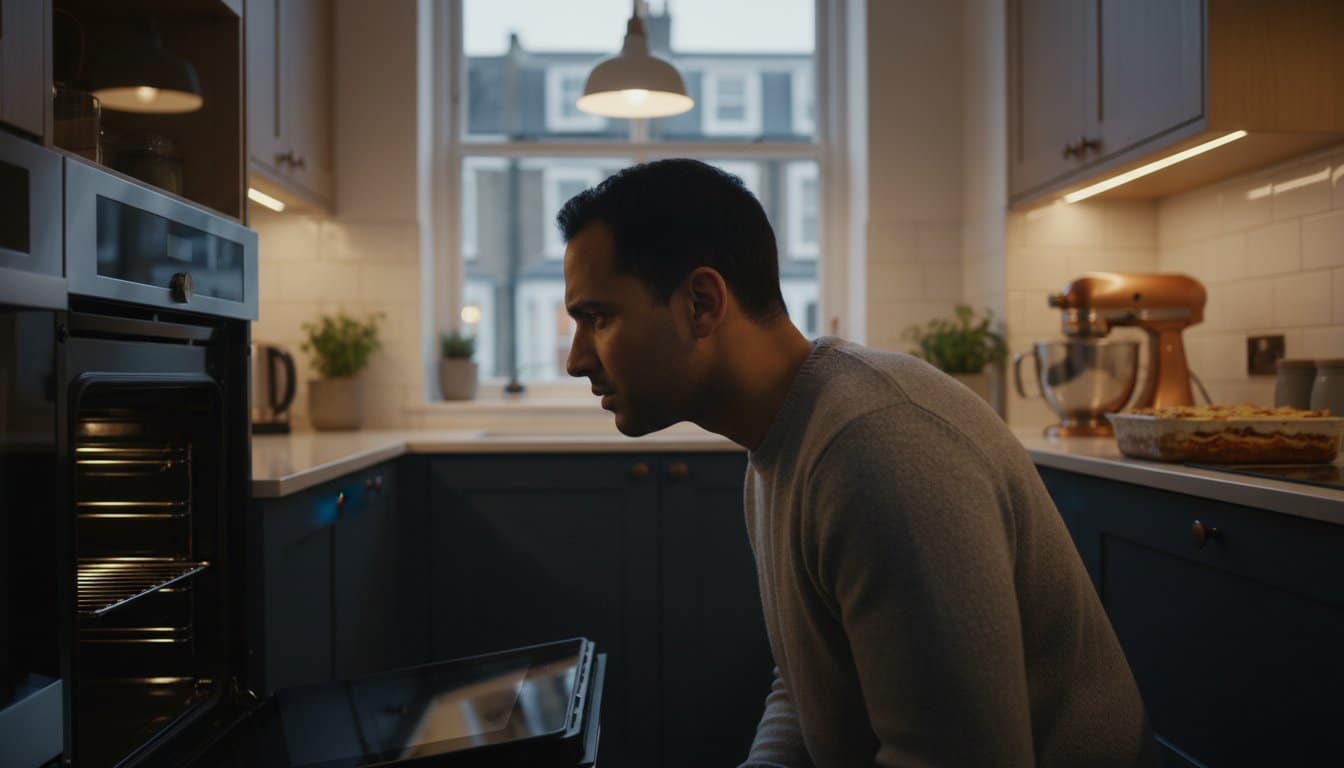
The dinner is prepped, the family is hungry, and you’re faced with a cold oven. A faulty appliance can bring your household to a standstill, turning a planned meal into a moment of stress. When you discover your oven not heating, your mind immediately fills with questions. Is this a simple fix I can handle myself, or am I facing a complicated and expensive repair? The uncertainty can be as frustrating as the problem itself, especially when you need a fast solution.
This troubleshooting guide is designed for Londoners facing this exact challenge. We will help you quickly and safely diagnose the issue by walking you through the 5 most common reasons for a cold oven. You’ll gain the confidence to know whether it’s a straightforward DIY job or if it’s time to call a qualified engineer. If you do need an expert, we’ll guide you on finding a reliable, same-day repair service right here in London, getting your appliance-and your dinner plans-back on track without the hassle.
Key Takeaways
- Start with simple, tool-free checks you can perform in minutes to rule out common oversights before calling for professional help in London.
- Identify the top 3 internal parts that fail. Understanding the most likely cause of your oven not heating helps you decide on the next steps.
- Learn the unique safety risks and UK regulations for gas ovens, which legally require a certified Gas Safe registered engineer for any repair work.
- Determine if a repair is cost-effective by weighing the age of your appliance against the estimated repair cost (£) to make a smart financial decision.
First Steps: Simple Checks Before You Call for Help in London
A cold oven when you’re ready to cook is a major inconvenience. Before you assume the worst, it’s crucial to run through a few simple checks. Often, an oven not heating is the result of a simple oversight, not a critical failure. These steps require no tools and can be performed safely in minutes, saving you the time and stress of an unnecessary call-out. For anyone living in a London flat or house, these common issues can often be the culprit.
Check 1: Is It a Power Issue?
First, look at the oven’s control panel. Is the clock or display lit? If the display is completely blank, the oven isn’t receiving any power. Your next stop is the consumer unit (often called a fuse box), typically found in a hallway cupboard or under the stairs in London homes. Look for a switch that has tripped to the ‘off’ position and flip it back on. If the circuit trips again immediately, this indicates a more serious fault that requires a certified expert electrician to diagnose safely.
Check 2: Are the Oven Settings and Timer Correct?
Modern ovens have complex settings that can easily be misconfigured. Many models will not heat if an automatic ‘cook time’ or ‘end time’ function is active. Ensure any timer is set to manual mode. Also, double-check that you’ve selected the correct cooking function (e.g., fan, conventional bake, or grill) and not just the oven light. Some ovens also feature a ‘demo mode’ for showroom display; an accidental button press could have activated it, which prevents the oven from heating up.
Check 3: Is the Oven Door Sealing Properly?
An oven cannot maintain its set temperature if the door doesn’t close securely. A poor seal allows hot air to escape, forcing the oven to work harder and often fail to heat correctly. Visually inspect the rubber gasket around the inside of the door frame. Is it cracked, torn, or caked with grime? Clean any debris and check for damage. Gently pull on the door to test the hinges; they should feel firm and pull the door shut tightly. A poor seal means the oven’s heating element has to work overtime, and understanding how heating elements work is key to diagnosing bigger problems if these simple checks don’t solve your issue.
Diagnosing the Fault: The 3 Most Common Reasons for an Electric Oven Failure
If the basic checks from our previous section didn’t solve the problem, the issue likely lies with an internal component. An oven not heating up is often caused by one of three common culprits. Understanding these potential faults helps you describe the problem clearly to an engineer, ensuring a faster, more accurate diagnosis. It is critical to note that these repairs involve complex electrical components and should only be handled by a qualified professional for a safe and effective fix. While these points focus on electric ovens, remember that any work on gas appliances requires a certified technician; you can find more information in the official Gas Safe Register guidance to ensure your family’s safety.
The Heating Element Has Failed
Electric ovens use two primary heating elements: the bake element at the bottom for general cooking and the grill element at the top. A clear sign of failure is when one function works but the other doesn’t. For instance, if your grill heats up perfectly but the main oven cavity remains cold, the bake element is the prime suspect. You can often spot a faulty element by looking for visible signs of damage, such as:
- Blisters or bubbles on the element’s surface
- Visible breaks or holes in the coil
- Sections that do not glow red when the oven is on
The Oven Thermostat is Faulty
The thermostat is your oven’s temperature regulator. Its job is to sense the internal temperature and signal the heating elements to turn on or off to maintain the heat you’ve selected. When it fails, your oven loses its ability to regulate temperature accurately. This leads to frustrating results like food that is burnt on the outside but raw inside, or meals that take far longer to cook than they should. A definitive diagnosis requires a professional to test the component with a multimeter for electrical continuity.
The Fan or Fan Motor is Broken
In a fan-assisted or convection oven, a fan is essential for circulating hot air and ensuring food cooks evenly. If your oven is not heating correctly and you notice an unusual silence, the fan could be the problem. When you turn the oven on, you should hear the fan motor running. If it’s silent, either the motor has seized or the fan element (the circular element around the fan) has failed. For these complex issues, our certified engineers provide fast and reliable London oven repairs to get your appliance working again promptly.
Special Considerations for Gas Ovens Not Heating
While many oven issues are shared between electric and gas models, a gas oven not heating presents unique challenges and significant safety risks. Gas appliances have specialised components like igniters and safety valves, and all work carried out on them is strictly regulated in the UK for your protection.
Under no circumstances should you attempt to repair a gas oven yourself unless you are a Gas Safe registered engineer. The risk of gas leaks, fire, or even explosion is extremely high. Instead, understanding the likely culprits can help you provide clear information to a qualified professional.
Here are the two most common reasons a certified engineer will investigate for a gas oven that won’t heat up.
A Weak or Faulty Igniter
The igniter in a gas oven has two jobs: to get hot enough to ignite the gas and to draw enough electrical current to signal the safety valve to open. If the igniter becomes weak over time, it may still glow but fail to reach the precise temperature needed to open the valve. This means no gas is released, and the oven will not heat. A classic symptom is hearing a click but never seeing a flame.
Gas Supply Problems
A lack of gas flow is another primary cause. Before calling an engineer, you can perform a simple, safe check: see if your other gas appliances, like your hob or boiler, are working. If they are also not working, the issue is likely with your home’s gas supply or meter. If only the oven is affected, the fault could be an internal blockage or, more commonly, a faulty oven safety valve that is stuck closed, preventing gas from reaching the burner.
Any issue related to gas flow is a serious safety concern. It is essential to turn off the gas supply to the appliance if you can and contact a professional immediately.
If your gas oven is failing to heat, don’t take any chances. The qualified and Gas Safe registered engineers at FaultFree Engineering Group are available for same-day callouts to diagnose the fault and perform a safe, reliable repair. Your safety is our priority.
Repair vs. Replace: Making the Right Call in London
When your oven isn’t heating up, you’re faced with a common dilemma: should you repair the appliance you have or invest in a brand new one? The decision depends on a few key factors, including the age of your oven, the estimated cost of the repair, and the type of appliance. In a high-cost city like London, a professional repair is often the most economical and hassle-free choice.
When a Repair Makes Financial Sense
For most ovens, a repair is the most practical solution. If your appliance is less than 8-10 years old, it likely has many years of service left. Common issues, such as a faulty heating element or a broken thermostat, are straightforward and affordable to fix-costing a fraction of a new oven. Before you start shopping, remember to factor in the hidden costs of replacement:
- Delivery Charges: Getting a large appliance delivered in London can be expensive and difficult to schedule.
- Installation Fees: A professional installation is crucial for safety and performance, adding to the overall cost.
- Disposal Costs: You may have to pay to have your old oven removed and recycled correctly.
Signs It Might Be Time to Replace
While we can fix most faults, sometimes a replacement is the smarter long-term investment. If your oven is suffering from multiple major component failures, the combined repair costs could approach the price of a new unit. Other clear signs it’s time for an upgrade include significant rust, a cracked interior liner, or a shattered glass door. Furthermore, if your oven is over 15 years old and inefficient, a modern, energy-saving model could lower your utility bills.
Get a Professional, Honest Assessment
The best way to make an informed decision is with expert advice. Our qualified engineers provide a fast, clear diagnosis of the problem and a fixed-price quote for the repair. When your oven not heating is disrupting your home, you need an answer quickly, which is why we offer same-day and next-day service across London. Our policy is transparent: if a repair isn’t cost-effective, we will tell you upfront. We believe in providing honest advice that serves your best interests.
Ready for a fast diagnosis and a trustworthy recommendation? Book your London oven repair today.
Your Fast, Reliable Solution for an Oven Not Heating in London
Facing an oven not heating can be frustrating, but you’re now equipped with the knowledge to take control. From simple power checks to identifying common culprits like a faulty heating element or thermostat, you understand the first steps. You also know how to weigh the critical decision of repairing versus replacing your appliance, a choice that often hinges on professional, honest advice.
When you’ve tried the basics and need a dependable solution, don’t let a cold oven disrupt your routine. The FaultFree Group is here to help. Our certified and experienced engineers deliver fast, reliable repairs with same-day and next-day availability across all London postcodes. We diagnose the issue and provide a transparent, fixed-price quote before any work begins, ensuring there are no surprises. Get your kitchen back to full working order without the wait.
Ready for a quick, professional fix? Book Your Same-Day Oven Repair in London Now and let our trusted team handle the rest.
Frequently Asked Questions
Why is my fan oven not heating up but the grill is working?
This is a very common issue. Your fan oven and grill use separate heating elements. If the grill works but the main oven cavity remains cold, the fan oven element has most likely failed. The fan may still spin, but it will only circulate cold air. Our certified engineers can quickly diagnose the fault and install a replacement element, restoring your oven’s function, often on the same day.
How much does it cost to replace an oven heating element in London?
In London, the cost to replace a standard oven heating element typically ranges from £95 to £150. This price generally includes the call-out fee, the new part, and professional labour. The final cost can vary based on your oven’s make and model. We always provide a transparent, fixed-price quote before any work begins, ensuring there are no hidden charges.
Can I replace an oven heating element myself?
While some people attempt a DIY repair, we strongly advise against it for safety reasons. Ovens are powerful electrical appliances, and incorrect installation poses a significant risk of electric shock, fire, or further damage. For your peace of mind and to guarantee a safe, reliable repair, the job should always be handled by a qualified and certified appliance engineer.
Why is my oven not getting up to the right temperature?
An oven not heating to the set temperature is usually caused by a faulty thermostat or a weakened heating element. The thermostat regulates the internal temperature, and if it fails, it cannot signal the element correctly. A failing element may still glow but won’t produce enough heat to reach higher temperatures. Our professional diagnosis will pinpoint the exact cause for an efficient repair.
How long does a typical oven repair take?
Most common oven repairs are completed quickly and efficiently. A straightforward heating element or thermostat replacement can often be finished in under an hour by our experienced engineers. We carry a wide range of common spare parts in our vans, which allows us to aim for a first-visit fix and get your appliance working again with minimal disruption to your day.
My oven is making a strange noise and not heating. What could it be?
A strange noise, such as rattling or grinding, combined with a lack of heat usually points to a problem with the fan motor. The fan is essential for circulating hot air in a fan-assisted oven. If the motor is faulty, it will be noisy and unable to distribute heat from the element, even if the element is working perfectly. This requires urgent professional attention to diagnose and fix safely.
Tags: appliance repair, DIY, Gas Oven Safety, Home Improvement, Kitchen Appliances, london, Oven Repair, troubleshooting guide