
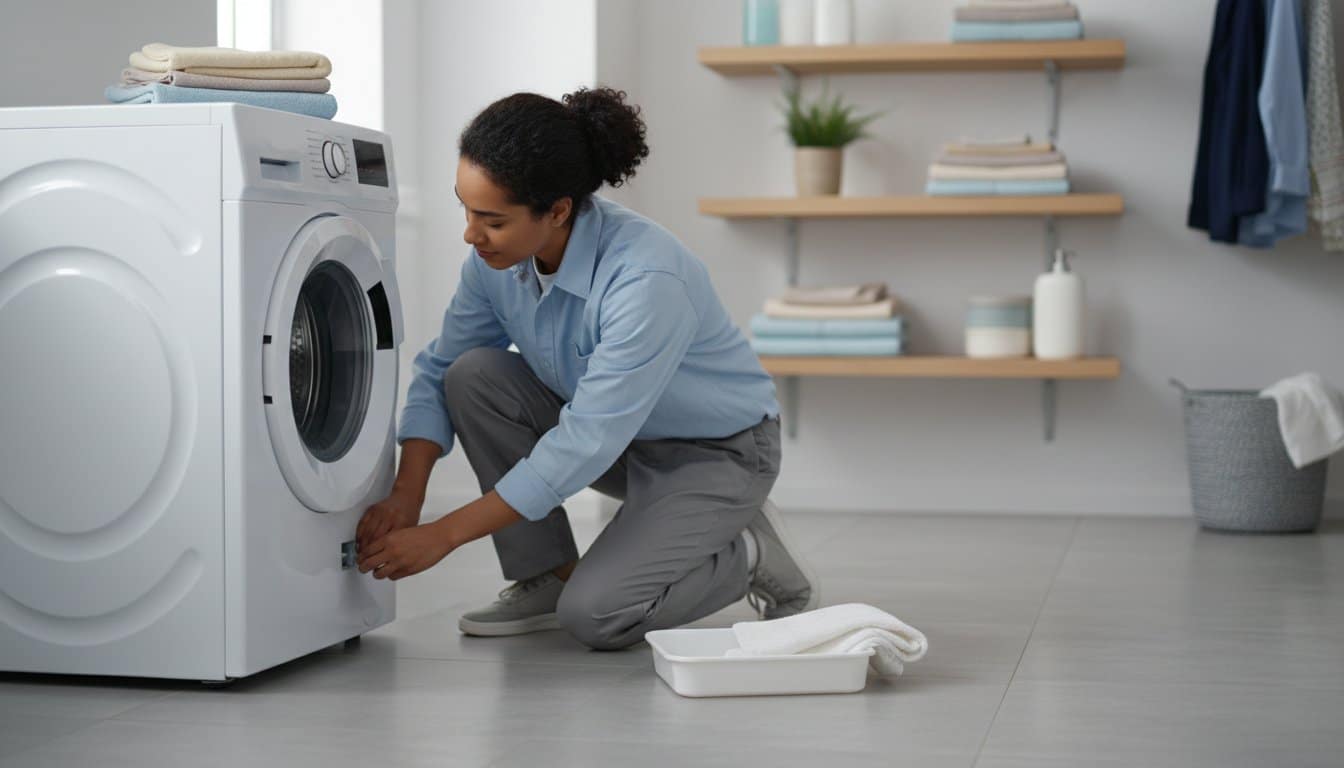
That sinking feeling when the wash cycle finishes, but your clothes are still floating in a pool of dirty water, is a common and stressful frustration. You’re left with a machine held hostage, the threat of a potential flood, and the worry of a costly call-out fee looming over you. But before you panic, understand that a washing machine not draining is one of the most frequent appliance issues we see, and often, the fix is surprisingly straightforward and something you can handle yourself.
For most machines under seven years old, repairing a drain pump is highly cost-effective compared to the price of a new appliance. The repair can extend the life of your machine for several more years. However, if your machine is much older and has had multiple previous issues, a replacement might be more economical. For those considering a replacement, looking into reconditioned models from specialists like Electroflex can be a great way to save money. Our technicians provide an honest assessment, and if a repair is not in your best interest, we will tell you upfront.
This step-by-step guide is designed to empower you. We will walk you through the simple, expert-approved checks to quickly diagnose and fix the problem, from a simple blocked filter to a kinked hose. Follow our clear instructions to get your laundry routine back on track safely and efficiently. We’ll also help you identify exactly when the issue requires a professional, so you can make an informed decision without wasting time or money. Let’s get that water drained and your machine working again.
Key Takeaways
- Discover how to safely check the most common causes of drainage issues, such as a blocked filter or waste hose, which you can often fix in minutes.
- Follow our step-by-step process to confidently diagnose exactly why your washing machine is not draining, from simple clogs to more complex faults.
- Learn to identify the clear warning signs of a failing drain pump or faulty electronic component, helping you avoid a more costly repair.
- Understand when a DIY fix is no longer practical and calling a certified engineer is the fastest, safest, and most economical solution.
Safety First: Before You Troubleshoot a Draining Issue
There’s nothing more frustrating than opening your appliance to find a drum full of murky water. A modern appliance is a complex piece of engineering, as this comprehensive overview of washing machines shows, but when your washing machine not draining properly, your first priority is safety, not theory. Before you attempt any diagnosis, following these essential steps is non-negotiable. Taking a few moments to prepare not only prevents serious injury but also makes the entire troubleshooting process cleaner, faster, and more efficient.
Disconnect From Mains Power
Your absolute first step is to completely disconnect the appliance from its power source. Turn the machine off at the wall socket and then unplug it. Water and electricity are a dangerous combination, and working on a machine that is still connected to the mains poses a severe risk of electric shock. For added security, we recommend taping the plug to the body of the machine to prevent anyone from accidentally plugging it back in while you are working.
Prepare for Water Spillage
A machine that won’t drain is, by definition, full of trapped water. The moment you open the drain pump filter or disconnect a hose, this water will be released. Be prepared. Place a thick layer of old towels around the base of the machine. A shallow baking tray or a low-sided bucket slid underneath the filter access panel can catch the initial gush of water. If you can, use a small jug or cup to bail out as much water as possible from the drum beforehand to minimise the potential mess.
Gather Your Basic Tools
The good news is that you won’t need a specialist toolkit for these initial checks. Most draining issues can be investigated with a few simple household items. Having them ready will save you time and stress. Your basic kit should include:
- A bucket or large bowl to drain water into
- Several old towels
- A pair of pliers (for hose clamps)
- A torch or your phone’s light to see into dark corners
A smartphone is also a great tool for taking photos of how pipes and connections are assembled before you take them apart. This can be an invaluable reference when it’s time to put everything back together.
Easy DIY Fixes: Checking the Most Common Culprits
A drum full of stagnant water is a frustrating sight, but don’t panic. Before you suspect a major fault, it’s important to know that over 80% of the time, a washing machine not draining is caused by a simple blockage you can likely fix yourself in minutes. These first-line-of-defence checks are designed to be safe and straightforward for any homeowner. Often, as explained in Whirlpool’s guide to washing machine draining issues, the problem can be as simple as a clogged filter or a kinked hose. Follow these steps to diagnose and solve the most common issues quickly.
Step 1: Inspect and Clean the Drain Filter
Your machine’s filter is designed to catch lint, coins, hair clips, and other small debris before they can damage the pump. When it gets clogged, water can’t escape. Here’s how to check it:
- Locate the Filter: It’s almost always behind a small, square or circular flap on the bottom front corner of your machine.
- Prepare for Water: Place a shallow tray and several old towels underneath the flap. A significant amount of trapped water will likely spill out.
- Unscrew and Clean: Slowly twist the filter anti-clockwise to release it. Once removed, clean it thoroughly under a running tap, removing all lint and grime.
- Check the Cavity: Before replacing the filter, use your fingers to feel inside the housing for any obstructions the filter may have missed. Re-secure the filter tightly.
Step 2: Check the Drain Hose for Kinks and Blockages
The grey, corrugated drain hose at the back of your machine carries the wastewater away. If it’s squashed or blocked, the water has nowhere to go.
- Inspect for Kinks: First, unplug your machine from the mains. Gently pull the appliance forward to get a clear view of the hose. Ensure it isn’t sharply bent, twisted, or crushed against the wall.
- Check for Blockages: Lower the end of the hose into a bucket on the floor. If trapped water drains out freely, the hose is likely clear. If not, you may need to detach it from the machine (consult your manual) and manually clear the obstruction with a long, flexible brush.
Step 3: Examine Your Standpipe or Under-Sink Plumbing
Sometimes the problem isn’t with your washing machine at all, but with the household drain it empties into. This is a common oversight when a washing machine is not draining properly.
- Test Your Standpipe: If your hose drains into a vertical household pipe (a standpipe), remove the hose and pour a large jug of water directly down it. If the water backs up or drains very slowly, the blockage is in your home’s plumbing, and you may need a plumber.
- Check Under-Sink Connections: If your machine drains into your sink’s plumbing, the small spigot it connects to can become clogged with food waste and grime. Carefully disconnect the hose and clear the spigot opening.
Intermediate Checks: When the Simple Fixes Don’t Work
If you’ve cleared the drain filter and checked the hose for kinks with no success, it’s time to investigate a little deeper. The following steps involve accessing internal components and are designed for those who feel confident proceeding. Your safety is the top priority. Before you begin, you must disconnect your washing machine from both the power and water supply.
Remember, a stubborn drainage problem can sometimes point to a more complex issue. If you feel unsure at any point, it is always safer and more efficient to call a professional. Our certified engineers can quickly diagnose the fault and provide a reliable, long-lasting repair. Don’t risk causing further damage; book a same-day appointment with us today.
Inspect the Sump Hose
The sump hose is a short, corrugated pipe that connects the bottom of the washing machine drum to the drain pump. It’s a common trap for small items like coins, buttons, or even a stray sock that can cause a complete blockage. Accessing it usually requires carefully tipping the machine or removing a back or front panel. Always consult your manufacturer’s manual for specific instructions on how to locate and safely access this component.
Check the Drain Pump Impeller
The drain pump is the part that actively forces water out of your machine. When you remove the drain filter, you can often see a small plastic fan, known as the impeller, inside the pump housing. Carefully check if you can turn it with your fingers or the end of a pen. It should move with a little resistance in small, distinct clicks. If the impeller is stiff, completely stuck, or feels loose and spins freely without engaging, it is either blocked by debris or the pump motor has failed.
Try a System Reset or a ‘Drain/Spin’ Cycle
Occasionally, a software glitch can be the reason your washing machine not draining properly. Before assuming a mechanical fault, try this simple step. First, attempt to run a ‘Drain’ or ‘Spin’ only cycle to see if you can manually trigger the pump. If that doesn’t work, perform a hard reset by unplugging the machine from the wall for at least 10 minutes. This can clear any temporary electronic errors. It’s a long shot, but it’s a quick, non-invasive check worth trying.
Advanced Problems: Signs of a Faulty Component
While a simple blockage is often something you can resolve yourself, some drainage issues stem from a failed internal part. The following symptoms point towards a more complex problem that requires professional diagnosis and repair. For your safety and to prevent further damage, these faults should always be handled by a qualified engineer.
Attempting to fix these components without the correct tools and electrical knowledge can be dangerous and may lead to more expensive repairs. Here’s what to look out for.
A Failed Drain Pump
The drain pump is the component responsible for actively forcing water out of the drum. If the motor inside the pump burns out or seizes, the water has nowhere to go. The most common sign of a failed pump is a loud humming or grinding noise coming from the machine during the drain cycle, but no water is actually being removed. This indicates the motor is trying to work but cannot turn. Replacing a pump requires disconnecting wiring and water hoses, a task best left to a professional. Hear a strange noise? Book a same-day repair with our London engineers.
Faulty Lid Switch or Door Lock
As a critical safety feature, your washing machine will not spin or drain if it detects that the door is open. A faulty lid switch or door lock mechanism can incorrectly signal to the machine’s computer that the door is not secure, even when it is. This prevents the drain cycle from ever starting. If your machine fills and washes but stops dead before the final drain and spin, a faulty lock is a likely culprit. This is a common point of failure, especially on older models that have seen years of use.
Control Board or Pressure Switch Issues
Think of the main control board as the washing machine’s brain-it sends instructions to every other component. A separate part, the pressure switch, acts as a sensor that tells the brain how much water is in the drum. If either of these electronic components fails, your washing machine not draining could be the result of a communication breakdown. The pressure switch might incorrectly report that the drum is empty, or the control board may fail to send the signal to the drain pump. Diagnosing these electronic faults requires specialist tools and is not a DIY job.
When to Call a Professional: Save Time, Money, and Stress
You’ve checked the filter and inspected the drain hose, but your appliance is still full of water. While DIY fixes can sometimes work, tackling complex appliance issues without the right tools and expertise can lead to further damage, costly mistakes, or even serious safety hazards. When your washing machine not draining becomes a persistent problem, calling a certified engineer isn’t giving up-it’s the smartest and most efficient way to protect your appliance and your home.
A professional can diagnose the root cause quickly, from a faulty pump to an electrical issue, ensuring a safe and long-lasting repair that gives you complete peace of mind.
The DIY vs. Professional Checklist
It’s time to put down the tools and pick up the phone if you encounter any of the following. Your safety is the top priority. Call a professional if:
- You see sparks, smell burning plastic, or hear unusual grinding or buzzing sounds from the machine.
- The problem continues after you have thoroughly cleaned the filter and checked the drain hose for blockages.
- You feel uncertain or lack the confidence to disassemble parts of your washing machine.
- You suspect the issue is with the pump motor, control board, or any other electrical component.
Why Choose FaultFree Engineering Group for Your Repair?
For London residents, the solution is simple and reliable. FaultFree Engineering Group specialises in getting your household back on track with minimal disruption. We understand the stress a broken appliance causes, which is why we offer same-day and next-day appointments across all of London. Our certified, experienced engineers are equipped to fix all major brands and models. We believe in total transparency, offering clear, upfront pricing and our ‘no fix, no fee’ guarantee. We don’t just apply a temporary patch; we deliver dependable, long-lasting repairs.
Book Your Repair in 60 Seconds
Don’t let a faulty appliance disrupt your day any longer. Solving your drainage issue is just a call or a click away. Our booking process is designed to be fast and straightforward-simply give us a call or fill out our online form, and we’ll handle the rest. A qualified engineer can be on their way to get your machine working perfectly again.
Get your washing machine draining again today. Book your repair now.
Get Your Laundry Routine Back on Track
Tackling a washing machine drainage issue can be a rewarding fix. As we’ve covered, simple steps like clearing a clogged filter or unkinking the drain hose often solve the problem. However, when your washing machine not draining is caused by a more serious fault, such as a broken pump or a faulty lid switch, it’s wise to seek professional expertise to avoid further damage.
Don’t let a drum full of water disrupt your day. For a fast, reliable solution, FaultFree Group is here to help. Our certified engineers specialise in all major brands and provide same-day service across all London postcodes. With transparent, upfront pricing, you know exactly what to expect-no hidden fees, just dependable results. Still stuck with a full drum? Book a certified London engineer for a same-day repair.
A professional fix is just a click away, restoring your peace of mind.
Frequently Asked Questions
Can I manually drain a washing machine that’s full of water?
Yes, you can manually drain your machine. First, unplug it from the mains for safety. Most machines have a small access panel at the bottom front. Behind it, you will find a drain filter cap and often a small emergency drain hose. Place towels and a shallow tray underneath, then either pull out the hose and unstop it or slowly unscrew the filter cap to release the water. Be prepared for a significant amount of water.
How much does it cost to fix a washing machine that won’t drain in the UK?
The cost to fix a washing machine that won’t drain in the UK typically ranges from £75 to £150. The final price depends on the specific fault and the model of your appliance. A simple blockage in the filter or hose will be at the lower end of the scale, while replacing a faulty drain pump will cost more. A professional diagnosis from a qualified technician is the best way to get a transparent and accurate quote for the repair.
Is it worth repairing a washing machine drain pump, or should I buy a new machine?
For most machines under seven years old, repairing a drain pump is highly cost-effective compared to the price of a new appliance. The repair can extend the life of your machine for several more years. However, if your machine is much older and has had multiple previous issues, a replacement might be more economical. Our technicians provide an honest assessment, and if a repair is not in your best interest, we will tell you upfront.
Why is my washing machine not draining AND not spinning?
The draining and spinning cycles are directly linked. Most washing machines have a sensor that prevents the high-speed spin cycle from starting until the drum is empty of water. This is a safety feature to protect the motor. Therefore, if your washing machine not draining is the primary issue, it will automatically prevent the spin cycle from engaging. The fault lies within the drainage system, such as a clogged pump or a blocked hose, not a separate spin problem.
Can using too much detergent stop my washing machine from draining?
Yes, absolutely. Using excessive detergent creates a large volume of suds, which the machine can struggle to pump out. This can cause an airlock in the drain hose or confuse the pressure sensor that detects the water level. The machine may pause the cycle, believing it is still full of water, and fail to drain properly. To fix this, try running an empty hot wash to clear out the residue and always use the recommended amount of detergent.
My machine drains but leaves clothes soaking wet. What’s the problem?
If the water has drained but your clothes are still saturated, the issue is with the spin cycle, not the drain pump. The machine is not spinning at a high enough speed to effectively extract water from the laundry. This could be caused by an unbalanced load, which you can fix by redistributing the clothes. If the problem persists, it may indicate a more technical fault, such as a worn motor carbon brush or a faulty drive belt.
Tags: appliance repair, blocked filter, DIY, drainage issues, home maintenance, troubleshooting guide, washing machine repair